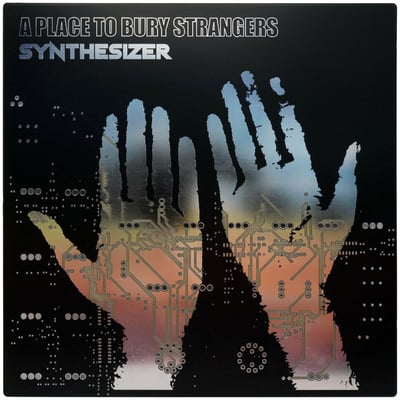
A Place to Bury Strangers Synthesizer
Released Oct 4, 2024 Dedstrange
Consensus forming 3 professional reviews Updated Dec 31, 2025
Broadly positive consensus
Consensus is still forming across 3 professional reviews. A Place to Bury Strangers's Synthesizer arrives as a vivid recalibration of the band's noir electronics and noise-rock fury, a record where machinery and humanity collide with deliberate force.
How ChoruScore worksCritics' Top Tracks
The songs critics returned to most
Fear Of Transformation
3 critic mentions
“after the two minute mark, the guitar finally gets full control of the song, a volcanic eruption” — Paste Magazine
Disgust
3 critic mentions
“Take the opener, “Disgust”: Instead of burying the song in layers of dirt and noise, Ackermann channels his guitar in specific moments.” — Paste Magazine
Bad Idea
3 critic mentions
“there are few signs of more traditional song structures—though “Fear of Transformation”, “Bad Idea” and “Comfort Never Comes” are all standout tracks” — PopMatters
Full critic consensus
A Place to Bury Strangers's Synthesizer arrives as a vivid recalibration of the band's noir electronics and noise-rock fury, a record where machinery and humanity collide with deliberate force. Across three professional reviews the critical consensus is favorable, the album earning a 79.33/100 score from critics who praise its tense dynamics and focused experiments in electronic dark wave and post-punk textures.
Reviewers consistently single out the same standout tracks as entry points: “Fear Of Transformation”, “Disgust” and “Bad Idea”. PopMatters highlights “Fear Of Transformation” and “Bad Idea” as immersive, abrasive pieces that reward repeat listening, while Under The Radar celebrates the opener “Disgust” for its full-throttle assault and engineered aggression. Paste emphasizes the album's control of contrast - the leaner moments such as “Join the Crowd” and “Don’t Be Sorry” amplify the impact when the trio unleashes walls of sound, a dynamic that drives much of the record's critical appeal.
Critics agree on the band's tightened cohesion and Adam Ackerman's custom electronics and gear-forward approach, noting that Synthesizer balances sonic experimentation and gothic-tinged post-punk without feeling merely derivative. Some reviews prize the album's restraint and clarity, while others revel in its manic mayhem, so the record reads as both a continuation of the group's noise-rock lineage and an exploratory step into darker, more synthetic territory. For listeners asking whether Synthesizer is worth hearing, the professional reviews suggest a strong yes - especially for those seeking the best songs on Synthesizer, which repeatedly point to “Fear Of Transformation”, “Disgust” and “Bad Idea” as the album's most compelling moments.
Track Ratings
How critics rated each track, relative to this album (0-100). Only tracks that made critics feel something are rated.
Disgust
Don't Be Sorry
Fear Of Transformation
Join The Crowd
Bad Idea
You Got Me
It's Too Much
Plastic Future
Have You Ever Been In Love
Comfort Never Comes
Get the next albums worth your time.
Critic-backed picks in one clean digest. No clutter.
What Critics Are Saying
Deep insights from 4 critics who reviewed this album

Critic's Take
In a characteristically bullish register Dom Gourlay argues that A Place to Bury Strangers's Synthesizer is a successful sonic expedition, naming “Disgust” and “Bad Idea” among the album's best songs. He emphasizes the full-throttle assault of opener “Disgust” and the similarly sculpted aural attack of “Bad Idea”, while flagging the pulsating throb of “Have You Ever Been In Love” and the extra-sensory collision of “Fear of Transformation”. The prose is assured and promotional rather than tentative - the record drags its palette into new territories and rarely disappoints.
Key Points
-
The best song is 'Disgust' for its full-throttle, sonic assault that sets the album's aggressive tone.
-
The album's core strength is its successful fusion of noise rock, electronic dark wave, and goth-tinged post punk into bold, exploratory tracks.
Themes

Critic's Take
A Place to Bury Strangers return on Synthesizer as a thrilling, chaotic re-synthesis of post-punk and noise rock, where the best tracks - “Fear of Transformation”, “Bad Idea” and “Comfort Never Comes” - crystallize the record's strange appeal. James Cosby’s sentences move from historical context to ecstatic description, noting that these songs are standout moments that mix manic mayhem, industrial angst and oddly comforting send-offs. He frames the album as original rather than derivative, praising Ackerman’s custom electronics and the trio’s ability to make each track a distinct, odd world. The narrative makes clear that the best songs on Synthesizer are not pop structures but immersive, abrasive pieces that reward repeat listening and attentive headphones.
Key Points
-
“Fear of Transformation” is the album's best song because it channels paranoia into manic, coordinated mayhem that epitomizes the record's power.
-
The album's core strength is its inventive synthesis of post-punk, noise and synth textures that feel original, dense, and rewarding on repeat listens.
Themes


Critic's Take
A Place to Bury Strangers’s Synthesizer makes its best songs into exercises in contrast, where restraint heightens the impact of explosion - tracks like “Disgust” and “Fear Of Transformation” showcase that strategy. The album rewards patience: the leaner moments on “Join the Crowd” and “Don’t Be Sorry” let the band breathe before the wall of sound returns. Ackermann’s guitar eruptions and the Fedowitz rhythm section’s anchoring give the best tracks purpose and punch, which is why listeners asking about the best songs on Synthesizer will point to those controlled, volcanic moments. Overall, the record feels clear-headed and deliberate, a noisy band finally honing when to unleash chaos and when to hold back.
Key Points
-
The best song moments (e.g., “Fear Of Transformation”) earn their noise by reserving chaos until it has maximum impact.
-
The album’s core strength is its balance: disciplined dynamics, gear-focused textures, and a cohesive trio performance.