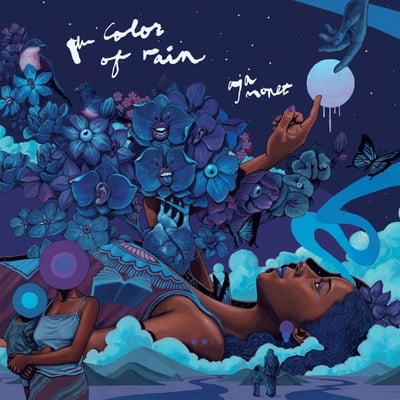
aja monet the color of rain
Released May 22, 2026 drink sum wtr
Established consensus 6 professional reviews Updated Jun 25, 2026
Broadly positive consensus
aja monet's the color of rain arrives as a defiant, tender ledger of Black life that critics identify as her most politically urgent work to date.
How ChoruScore worksCritics' Top Tracks
The songs critics returned to most
for the Congo
5 critic mentions
“For the Congo," all racing percussion, she wonders "How many children died for the sake of my comfort today?” — AllMusic
say it with your chest
2 critic mentions
“By the time monet repeats the expression at the end of her verse, chanting it gently” — Pitchfork
hollyweird
5 critic mentions
“Monet delivering an urgent bulletin over Brown 's tumbling drums” — AllMusic
Full critic consensus
aja monet's the color of rain arrives as a defiant, tender ledger of Black life that critics identify as her most politically urgent work to date. Across six professional reviews, the record earned an 81.67/100 consensus score, with reviewers repeatedly pointing to tracks that translate surrealist blues poetry into collective reckoning and solace. Critics consistently single out “for the Congo”, “hollyweird” and “say it with your chest” as standout moments where musical detail heightens poetic indictment.
The critical consensus foregrounds themes of racial and gender injustice, Black identity, spiritual seeking and solidarity. Reviewers praise how percussion-led confrontations like “for the Congo” function as march-like indictments while “hollyweird” renders urban catastrophe in neon, Afro-surrealist images. At the same time, quieter pieces such as “to sister (feat. Ganavya & Brandee Younger)” and the finale “indigo” offer communal tenderness, turning protest into elegy and uplift. Across the reviews, commentators note Monet's control of voice and phrasing, the marriage of poetry and jazz textures, and the album's balance between fury and consolation.
Not all commentary is uniform; some critics emphasize the record's confrontational streak, while others highlight its musical reprieves like “working class musicians” and collaborative expanses such as “elsewhere”. Taken together, professional reviews suggest the color of rain is both a necessary political statement and a moving collection of songs, worth attention from listeners asking whether the album is good and what the best songs on the color of rain are. Below, the full reviews unpack how these standout tracks and recurring themes shape Monet's most compelling collection in recent memory.
Track Ratings
How critics rated each track, relative to this album (0-100). Only tracks that made critics feel something are rated.
say it with your chest
elsewhere
withness
hollyweird
skinfolk
for the Congo
i came to the poem
to sister (feat. Ganavya & Brandee Younger)
i know that i don’t know
working class musicians
love is a choosing (feat. Mereba)
song of myself
melting clocks
every media minute
indigo
Get the next albums worth your time.
Critic-backed picks in one clean digest. No clutter.
What Critics Are Saying
Deep insights from 7 critics who reviewed this album

Critic's Take
In this vividly rhetorical follow-up, aja monet scalds and soothes on the color of rain, with the best songs turning outrage into elegy. The album's strongest cuts, like “hollyweird” and “for the Congo”, push Monet's surrealist blues-poet persona into direct political engagement, language that shocks and clarifies. Elsewhere, “to sister (feat. Ganavya & Brandee Younger)” offers a softer counterpoint, a lullaby of solace amid indictment. These are the best tracks on the color of rain, because they balance urgent imagery with musical detail and emotional range.
Key Points
-
The best song is "hollyweird" because it combines urgent delivery, vivid political imagery, and aggressive musical propulsion.
-
The album's core strengths are its surrealist-poet voice, political engagement, and the balance of outrage with intimate solace.
Themes

Critic's Take
In his warm, precise voice Stephen Kearse casts aja monet’s the color of rain as a level-up, and he keeps returning to the album’s best tracks to prove it. The review treats “say it with your chest” as a spellbound opener and centerpiece, while “for the Congo” is framed as a drum-circle siren that carries urgent imagery. He also highlights quieter closers like “indigo” and playful experiments such as “melting clocks” to show how monet’s vocals and musicianship turn poems into songs. This reads like an argument for the best songs on the color of rain, grounded in concrete moments of vocal invention and communal feeling.
Key Points
-
The best song, “say it with your chest”, is best because it transforms a taunt into a spell and centers the album’s musical reinvention.
-
The album’s core strengths are monet’s expanded vocal repertoire and arrangements that make poetry feel musical and communal.
Themes
Sh
Critic's Take
aja monet channels anger and tenderness across the color of rain, and the best songs - notably “hollyweird”, “for the Congo” and “skinfolk” - are where her urgency and tenderness collide. The record slips between march and hymn, with “hollyweird” painting neon, arson, and Octavia Butler’s grave in a single furious image, while “for the Congo” turns political indictment into a hand-drummed assault. At the center, “skinfolk” becomes a hymn to labor and body, a tender catalog that feels like prayer. These are the best tracks on the color of rain because they make Monet’s critiques hit physically and hold intimacy at the same time.
Key Points
-
“skinfolk” is the album’s emotional center, turning a body catalogue into a hymn with strong features and instrumentation.
-
The album’s core strengths are vivid urban imagery, political urgency, and intimate tenderness balanced across production and performance.
Themes

Critic's Take
aja monet continues to refine her surrealist blues poetry on the color of rain, and the best songs on the album show why this is true. The opener, “say it with your chest”, sets the tone with horns and jazzy drums urging authenticity, while “for the congo” is a marching, intense protest that hits like a moral indictment. “working class musicians” offers a warmer, more musical reprieve, and the finale “indigo” brings the record down with gratitude and quiet catharsis. These tracks together explain why listeners asking "best tracks on the color of rain" will find urgency, intimacy and clarity in Monet's delivery.
Key Points
-
The best song, "for the congo", is the album's fiercest protest, pairing polyrhythmic intensity with moral questioning.
Themes

Critic's Take
aja monet arrives on the color of rain with a voice sharpened by activism, and the best tracks prove it: “hollyweird”, “for the congo”, and “every media minute” are where her political urgency and poetic dexterity collide. Elsewhere, the quieter meditations of “to sister (feat. Ganavya & Brandee Younger)” and “love is a choosing (feat. Mereba)” show Monet's capacity to balance communal tenderness with hard-hitting critique. This is an album whose best songs are both protest and balm, songs that make the case for love as labor and collective change.
Key Points
-
“hollyweird” is best for its punchy confrontation and incisive critique of Hollywood's evasions.
-
The album's core strength is balancing militant political urgency with intimate communal love.
Themes


Critic's Take
Aja Monet speaks with the same warm, incisive authority throughout the color of rain, and the best songs here are those that crystallise her Afro-surrealist critique. The record's lead single, “hollyweird”, stands out as a vivid portrait of Los Angeles after catastrophe, a surreal apocalyptic landscape full of hypocrites that the review singles out. Elsewhere, “elsewhere” is noted as a collaborative, expansive moment that ties Monet's jazz experiments to political urgency. The reviewer emphasises how Monet's poetry and music act as balm and testimony, making these tracks the best tracks on the color of rain for listeners seeking politics fused with psychedelic jazz.
Key Points
-
The best song is “hollyweird” because it vividly crystallises Monet's Afro-surreal critique in a cinematic portrait of LA.
-
The album's core strength is fusing experimental jazz and poetry into politically charged, surreal snapshots that act as balm and testimony.