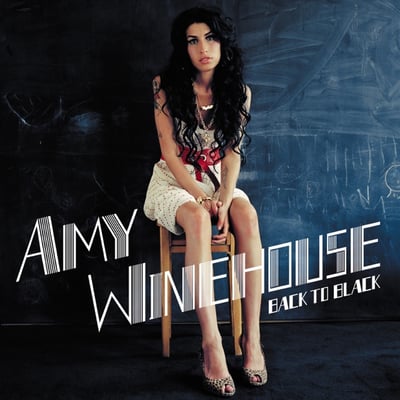
Amy Winehouse Back to Black
Released Oct 27, 2006 Universal-Island Records Ltd.
Established consensus 23 professional reviews Updated Mar 23, 2026
Broadly positive consensus
Amy Winehouse's Back to Black converts tabloid fodder and private pain into a 1960s-inflected pop-soul record whose best songs have become modern standards.
How ChoruScore worksCritics' Top Tracks
The songs critics returned to most
Rehab
16 critic mentions
“From the opening "Rehab" to the closing "Addicted", there's none of the blame-shifting” — The Independent (UK)
Me & Mr. Jones
12 critic mentions
“Me and Mr. Jones," rumored to be a fictitious gripe directed at Nasir Jones, let's you know right away you're not in Motown” — Prefix Magazine
Back to Black
11 critic mentions
“Song titles like "Back to Black," "Love Is a Losing Game," "Tears Dry on Their Own" and "Wake up Alone" should give you an idea” — Prefix Magazine
Full critic consensus
Amy Winehouse's Back to Black converts tabloid fodder and private pain into a 1960s-inflected pop-soul record whose best songs have become modern standards. Across professional reviews, critics point to “Rehab”, “Love Is a Losing Game” and “You Know I'm No Good” as the album's clearest standout tracks, moments where Winehouse's bruised, witty songwriting meets Mark Ronson and Salaam Remi's retro Motown and Philly-tinged production.
The critical consensus—an 80.74/100 score compiled from 23 professional reviews—celebrates the record's marriage of grit and polish. Reviewers consistently praise the immediacy of “Rehab” as a brazen opener, the title cut's brittle grief, and the tenderness of “Love Is a Losing Game”. Critics note recurring themes of breakup and excess, authenticity versus theatricality, and a revivalist 1960s soul sound updated with contemporary R&B beats. Across reviews, the best tracks are singled out for vivid storytelling, vocal maturity and arrangements that balance homage with invention.
Not all commentary is uniformly celebratory: some critics question moments of theatrical affect and occasional unevenness in pacing, arguing that persona sometimes threatens to overshadow intimacy. Still, the prevailing view in professional reviews frames Back to Black as a 21st-century soul touchstone—a record where standout songs turn personal turmoil into propulsive, unforgettable pop-soul. For readers searching for a verdict on whether Back to Black is worth hearing, the critic consensus points to a powerful collection anchored by several indispensable tracks.
Track Ratings
How critics rated each track, relative to this album (0-100). Only tracks that made critics feel something are rated.
Rehab
You Know I'm No Good
Me & Mr. Jones
Just Friends
Back to Black
Love Is a Losing Game
Tears Dry On Their Own
Wake Up Alone
Some Unholy War
He Can Only Hold Her
Addicted
Get the next albums worth your time.
Critic-backed picks in one clean digest. No clutter.
What Critics Are Saying
Deep insights from 23 critics who reviewed this album

Critic's Take
Amy Winehouse keeps her voice front and centre on Back to Black, where tracks like “Rehab” and “Back to Black” distil her raw, unashamed frankness into modern R&B. Andy Gill's prose savours the album's Motown-like grooves and Otis-style horns, and he treats “Wake Up Alone” and “Me & Mr. Jones” as vivid examples of Winehouse's blend of languid vocal power and candiditude. The result is an album that refuses shame, and that directness makes clear why listeners ask about the best songs on Back to Black - they are the ones that channel that fearless voice most completely.
Key Points
-
Rehab is the best song because it encapsulates the album's directness, production punch, and emotional impact.
-
The album's core strengths are candid, unashamed lyrics paired with sculpted, retro-soul production.
Themes

Critic's Take
Amy Winehouse sounds rescued rather than diluted on Back to Black, and the best tracks prove why. The reviewer's delight surfaces most clearly around “Rehab” and “Love Is a Losing Game”, which are cited as knockout moments and universal songs respectively. With Mark Ronson and Salaam Remi supplying Brill Building and Motown touches, the album's best songs on Back to Black feel both contemporary and lovingly retro. The result is an album where the strongest tracks reaffirm Winehouse's voice instead of erasing it.
Key Points
-
The best song, "Rehab", is praised as a knockout single with memorable lines that showcase Winehouse's character.
Themes

En
Pr
Critic's Take
Amy Winehouse's Back to Black reads like a retro-leaning, modern heartbreak record, and the best songs on Back to Black - “Rehab” and “You Know I'm No Good” - announce her as the star. The record plugs 60s girl-group melodrama into hip-hop-tinted production, so tracks like “Rehab” land like sharp, whiskey-soaked confessions while “You Know I'm No Good” revels in big drums and barroom narrative. Elsewhere, “Addicted” and “Back to Black” deepen the album's jilted-lover throughline, yielding songs that feel classic and uncommonly witty.
Key Points
-
Rehab is the album's strongest opening statement, combining confessional lyrics and whiskey-soaked delivery.
-
Back to Black's core strengths are its 60s girl-group influence updated by hip-hop sensibility and sharply observant songwriting.
Dr
Critic's Take
Amy Winehouse sounds like a born pop star on Back to Black, and the best songs here underline that fact rather than contradict it. “Rehab” captures her bolshy wilfulness with a brash immediacy, while “You Know I'm No Good” pairs Ronson’s beats with a duplicitous, self-loathing lyric that lingers. The title-track “Back to Black” is the heart-stopping centrepiece, making misery plain with stark, memorable lines, and quieter moments like “Love Is a Losing Game” show her graceful, Dusty-like restraint. This is an album whose best tracks marry scuff and polish to devastating effect, which is why listeners still call these the best songs on Back to Black.
Key Points
-
The title-track is the album's emotional centre, pairing stark lyrics with a heart-stopping shuffle.
-
The album's core strength is marrying soulful, world-weary vocals with polished pop production and gritty lyrics.
Themes
mu
Co
Critic's Take
Amy Winehouse assumes persona after persona across Back to Black, and the best songs on Back to Black - namely “Rehab” and “Back to Black” - reveal why that chameleonic talent matters. The record opens with the brass-bottomed rumpus of “Rehab” that takes her tabloid image head-on with rat-a-tat-tat Motown drums, while the title track is an aching black mass of heartache whose chorus swamps the listener in brittle grief. Her glide on “Love Is a Losing Game” and the cooing harmonies of “Me & Mr. Jones” show she can summon both style and songwriting weight, making these among the best tracks on Back to Black. The album reads less like homage and more like an authentic self-assertion, which is why listeners hunting for the best songs on Back to Black will find these standouts unforgettable.
Key Points
-
The title track is the emotional centerpiece, its chorus delivering brittle, devastating heartache.
-
Winehouse's core strength is her chameleonic ability to inhabit soul styles while writing authentically.
Themes
Ir
Critic's Take
Kevin Courtney writes with bright, punchy relish about Amy Winehouse and Back to Black, singling out “Rehab” as the album's heady centrepiece and praising the back-alley soul stomp of “You Know I'm No Good” and “Addicted”. He frames the record as a soulful excursion through Philly and Motown, noting that while nothing quite rivals “Rehab” it is these gritty, vulnerable songs that mark the best tracks on Back to Black. The voice is admiring and knowing, celebrating Winehouse's arrival while conceding a clear standout single.
Key Points
-
Rehab is the album's undeniable standout for its immediacy and classic Motown call-backs.
-
The album's core strength is its revival of 1960s Philly/Motown soul melded with personal vulnerability.
Themes

Critic's Take
Amy Winehouse sounds like a 21st-century soul classic on Back to Black, the record’s best songs turning petty domestic detail into vivid heartbreak. Dorian Lynskey singles out the pungent opener “Rehab” and the telltale “You Know I'm No Good” as exemplars of confident, modern songwriting, and he celebrates the production swagger that makes those tracks the best songs on Back to Black. The voice, the lines and the neo-Motown swing combine so that the album’s standouts feel both immediate and timeless.
Key Points
-
Rehab is best for its pungent, perfectly produced neo-Motown swagger and commanding vocal delivery.
-
The album’s core strengths are vivid, modern songwriting and retro-soul production that make small domestic details feel epic.
Themes
Critic's Take
Amy Winehouse arrives on Back to Black sounding like a Fifties jazz-soul survivor with the lyrics of a modern Londoner, and the best tracks - notably “Rehab” and “Love Is a Losing Game” - prove that collision is thrilling, not gimmicky. Nicholson writes with amused admiration, as when he calls the record "mesmerising" and praises the concise 45-length songs that make their point and move on, so “Tears Dry On Their Own” and “Me & Mr. Jones” stand out for balancing vintage backing with sharp contemporary lines. The reviewer's voice is part-critical, part-enamoured, and it lands on those songs as the standout moments that make Back to Black recommendable and memorable.
Key Points
-
Rehab is the best song for its rousing, churchy delivery and memorable chorus.
-
The album's core strength is fusing retro soul arrangements with contemporary, candid lyrics.
Themes
Gi
Critic's Take
Amy Winehouse arrives on Back to Black with a slick retro palette and sharper focus, and the review keeps circling back to a few key songs as proof. Opener “Rehab” is foregrounded as the in-your-face hit that sets the tone, while the title song and “Love Is a Losing Game” are held up as the album's deeper, timeproof moments. This is why searches for best songs on Back to Black will consistently highlight “Love Is a Losing Game” and “Rehab” as essentials.
Key Points
-
The reviewer names 'Love Is a Losing Game' the best song for its timeless, imagistic melancholy.
Themes
NO
Critic's Take
Amy Winehouse's Back to Black is celebrated here for keeping its edges intact, and the review singles out “Rehab” as a ballsy, chart-winning standout that proves the album's raw soul works. The writer's tone is enthusiastic and slightly tongue-in-cheek, praising Mark Ronson's gritty, old-school backing that lets tracks like “Rehab” and the title track breathe with 60s-style heft. They position the record as a corrective to modern R&B; slickness, calling it a darkly rockin' good time that leans into retro soul rather than smoothing itself over. Overall, the critic frames the best songs on Back to Black as those that retain rough edges and emotional honesty, with “Rehab” leading the pack.
Key Points
-
“Rehab” stands out for its ballsy, chart-winning honesty and vintage-soul delivery.
-
The album's core strength is its raw, 60s-style soul production that resists modern R&B; slickness.
Themes
Ho

Critic's Take
In the bruising, sharp-edged voice of this reviewer, Amy Winehouse’s Back to Black yields clear highlights: “Rehab” stands as the massive, defiantly memorable single and “You Know I'm No Good” is a delightfully self-deprecating ballad. The title track “Back to Black” is praised as the most seamless track, fusing Spector-style harmonies, Stax/Muscle Shoals tempo shifts and raw, bruised lyrics into one four-minute burst. Mark Ronson-produced tracks are lauded as punchy and upbeat, giving the album its popular-soul backbone and making these songs the best tracks on Back to Black by some distance.
Key Points
-
‘Rehab’ is the album’s massive, defining single and the clearest best song.
-
The album’s core strengths are Ronson’s punchy soul production and Winehouse’s blunt, character-driven lyrics.
Themes
Q


Critic's Take
Amy Winehouse wears her influences proudly on Back to Black, and the best tracks - especially “Rehab” and “Love Is a Losing Game” - distill that bruised-soul storytelling into irresistible pop-soul vignettes. The reviewer’s voice admires how the album twists 1960s sweetness with a voice soaked in gin and smoke, so the best songs on Back to Black feel both immediate and deeply lived-in. Mid-album gems like “Tears Dry On Their Own” and “Wake Up Alone” knit longing and independence into the record’s beating heart, which is why listeners searching for the best tracks on Back to Black should start there. The record can drag occasionally, but its high points make the album worth keeping on repeat.
Key Points
-
“Love Is a Losing Game” is the emotional centerpiece for its nuanced resignation and sensitivity.
-
Back to Black’s core strengths are its 1960s soul homage, vivid storytelling, and several superb singles.
Themes

Critic's Take
Amy Winehouse sounds like a throwback gone vivid on Back to Black, and the best songs - notably “Rehab” and “Back to Black” - showcase that bruised, savvy voice. Sal Cinquemani writes with amused authority, likening her to Polly Jean Harvey and Shirley Bassey while pointing out how tracks such as “Me & Mr. Jones” and “Just Friends” repurpose old-school grooves for modern R&B. The title track and “Wake Up Alone” reveal her ear for poetic heartbreak, lines that stick because they feel lived-in and blues-educated. Overall, the best tracks on Back to Black are those that pair vintage arrangements with Winehouse's unforgivingly intimate storytelling.
Key Points
-
The title track is best because it crystallizes Winehouse's poetic, blues-educated delivery.
-
The album's core strength is marrying vintage soul and jazz arrangements with unflinching, modern lyrics.
Themes

Critic's Take
Amy Winehouse arrives on Back to Black sounding bruised but brazen, and the best songs - notably "Rehab" and "Love Is a Losing Game" - turn personal defeat into dramatic, soulful statements. The album's highs are intimate and direct, the low points shaded by regret rather than self-pity, which is why songs like "Back to Black" and "Wake Up Alone" land with such bittersweet authority. Overall, Klein suggests the best songs on Back to Black are those that let Winehouse twist her ache into memorable, vintage-flavored pop-soul.
Key Points
-
The best song is the unapologetic opener "Rehab", which frames Winehouse's defensive, larger-than-life persona.
-
The album's core strengths are its vintage-soul production and Winehouse's ability to turn regret into memorable, emotionally direct songs.
Themes

Critic's Take
Amy Winehouse sounds at home on Back to Black, where the best songs - notably “Rehab” and “Addicted” - marry Motown swagger to brittle, witty confession. The reviewer revels in the album's big, bright, punchy production while noting the tunes do not always hold up. Still, tracks like “You Know I'm No Good” and “Me & Mr. Jones” register as excellently funky and nervy highlights. Overall the record's strongest cuts are impossible to dislike, propelled by Winehouse's lovesick, testifying delivery.
Key Points
-
The best song is identified as "Addicted," a wistful gem singled out for its narrative and charm.
-
The album's core strengths are classic soul production, punchy beats, and Winehouse's nervy, witty delivery.
Themes

Critic's Take
In a voice that alternates between admiration and skepticism, Amy Winehouse on Back to Black delivers standout moments like “Rehab” and “Love Is a Losing Game” that showcase her formidable vocals and Motown-tinged arrangements. The reviewer praises “Rehab” as an exhilarating opener and calls “Love Is a Losing Game” a tender, Bacharach/David-style ballad, while noting a theatrical contrivance that sometimes undercuts authenticity. These best tracks on Back to Black are singled out because they marry immediacy and emotional weight in ways the rest of the album only occasionally matches. Overall the album is effective and occasionally thrilling, even as it invites questions about persona and production choices.
Key Points
-
“Rehab” is the album's standout for its immediacy and thrilling Motown-styled stomp.