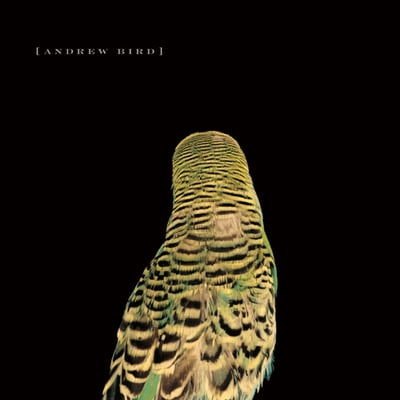
Andrew Bird Armchair Apocrypha
Released Mar 20, 2007 Wegawam Music Co.
Established consensus 20 professional reviews Updated Mar 23, 2026
Broadly positive consensus
Andrew Bird's Armchair Apocrypha announces itself as a quietly restless record, one where whistling, intricate string arrangements and guitar-forward production push songs toward both melancholy and bite.
How ChoruScore worksCritics' Top Tracks
The songs critics returned to most
Dark Matter
7 critic mentions
“When I was just a little boy/I threw away all of my action toys/I became obsessed with Operation.” — Sputnik Music
Imitosis
4 critic mentions
“renders its predecessor little more than a sketch in terms of language” — PopMatters
Armchairs
4 critic mentions
“arrangements like that on "Armchairs", where a piano pushes around chunks of listless violin” — Pitchfork
Full critic consensus
Andrew Bird's Armchair Apocrypha announces itself as a quietly restless record, one where whistling, intricate string arrangements and guitar-forward production push songs toward both melancholy and bite. Across 20 professional reviews, critics largely agree the record rewards patience: its blend of chamber-pop, alt-country pop and off-kilter rock yields moments of virtuosic lyricism and percussive texture that linger long after the first listen.
The critical consensus landed at a 79.95/100 across those 20 reviews, with reviewers consistently praising standout tracks such as “Imitosis”, “Armchairs” and “Fiery Crash” as the album's high points. Critics note Bird's fascination with science, psychology and mortality in opaque, witty lyrics, and they single out “Cataracts” and “Dark Matter” for their haunting restraint and layered orchestration. Praise centers on Bird's arranging skill, his whistling and instrumental virtuosity, plus the record's textured percussion and subtle political and apocalyptic imagery that give the songs emotional weight.
Not everyone was unanimous: some reviews flagged occasional overreach or moments that feel less immediate, but most writers frame those quibbles within a larger appreciation for musical growth and complexity. For readers wondering whether Armchair Apocrypha is worth listening to, the consensus suggests it is a rewarding, if sometimes opaque, work whose best songs - notably “Imitosis”, “Armchairs” and “Fiery Crash” - emerge as essential listening and justify repeated plays.
Track Ratings
How critics rated each track, relative to this album (0-100). Only tracks that made critics feel something are rated.
Fiery Crash
Imitosis
Plasticities
Heretics
Armchairs
Dark Matter
Simple X
The Supine
Cataracts
Scythian Empires
Spare-Ohs
Yawny At the Apocalypse
Get the next albums worth your time.
Critic-backed picks in one clean digest. No clutter.
What Critics Are Saying
Deep insights from 20 critics who reviewed this album

Critic's Take
Andrew Bird approaches Armchair Apocrypha with a rueful, reflective gaze, and the best tracks - like “Fiery Crash” and “Heretics” - carry that haunted, stick-in-your-head quality the reviewer keeps circling back to. He foregrounds Bird's voice and whistling as the album's most powerful instruments, which is why “Fiery Crash” feels like the clearest standout, piling on images until the apocalypse feels inevitable. Meanwhile “Heretics” earns notice for a chorus that lodges itself as stubbornly as pop hooks, making it one of the best songs on Armchair Apocrypha. The piece consistently frames these songs as off-kilter pop that is catchier, in its own terms, than most Top 40 radio, which is the record's persistent, uncanny virtue.
Key Points
-
The best song, "Fiery Crash", is best because its slow-building, haunting imagery crystallizes the album's apocalyptic undercurrent.
Themes
Dr
Critic's Take
Andrew Bird sounds more classical than ever on Armchair Apocrypha, and the best tracks - notably “Fiery Crash” and “Imitosis” - show why his arranging skills matter. There is a brooding, melancholic current throughout, yet the melodies remain undeniably fun, making these the standout songs on Armchair Apocrypha.
Key Points
-
“Fiery Crash” is the album standout for its panegyric drama and concise summation of the record.
Themes

Critic's Take
In his warm, observant way Michael Metivier persuades you that the best songs on Armchair Apocrypha are the sprawling, elegiac “Armchairs” and the nimble, vital “Imitosis” - he treats Bird's arrangements as purposeful vessels rather than virtuosic showboating. Metivier lingers over how “Armchairs” unfolds, calling it a seven-minute centerpiece and a revelation, and he praises “Imitosis” for rendering its predecessor almost lethargic by comparison. The review highlights also the bite of “Plasticities” and the bemused satire of “Scythian Empires” as evidence of Bird's thematic reach, with rhythm and texture serving the songs' emotional aims. Overall Metivier’s voice is admiring and analytic, pointing readers to these tracks as the best tracks on Armchair Apocrypha because they encapsulate Bird’s growth and melodic intelligence.
Key Points
-
The seven-minute “Armchairs” is the album’s emotional centerpiece and best track for its sweeping structure and climactic payoff.
-
The album’s core strengths are purposeful arrangements, thematic focus on time and mortality, and balanced restraint in virtuosity.
Themes

Pr
En
Co

Critic's Take
Andrew Bird’s Armchair Apocrypha rushes ever upward, marrying restless Eno-like exploration with chamber-pop playfulness, and it is the vaulting “Dark Matter” and the wistful “Armchairs” that stand tallest. The record bristles with itchy percussion, Eastern melodies and spectral fuzz, and Bird even sings, at times like Jeff Buckley, which is why listeners asking about the best songs on Armchair Apocrypha will point to “Dark Matter” and “Armchairs”. Dotted with peaks, the album rewards repeated listening for those peaks and the percussive tics that carry them.
Key Points
-
“Dark Matter” is the album’s most celebrated track for its vaulting vocal and peak moments.
-
The album’s core strengths are its eclectic textures, percussive tics and chamber-pop rock arrangements.
Themes

Critic's Take
Andrew Bird writes a record of patient rewards on Armchair Apocrypha, where the best songs reveal themselves over time, especially “Dark Matter” and “Cataracts”. The reviewer insists that initial disappointment gives way to revelation, praising how “Dark Matter” layers guitars and harmonies into something both big and controlled. He highlights “Cataracts” as the most tranquil and beautiful track, noting its sparse arrangement and whistling, and calls out “Simple X” for its electronica calm. These observations answer queries about the best tracks on Armchair Apocrypha by pointing to those standout moments that grow with repeated listens.
Key Points
-
Dark Matter is the best track for showcasing Bird's layered arrangements and dynamic control.
-
The album's core strength is subtlety that rewards repeated listens through intricate instrumentation and whistling.
Themes
Ar

Sp

Q

Critic's Take
Andrew Bird settles into a more guitar-forward texture on Armchair Apocrypha, and the reviewer's voice makes clear why the best tracks on Armchair Apocrypha stand out. He praises “Imitosis” for improving on its earlier incarnation and digging into science and psychology with a sharper hook. He also highlights “Plasticities” as practically power pop, and points to “Scythian Empires” as a subtle, elegant take on the futility of conquest. Even when noting small disappointments like “Heretics”, the critic frames the album as another object of strange and unique beauty from Bird.
Key Points
-
Imitosis is the best track because it reworks earlier material into a faster, sharper, more accomplished song.
Themes

Critic's Take
Andrew Bird sounds improbably adept across instruments on Armchair Apocrypha, and the review singles out moody highlights such as “Dark Matter” and “Cataracts” as the album's best songs. The writer relishes Bird's virtuoso whistling and compares his alt-country pop palette to the likes of Lambchop and My Morning Jacket, explaining why those best tracks feel both mournful and invigorating. In the reviewer’s clipped, teasing tone, the strongest songs are described as spacious, whistled, and emotionally resonant, making them the best tracks on Armchair Apocrypha for listeners seeking melancholy craft.
Key Points
-
The best song is “Dark Matter” for its moody, spacey march and introspective lyric.
Themes

Critic's Take
Andrew Bird sounds rougher and a bit more rock-forward on Armchair Apocrypha, yet the best tracks reveal his strengths as both a wordsmith and instrumentalist. The review fusses most productively over “Armchairs” - where Bird even evokes Jeff Buckley - and the mournful instrumental “Yawny At the Apocalypse” which lets his violin speak plainly. Other highlights like “Scythian Empires” and “Dark Matter” reward close listening, their obscure lyrics and concentrated obsessions standing out as the best songs on Armchair Apocrypha.
Key Points
-
The best song is “Yawny At the Apocalypse” for letting Bird's violin communicate plainly and mournfully.
-
The album's core strengths are its instrumental expressiveness and evocative, if opaque, lyrical imagery.
Themes

Ti
