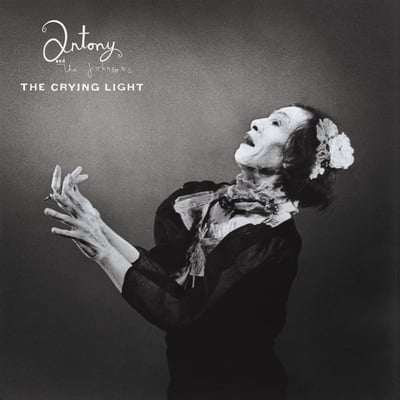
Antony and the Johnsons The Crying Light
Released Jan 19, 2009 Rough Trade
Established consensus 34 professional reviews Updated Aug 25, 2026
Broadly positive consensus
Antony and the Johnsons's The Crying Light frames mortality, gender and the natural world in a hushed, vividly orchestrated suite that critics largely found rewarding.
How ChoruScore worksCritics' Top Tracks
The songs critics returned to most
Her Eyes Are Underneath the Ground
11 critic mentions
“Her Eyes Are Underneath the Ground conflates mortality and motherhood in a way that's both queasy and romantic” — The Guardian
Aeon
8 critic mentions
“Aeon’ – with its lyric “Oh Aeon, my baby boy/Aeon will take care of me” – proves Hegarty can’t quite keep one foot out of his androgynous issues” — New Musical Express (NME)
Epilepsy Is Dancing
8 critic mentions
“But a couple of tracks stand out for their ambivalence or disquiet: "Epilepsy Is Dancing" is exquisite, composed with what Emily Dickinson called the "formal feeling" that follows great pain,” — Uncut
Full critic consensus
Antony and the Johnsons's The Crying Light frames mortality, gender and the natural world in a hushed, vividly orchestrated suite that critics largely found rewarding. Across 34 professional reviews the record earned a 79.68/100 consensus score, with reviewers repeatedly pointing to songs that balance elegiac intimacy and pastoral ambition as the album's strongest moments. Critics consistently praise the chamber arrangements and Antony Hegarty's vocal clarity as the emotional engine of the collection.
Reviewers name several standout tracks when asked what the best songs on The Crying Light are: “Aeon”, “Epilepsy Is Dancing”, “Another World”, “Everglade” and “Daylight and the Sun” recur across reviews as highlights. Praise centers on sparse, piano-led pieces that swell into lush orchestral accents - oboe, horn and strings used as punctuation rather than crowding the voice - and on lyrics that move from mourning to quiet hope and ecological concern. Professional reviews note a throughline of otherworldliness and intimacy, with critics lauding moments where minimalism yields intense emotional payoff.
Not all responses are unanimous: some critics argue the record occasionally turns the voice into spectacle or trades confessional immediacy for grandeur, a tension that leaves parts of the album feeling less immediate than earlier work. Yet the consensus suggests The Crying Light is a mature, often enthralling follow-up that rewards immersion; the best tracks emerge as evidence of Antony's refined songcraft and the record's delicate, haunting power. For readers searching for an informed The Crying Light review, the critical consensus points to a work worth attentive listening.
Track Ratings
How critics rated each track, relative to this album (0-100). Only tracks that made critics feel something are rated.
Her Eyes Are Underneath the Ground
Epilepsy Is Dancing
One Dove
Kiss My Name
The Crying Light
Another World
Daylight and the Sun
Aeon
Dust and Water
Everglade
Another World - Alternate Version
Album Commentary
Get the next albums worth your time.
Critic-backed picks in one clean digest. No clutter.
What Critics Are Saying
Deep insights from 34 critics who reviewed this album
Sp

Ti
En
Al


Critic's Take
Antony and the Johnsons on The Crying Light feels like a collection of tellurian secrets, intimate and multigenerational, with the best tracks, notably “Her Eyes Are Underneath the Ground” and “Aeon”, serving as emotional anchors. Varnau writes in a warm, observant tone that foregrounds Antony Hegarty’s falsetto and the golden-boy arrangements that intensify the intimacy, which is why the best songs on The Crying Light stick - they marry domestic myth and aching vocality. The review highlights “Epilepsy Is Dancing” as a notable listen, but it is the maternal-to-eternal arc from “Her Eyes Are Underneath the Ground” to “Aeon” that defines the album’s strongest moments.
Key Points
-
The best song is rooted in intimate, maternal imagery, with "Her Eyes Are Underneath the Ground" anchoring the album.
-
The album’s core strengths are Antony’s falsetto, Nico Muhly’s arrangements, and a sustained theme of nature and familial communion.
Themes

Critic's Take
Antony and the Johnsons keeps the focus intimate on The Crying Light, mining big spiritual ideas through small musical gestures. The reviewer's voice lingers on how “One Dove” frames rebirth and how “Dust and Water” turns into a droning meditation, making those the best songs on The Crying Light for emotional gravity and restraint. He praises the spareness and precision of arrangements that let moments like the cello on “Her Eyes Are Underneath the Ground” and the horn in “Epilepsy Is Dancing” register as powerful accents.
Key Points
-
The best song, "Dust and Water", is lauded for its droning, hypnotic meditation and haunting vocal delivery.
Themes
Ti

Critic's Take
Antony and the Johnsons’s The Crying Light is, in the reviewer’s phrasing, a haunting and beautiful record that rewards immersion. The best songs here are those that carry the album’s emotional weight - for example “The Crying Light” as a centerpiece of its vulnerability and “Dust and Water” in its quiet weariness. Elias Isquith writes with measured admiration, noting the record’s ethereal mystery and delicate orchestration, which is precisely why listeners searching for the best songs on The Crying Light will find those tracks most indicative of its power.
Key Points
-
The title track embodies the album’s emotional center and delicate orchestration.
-
The album’s core strengths are its haunting mood, Antony’s distinct voice, and intimate orchestral arrangements.
Themes
Re
Critic's Take
Antony and the Johnsons’s The Crying Light finds its best tracks in the meditative center - notably “Another World” and “Epilepsy Is Dancing” - where Antony’s devastating voice and sparse arrangements render you speechless. The record, loosely ecological in focus, swaps Bird-era piano for orchestra but keeps that uncanny hush, so the best songs on The Crying Light feel like private epiphanies rather than pop statements. There is an aching economy to these performances, and when “Another World” reduces to feedback and minor chords it crystallizes the album’s mournful power. This is not easy listening, but those moments make clear why these are the best tracks on the record.
Key Points
-
The best song, “Another World”, is best because its skeletal feedback and minor chords foreground Antony's devastating voice and the album's thematic aftermath.
-
The album’s core strength is its economical orchestration and Hegarty's unforgettable, speechless vocal performances.
Themes
Dr
Critic's Take
Antony and the Johnsons arrives with a sombre, elegiac pulse on The Crying Light, and the best songs - “Epilepsy Is Dancing” and “One Dove” - show Antony balancing yearning with surprising musical detail. Tudor writes with close attention to texture, noting the buoyant oboe and infectious rhythms of “Epilepsy Is Dancing” and the caressing oboe and electronic ripples that complicate “One Dove”. The title-track and “Aeon” reveal charms over time, but it is the songs that marry intimacy and invention that stand out as the best tracks on The Crying Light. The result is an album that feels familiar yet quietly ambitious, its best songs pointing the way forward for Antony's voice and arrangements.
Key Points
-
The best song is highlighted for marrying intimacy and inventive arrangements, notably “Epilepsy Is Dancing” with its infectious oboe and rhythm.
-
The album's core strengths are textured orchestration, lyrical restraint, and a thematic focus on environmental mourning and transcendence.
Themes

Critic's Take
From the first paragraphs Conor McKay returns to Antony Hegarty's strengths, insisting that Antony and the Johnsons on The Crying Light foregrounds that voice in sparse arrangements. He singles out “Her Eyes Are Underneath the Ground” and “Daylight and the Sun” as songs so innately beautiful they are simply breathtaking, making them the best tracks on The Crying Light. McKay's tone is admiring and reflective, noting the record rescues Antony from needless adornment and matches its predecessor step for step. For listeners searching for the best songs on The Crying Light, his verdict is clear - these quiet, string-laced numbers encapsulate Antony's most natural and perfect fit.
Key Points
-
The best song is best because its spare arrangement and Antony's vocal make it transcendent and breathtaking.
Themes

Critic's Take
Antony and the Johnsons sound more extrovert on The Crying Light, and the review points to a trio of best tracks that embody that shift: “Another World”, “Daylight and the Sun” and “Everglade”. Gareth Grundy writes with affectionate clarity about Hegarty swapping inward neurosis for outward concern, and it is these nature-themed ballads that provide the album's spine and emotional reach. The result is presented as growth and poise - the best tracks on The Crying Light show an artist coming into his own, relaxed and confident on stage and record.
Key Points
-
The album's core strength is its shift from introspection to outward, compassionate balladry focused on environmental themes.
Themes

Critic's Take
Antony and the Johnsons’s The Crying Light is a record that turns romanticism toward the natural world while keeping its theatrical pulse, and the best songs on The Crying Light prove it. The reviewer lingers on “Daylight and the Sun” and “The Crying Light”, praising Hegarty’s quixotic vocal on the bombastic moments and calling them engrossing and powerful. Equally compelling are the ominous strings that drive “Her Eyes Are Underneath the Ground” and the sparse, heartbreaking arrangement of “Another World”, which together make clear why these are the album’s standout tracks. The tone remains admiring throughout - an avant-classicist pop statement that covers emotional bases and deserves celebration.
Key Points
-
The best song is a bombastic vocal showcase like "Daylight and the Sun" because of its quixotic vocal and engrossing power.
-
The album’s core strength is marrying theatrical, avant-classicist pop with natural-world romanticism and powerful string arrangements.
Themes

Critic's Take
Antony and the Johnsons return with The Crying Light, a record where Antony's ivory-keyed arrangements and yearning voice make the best tracks quietly devastating. The review repeatedly elevates “One Dove” and “Daylight and the Sun” as subtly nuanced numbers that carry the album's complexities and optimism. Billy Hamilton's tone is admiring and measured, noting jaw-gaping compositions and heart-melting vignettes that mark these songs as the best tracks on the record. Overall, the album feels like a patient, worth-waiting-for continuation of Antony's singular artistry.
Key Points
-
The best song is best because its subtle nuances and optimism crystallize Antony's emotive songwriting.
-
The album's core strengths are piano-led, jaw-gaping compositions and heart-melting vignettes that balance melancholy with hope.
Themes

Critic's Take
In his characteristically baroque, slightly amused tone, Antony and the Johnsons give us The Crying Light, a pastoral, otherworldly record whose best songs - notably “Another World” and “Aeon” - crystallise Antony's mourning and strange grandeur. The review savours the delicate chamber arrangements and Nico Muhly's sparse harmonies while praising “Epilepsy Is Dancing” as exquisitely composed, conjuring Kate Bush and Joy Division in one breath. This is not a record seeking corporate plaudits but one whose standout songs reward patient listening and linger long after the last note fades.
Key Points
-
The best song moments—especially "Aeon" and "Another World"—are powerful because they turn Antony's pastoral imagery into haunting, sustained emotional tones.
-
The album's core strengths are its delicate chamber arrangements, Nico Muhly's sparse harmonies, and an evocative, otherworldly atmosphere.
Themes
mu

Q
Ho
Co
NO
Pr
Th
Gi
Co

Critic's Take
Antony and the Johnsons’s The Crying Light often feels like an elegy and a small-scale chamber spectacle, and the best songs here earn that description. The opener “Her Eyes Are Underneath the Ground” reads as an elegy for Earth, setting the tone, while “Another World” works as a perfect, start-and-stop piano segue between the Philip Glass-y title track and “Daylight and the Sun”. “Everglade” is a stirring, otherworldly ballad that almost touches Celine Dion operatics without tipping into melodrama. These highlights explain why listeners search for the best songs on The Crying Light and why the album’s quieter chamber textures are its strongest assets.
Key Points
-
“Everglade” is the best song for its stirring, operatic balladry that stops just short of excess.
-
The album’s core strength is its elegiac, chamber-music arrangements and Antony’s otherworldly tenor.
Themes

Critic's Take
Antony and the Johnsons sounds more assured on The Crying Light, and the reviewer's eye settles on songs like “Aeon” and “Her Eyes Are Underneath the Ground” as the album's richest moments. The writer praises Antony's renewed songcraft, noting how “Aeon” slowly reveals distortion and swelling strings while its pay-off lyric lands hard. They call the opener “Her Eyes Are Underneath the Ground” bewitching, with a flute arrangement that moves into oddly comforting territory before a heavy string finale. Overall, the tone is celebratory but measured, framing these best tracks as proof that Antony has made a confident step forward.
Key Points
-
The best song is "Aeon" because of its subtle arrangement and emotionally charged lyric payoff.
-
The album's core strengths are improved songcraft, lush orchestration, and a more assured vocal presentation.
Themes
Sp

Critic's Take
Antony and the Johnsons never abandons its preoccupations on The Crying Light, but the best songs - notably “Aeon” and “Everglade” - pry open new registers. The reviewer's voice lingers on how “Aeon” sets Hegarty free, pairing his tremulous delivery with a swaying Steve Cropper guitar to produce an unequivocally fantastic moment. Equally, “Everglade” is praised for its lovely string and woodwind arrangement that reveals a bucolic wonderment. By contrast, songs too close to the past leave a sense of repetition rather than revelation, making the album's highlights stand out all the more.
Key Points
-
‘‘Aeon’ is the best track because it places Antony's voice in an unexpected, freeing context and delivers an unequivocally fantastic climax.
-
The album's core strength is its moments of surprise and rich arrangements that reveal Hegarty can do more than sheer misery.
Themes


Critic's Take
Antony and the Johnsons’s The Crying Light feels like a retreat from the bruised intimacy that made Antony compelling, turning the voice into a spectacle rather than a confessional. The reviewer singles out “One Dove” for its near-absent backing and argues that tracks like “Dust and Water” make Antony seem more robotic than vulnerable. Where I Am a Bird Now balanced frailty and orchestral swells, The Crying Light strips that context away, leaving the songs to plead without the connective tissue that once made them resonate. This shift explains why listeners searching for the best tracks on The Crying Light might still note “One Dove” and “Dust and Water” as central, if flawed, moments.
Key Points
-
“One Dove” is the best-noted track for its stark, near-unaccompanied arrangement that foregrounds Antony’s vocal shift.
-
The album’s core strength, strings and lyrical directness, has been stripped back, making emotional connection harder.