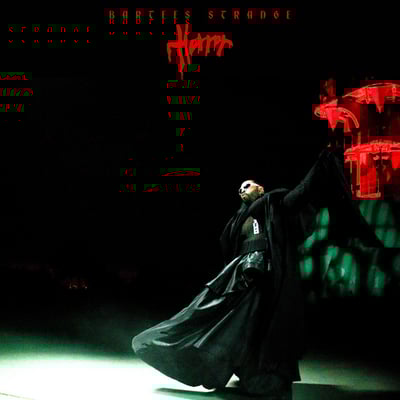
Bartees Strange Horror
Released Feb 14, 2025 4AD
Established consensus 7 professional reviews Updated Aug 27, 2026
Broadly positive consensus
Bartees Strange's Horror arrives as a restless, emotionally direct collection that folds yearning and anxiety into a wide palette of styles.
How ChoruScore worksCritics' Top Tracks
The songs critics returned to most
17
2 critic mentions
“17 is one of the most powerful songs, from the cutting line "The first time I felt impending doom / Was realizing I’m too Black for the room" to the big, Bruce Springsteen -style finale.” — PopMatters
Loop Defenders
2 critic mentions
“The songs with the most overt hip-hop influence, "Norf Gun", "Loop Defenders", and "Hit It Quit It" are all bangers.” — PopMatters
Backseat Banton
2 critic mentions
“The closer, "Backseat Banton", has an anthemic quality that would fit right in as the closer on a Hold Steady record.” — PopMatters
Full critic consensus
Bartees Strange's Horror arrives as a restless, emotionally direct collection that folds yearning and anxiety into a wide palette of styles. Critics point to the record's quiet-loud dynamics and confessional lyrics as its core: moments of fragile intimacy sit beside jagged bravado, while genre-mashing production moves from deep-house thrust to Prince-era guitar skronk.
Across seven professional reviews the critical consensus lands positive, with a 79.29/100 score that reflects both praise and reservation. Reviewers consistently single out standout tracks as evidence of the album's strengths: “Loop Defenders” and “17” earn repeated mention for their combustible energy and emotional clarity, while “Wants Needs” and “Backseat Banton” are cited as pivotal highlights that crystallize Strange's blend of vulnerability and muscle. Critics note quieter cuts such as “Baltimore” and “Lie 95” as revealing the record's intimate side, and reviewers consistently praise Strange's lyricism and identity-driven narratives even when production choices feel uneven.
The reviews present a nuanced verdict: professional reviews applaud the ambition and emotional candor that make several tracks essential, yet some critics find the album uneven in cohesion and production refinement. For readers searching a clear answer to "is Horror good" the consensus suggests it's worth listening to for its standout songs and bold genre-blending, even if the full collection feels uneven at times. Below, the detailed reviews map where those highs and lows land within Strange's evolving catalog.
Track Ratings
How critics rated each track, relative to this album (0-100). Only tracks that made critics feel something are rated.
Too Much
Hit It Quit It
Sober
Baltimore
Lie 95
Wants Needs
Lovers
Doomsday Buttercup
17
Loop Defenders
Norf Gun
Backseat Banton
Get the next albums worth your time.
Critic-backed picks in one clean digest. No clutter.
What Critics Are Saying
Deep insights from 7 critics who reviewed this album

Critic's Take
Bartees Strange’s Horror stakes its claim through intimate reckonings and genre leaps, and the best songs on Horror make that tension sing. The review points to “Sober” and “17” as standout tracks, while the closing rush of “Backseat Banton” is recommended to listen to - these songs crystallise the record’s blend of vulnerability and muscular production. The voice throughout is admiring and exacting, highlighting how the album’s acoustic moments in “Baltimore” and the deep-house thrust of “Lovers” both serve the themes of fear and yearning. In short, the best tracks on Horror are those that let Strange shift styles without losing emotional focus.
Key Points
-
The best song is impactful because it pairs candid identity lyrics with a powerful musical moment, exemplified by "17".
-
The album’s core strengths are its genre-hopping production and pervasive vulnerability, which make tracks like "Sober" and "Backseat Banton" sing.
Themes


Critic's Take
Bartees Strange’s Horror keeps doing what he does best: marrying genre-hopping pop with confessional lyricism, and the best songs on Horror prove it. The record’s big hooks land hardest on “Wants Needs”, which functions as the album’s fulcrum, and on “Sober”, whose mix of power and vulnerability is irresistible. quieter moments like “Baltimore” and “Lie 95” show his softer, aching side, while the hip-hop-leaning bangers “Norf Gun” and “Hit It Quit It” push the energy. Ultimately, the best tracks on Horror confirm Strange’s knack for making expansive, personal songs that hang together as a cohesive whole.
Key Points
-
Wants Needs is the album’s explosive centerpiece, focused on audience and stakes.
-
Horror’s strength is its melding of genre-hopping pop and confessional lyrics into cohesive, hooky songs.
Themes


Th
Critic's Take
Bartees Strange’s Horror is a restless record where the best tracks - “Loop Defenders” and “Baltimore” - trade jagged bravado for fragile intimacy, and those moments land hardest. The reviewer admires the Prince-at-CBGB fury of “Loop Defenders”, and the tension in “Baltimore” where distorted soloing meets vulnerable introspection. There is praise for guitar flashes on “Wants Needs” and frustration that many songs never quite cohere into compelling whole. Overall the album is uneven but contains treat-like highs that make it worth revisiting.
Key Points
-
The best song is "Loop Defenders" because its gloriously savage energy and Prince-like fury stand out.
-
The album’s core strengths are jagged, genre-mashing moments and striking tension between noise and vulnerability.