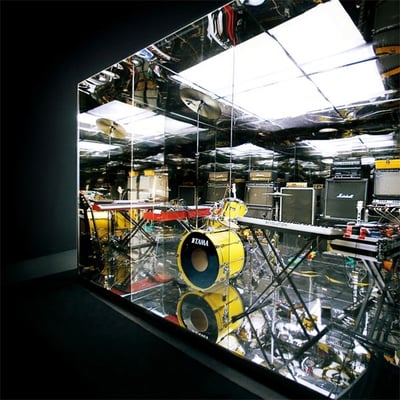
Battles Mirrored
Released Apr 25, 2007 Warp Records
Established consensus 21 professional reviews Updated Mar 23, 2026
Broadly positive consensus
Battles's Mirrored detonates with calibrated chaos and giddy precision, a record where machine-like rhythms collide with playful melody to memorable effect.
How ChoruScore worksCritics' Top Tracks
The songs critics returned to most
Atlas
6 critic mentions
“what is surely the album’s standout track and former NME Track Of The Week, ‘Atlas’.” — New Musical Express (NME)
Tij
3 critic mentions
“Penultimate piece ‘TIJ’ is something of an icing on the cake arrangement” — Drowned In Sound
Tonto
3 critic mentions
“Tonto” rocks, hard, but about four minutes in, a pentatonic synth-line pops out” — PopMatters
Full critic consensus
Battles's Mirrored detonates with calibrated chaos and giddy precision, a record where machine-like rhythms collide with playful melody to memorable effect. Across professional reviews critics point to a handful of tracks that crystallize the album's appeal, and the consensus suggests that Mirrored is both a technical showcase and an unexpectedly danceable collection.
Critics consistently praise the single “Atlas” as the record's centerpiece, calling it a floor-filler and an exercise in robot-rock hookcraft; other recurring standouts include “Tij”, “Tonto” and “Rainbow”, which reviewers identify as the best songs on Mirrored for their combination of virtuosic arrangement and immediate momentum. Across 21 professional reviews the album earned an 80.24/100 consensus score, with praise focused on its rhythmic dynamism, machine-code guitar hooks, and the way repetition and mutation yield melodic payoff. Many critics note the balance between technical dexterity and accessibility - virtuosity that rarely feels sterile because the band keeps fun and danceability front and center.
Not all responses are uniformly ecstatic; some reviewers admire the album's invention while warning that its relentless intricacy can frustrate listeners seeking traditional songcraft. Still, the dominant narrative among music critics highlights Mirrored as a landmark of experimental rock that blends electronics, math-rock precision, and rave-tinged propulsion. For anyone searching for a Mirrored review, the critical consensus suggests this is a record worth repeated listens, especially to hear how tracks like “Atlas” and “Tij” reveal new mechanical pleasures on each pass.
Track Ratings
How critics rated each track, relative to this album (0-100). Only tracks that made critics feel something are rated.
Race - In
Atlas
Ddiamondd
Tonto
Leyendecker
Rainbow
Bad Trails
Prismism
Snare Hangar
Tij
Race - Out
Get the next albums worth your time.
Critic-backed picks in one clean digest. No clutter.
What Critics Are Saying
Deep insights from 21 critics who reviewed this album

Critic's Take
Battles sound like a bio-mechanical experiment turned pop, and on Mirrored the best songs - notably “Atlas” and the paired “Race - In” / “Race - Out” - propel the record into addictive territory. The reviewer revels in the album's machine-code guitar hooks and dehumanised hums, arguing that repeated listens let the unobvious rhythmic logic sink in. Praise is concentrated on “Atlas” for its wordless, dehumanised vocals and on the bookending races for how themes are reprised and mutated. Terrific stuff, in short, and these tracks are the clearest highlights of Mirrored.
Key Points
-
The best song is “Atlas” because of its dehumanised, wordless vocals and memorable single status.
-
The album's core strengths are its machine-like guitar hooks, electronics, and the rewarding repetition and mutation of motifs.
Themes

Critic's Take
Battles' Mirrored genuinely sells its best tracks as impossible little machines, and the best songs - “Atlas” and “Rainbow” - show that off with gleeful, hyperactive precision. Jess Harvell's prose delights in the way “Atlas” converts a shuffling stomp into a steroidal, robot rock signature, while “Rainbow” spins into dizzying Rube Goldberg keyboard and drum corkscrews that feel cartoonishly ecstatic. The record's charms are human and computer in equal measure, so the best tracks on Mirrored stand out because they make virtuosity sound like play, and they make technology sing with nonsense glee. Overall, the album's top moments reward repeat listens by revealing microscopic parts that assemble into towering hooks and improbable melodies.
Key Points
-
The best song, "Atlas", is the perfect introduction because its stomping beat and processed vocals crystallize Battles' man-machine aesthetic.
-
The album's core strengths are virtuosic, tightly arranged microscopic parts and playful, heavily processed vocals that make technology feel alive.
Themes
Dr
Critic's Take
Battles's Mirrored is a restless, ecstatic record where the best songs - notably “Atlas” and “Ddiamondd” - make you dance in your chair. Mike Diver's prose revels in the album's glam-rock stomps and alien laser buzzes, insisting these tracks are both dazzlingly technical and irresistibly immediate. He frames “Atlas” as the year's best dance single while crediting “Ddiamondd” with spiralling builds and crashes that mark it out as a highlight. The result is an LP of convulsive, handclap-ready compositions that cohere into a single, thrilling listening experience.
Key Points
-
The best song is “Atlas” because the reviewer calls it the best dance single of the year and lauds its seven-minute mix.
-
The album’s core strength is marrying technical virtuosity to immediate, danceable compositions that cohere into a single thrilling LP.
Themes
Ti


Pr
Ti

Critic's Take
In his energetic appraisal Dan Raper argues that Battles' Mirrored rewards repeated listens, singling out the pounding immediacy of “Tij” and the bruising joy of “Tonto” as the album's best songs on Mirrored. He writes in a conversational, slightly academic tone that highlights the band’s marriage of tech and flesh, praising the virtuosic arrangements that let tracks like “Tij” rock you while also revealing electronic cunning. Raper’s voice balances enthusiasm and analysis, noting how playful melodic touches make the best tracks on Mirrored both visceral and surprising.
Key Points
-
“Tij” combines hulking crescendos and electronic manipulation to deliver the album’s most visceral payoff.
-
Mirrored’s core strength is its blend of virtuosic, math-rock complexity with playful melodic hooks and tech-enhanced vocals.
Themes

Critic's Take
Battles sound like brainy show-offs who actually want you to have a good time, and on Mirrored that intent is clearest on “Atlas” and “Race - In”. Pattison revels in the album’s gleeful mash of glam bounce and schaffel rhythm, calling “Atlas” the record’s standout and noting its floor-filler charm. He also highlights how opener “Race - In” folds waterfall guitars and jolting bells into tense climaxes, showing why these are the best tracks on Mirrored. The tone stays admiring throughout, praising technical flair that never quite tips into self-indulgence, which is why listeners hunting for the best songs on Mirrored should start with “Atlas” and “Race - In”.
Key Points
-
“Atlas” is the standout for its glam bounce and schaffel-inspired rhythm, making it the album's best track.
-
Mirrored’s core strength is expert musicianship married to playful, dance-inflected experimentation that rarely tips into excess.
Themes
mu
Sp
Co


Ir
Critic's Take
Battles's Mirrored is driven by machine-like momentum and moments of jaw-dropping invention, and the best songs on Mirrored are the ones that let the rhythm breathe. The album's centrepiece, “Atlas”, lays down a pulsating tribal clatter around John Stanier's fluid drumming and holds that dynamism for seven minutes in a way that marks it as one of the best tracks on Mirrored. Elsewhere the simple dexterity of “Leyendecker” and the tightly spun “Tonto” provide compact, high-wire thrills - concise feats of technique that reward repeated listens. Even the crackle of “Race - In” makes a distinctive early impression, seeding the record with punchy ideas that the band then expands and complicates.
Key Points
-
The best song is “Atlas” because it is labelled the album's centrepiece and sustains a pulsating, tribal dynamism.
-
Mirrored's core strengths are tight rhythmic invention, technical dexterity, and concentrated moments that translate live energy into recorded form.
Themes
Critic's Take
Battles sound like they have one foot in hard rock and another in leftfield pop, which is why on Mirrored the best tracks feel like collisions: the single “Atlas” slams that Motorhead-on-Stereolab image into a thrilling, propulsive hook, and “Leyendecker” is the crisp, quasi-rave vocalled moment that shows they like to have fun. The record bristles with artful muscle and playful oddities, so when you search for the best songs on Mirrored start with “Atlas” and “Leyendecker” as clear entry points. The album never settles, which is part of its appeal and its occasional frustration, but those tracks make the case for Battles' oddball pop ambition.
Key Points
-
The best song is “Atlas” because the reviewer singles it out as the propulsive single that crystallizes the album's hybrid sound.
-
The album's core strengths are its blend of hard-rock power and experimental, dance-inflected avant-rock textures.
Themes
