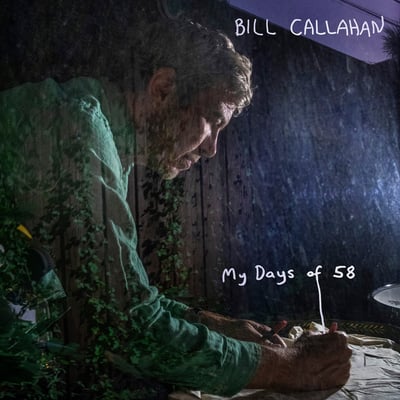
Bill Callahan My Days of 58
Released Feb 27, 2026 Drag City
Established consensus 6 professional reviews Updated Feb 27, 2026
Broadly positive consensus
Bill Callahan's My Days of 58 arrives as a quietly observant record that turns private anecdotes into plainspoken, resonant songs.
How ChoruScore worksCritics' Top Tracks
The songs critics returned to most
The Man I'm Supposed To Be
6 critic mentions
“Then "The Man I’m Supposed to Be" starts eerie and slow, sounding like those early Smog releases.” — Northern Transmissions
Why Do Men Sing
5 critic mentions
“I had a bad dream that I was gonna die/My spirit guide came and showed me where I was to hide,” — Slant Magazine
Pathol O.G.
5 critic mentions
“To kick off his new song "Pathol O.G.," Bill Callahan speak-sings "you know, I've been writing songs and singing them nigh on 30 years/I like it/I love it.” — Northern Transmissions
Full critic consensus
Bill Callahan's My Days of 58 arrives as a quietly observant record that turns private anecdotes into plainspoken, resonant songs. Across professional reviews critics consistently point to narrative restraint and laconic humor as the album's strengths, and an 82.67/100 consensus score compiled from six reviews underscores a broadly favorable critical reception. Standout tracks repeatedly named by reviewers include “Why Do Men Sing”, “The Man I'm Supposed To Be” and “Pathol O.G.”, with “Empathy” and “Computer” also singled out for emotional heft and thematic clarity.
The critical consensus highlights recurring themes of legacy and intergenerational trauma, contemplative storytelling, and a roots-tinged folk-Americana palette. Reviewers praise how “Why Do Men Sing” functions as a sprawling opener that frames repetition and uncertainty, while “The Man I'm Supposed To Be” and “Pathol O.G.” exhibit Callahan's workmanlike consistency and knack for turning observation into melody. Critics also note moments of tenderness in “Empathy” and sly warnings about technology in “Computer”, framing the record as a study in mortality, masculinity and nonattachment delivered with minimalism and intimacy.
While some reviews emphasize the album's playful spontaneity and live immediacy, others register a cooler, more laboratory-like restraint, producing a balanced critical picture rather than unanimity. Across six professional reviews critics agree that songwriting craft and conversational delivery make My Days of 58 worth hearing for those tracking Callahan's long career; the record feels like another thoughtful chapter in his ongoing examination of family, aging and the small revelations of ordinary life.
Track Ratings
How critics rated each track, relative to this album (0-100). Only tracks that made critics feel something are rated.
Why Do Men Sing
The Man I'm Supposed To Be
Pathol O.G.
Stepping Out For Air
Lonely City
Empathy
West Texas
Computer
Lake Winnebago
Highway Born
And Dream Land
The World is Still
Get the next albums worth your time.
Critic-backed picks in one clean digest. No clutter.
What Critics Are Saying
Deep insights from 7 critics who reviewed this album

Critic's Take
Bill Callahan sounds at once familiar and quietly revelatory on My Days of 58, where the best tracks - “The Man I’m Supposed To Be” and “Pathol O.G.” - showcase his workmanlike consistency and contemplative storytelling. The reviewer’s voice lingers on how Callahan turns thought into melody, and on “Stepping Out For Air” the tight-knit ensemble sharpens his forthright delivery. These songs feel like conversations with an old friend, each one a serenely narrated anecdote that proves why they stand out on the record.
Key Points
-
The best song is "Pathol O.G." because its career-reflective lyric crystallizes Callahan's life-and-art synthesis.
-
The album's core strengths are contemplative storytelling and a tight ensemble that makes the music more forthright.
Themes
No
Critic's Take
I hear on Bill Callahan's My Days of 58 a relaxed, empathetic record that still thrills at its peaks - notably “Why Do Men Sing” and “Pathol O.G.”. The reviewer praises the sprawling master class of “Why Do Men Sing” and highlights the opening of “Pathol O.G.” as proof Callahan still loves writing and singing. The album is often playful yet teetering on loneliness, with Jim White's brushes and a panoply of instruments making the best tracks resonate. Buy it for the songwriting, stay for the moments that recall early Smog and Callahan's unmistakable voice.
Key Points
-
The best song is "Why Do Men Sing" because the reviewer calls it a "sprawling master class in songwriting."
-
The album's core strengths are relaxed, empathetic songwriting and inspired instrumental collaborations that recall early Smog.
Themes
mu

Critic's Take
Bill Callahan's My Days Of 58 finds its best tracks in the songs where his human sketches insist on feeling, notably “Computer” and “Empathy”. There's also praise for the haunted charm of “The Man I'm Supposed To Be” and the dreamlike reach of “Why Do Men Sing?”, all of which make clear why listeners ask about the best songs on My Days Of 58.
Key Points
-
The best song is 'Computer' because its prophetic warning about technology crystallizes the album's humanist core.
-
The album's strengths are vivid human detail, warm room ambience, and an intimate blend of domestic tenderness and spiritual vision.
Themes

Critic's Take
Bill Callahan sounds unsentimental on My Days of 58, his voice more observer than confessional, which makes the best tracks - “Why Do Men Sing?” and “The World Is Still” - quietly revelatory. The opener “Why Do Men Sing?” frames repetition and the unknown with stark images, drums and guitar fleshing out what the lyrics leave unanswered. By the closer, “The World Is Still”, breathy horns and a crystalline line about permanence give the album a composed, inward finish. Callahan’s knack for laconic, laboratory-like lyricism makes these songs the standout moments on an album preoccupied with nonattachment and the small revelations of ordinary life.
Key Points
-
The opener “Why Do Men Sing?” is best for how it frames the album’s themes with stark imagery and unsentimental music.
-
The album’s core strengths are laconic, observational lyricism and a restrained, improvised instrumental palette that foregrounds nonattachment.
Themes

Critic's Take
In his quietly wry way, Bill Callahan confronts mortality and family legacy on My Years of 58, making the best tracks - “Why Do Men Sing” and “Empathy” - feel like private confessions. The opener “Why Do Men Sing” sets the tone with that deadpan, jokey reckoning, while “Empathy” delivers the album's emotional center, a bittersweet father-son reckon. Even the rollicking “Stepping Out for Air” wears its roots-rock comfortably, recalling honky-tonk without pretense. Throughout, Callahan's plainspoken baritone and living-room arrangements turn small domestic lines into resonant statements about legacy and mortality.
Key Points
-
The opener “Why Do Men Sing” is the best for setting the album's wry, mortality-focused tone.
-
The album's core strengths are its plainspoken intimacy, conversational baritone, and rootsy arrangements.
Themes
KL
Critic's Take
In his patient, conversational way Thomas Blake finds the best tracks on My Days of 58 in songs that ask rather than answer, chief among them “Why Do Men Sing” and “The Man I’m Supposed To Be”. Blake revels in Callahan's playful, melancholic shifts - from wandering acoustic folk to squally guitar improv - which make “Why Do Men Sing” a seven-minute tour de force and “The Man I’m Supposed To Be” a gleefully dark centrepiece. He praises quieter moments too, noting the tenderness of “Empathy” and the feather-light charm of “Lake Winnebago”, and argues the album's blend of humour, wisdom and live spontaneity marks these as the record's standout songs.
Key Points
-
The best song is the expansive, seven-minute “Why Do Men Sing” because of its wide-ranging structure and wit.
-
The album’s core strengths are its embrace of uncertainty, live spontaneity, collaborative playing, and a mix of humour and tenderness.