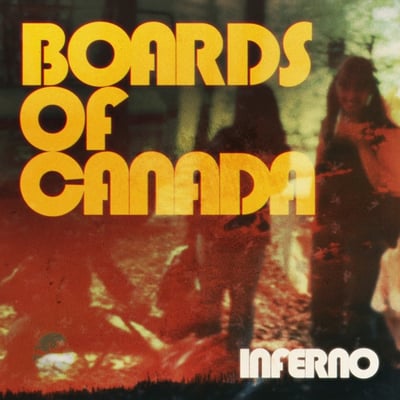
Boards of Canada Inferno
Released May 29, 2026 Warp Records
Established consensus 18 professional reviews Updated Jun 24, 2026
Broadly positive consensus
Boards of Canada's Inferno arrives as a ritualistic, widescreen statement that threads biblical imagery, retro-futurist synths and haunted nostalgia into one of the duo's most vividly cinematic records.
How ChoruScore worksCritics' Top Tracks
The songs critics returned to most
Prophecy At 1420 Mhz
10 critic mentions
“Prophecy at 1420 MHz" - the lead single from the album - could well be the key” — Beats Per Minute
I Saw Through Platonia
4 critic mentions
“Album closer "I Saw Through Platonia" is probably/possibly/definitely the best track Boards of Canada have ever produced.” — Beats Per Minute
Blood In The Labyrinth
3 critic mentions
“track titles like ‘Naraka’ (the Buddhist realm of suffering ), ‘Blood In The Labyrinth’, and ‘All Reason Departs’ make the thematic territory bracingly clear.” — Clash Music
Full critic consensus
Boards of Canada's Inferno arrives as a ritualistic, widescreen statement that threads biblical imagery, retro-futurist synths and haunted nostalgia into one of the duo's most vividly cinematic records. Across 18 professional reviews the critical consensus lands on the positive side, the record earning an 80.61/100 consensus score across those reviews as critics weighed its apocalyptic atmosphere, timestretched ambiences and vocal manipulation against occasional accusations of sounding safely retrospective.
Reviewers consistently single out “Prophecy At 1420 Mhz” as the album's declarative centrepiece, a nervy, anthemic cut listeners name when searching for the best songs on Inferno. Other repeatedly praised tracks include “Hydrogen Helium Lithium Leviathan”, “I Saw Through Platonia” and “Father And Son”; critics note that these standout tracks balance ritual samples and analogue warmth with sharper production and thematic urgency. Across professional reviews the record's recurring themes - religion and faith, apocalypse and revelation, memory versus present, and retro-futurist sound design - are cited as the source of its power, giving many moments the feel of a hymn and a warning.
Nuance threads through the reception: several critics hail Inferno as a pinnacle of the Hexagon Sun's cinematic scope and a return to the mysterious, while a minority fault its reliance on hauntological textures and occasional tedium. Taken together, the critic consensus suggests Inferno is worth listening to for anyone drawn to moody electronica and ritualised ambience; its best tracks - especially “Prophecy At 1420 Mhz”, “Hydrogen Helium Lithium Leviathan” and “I Saw Through Platonia” - provide the clearest entry points into the record's dark, revelatory world.
Below, read the full reviews and track-by-track takes that explain why critics praised these songs and where opinions diverge.
Track Ratings
How critics rated each track, relative to this album (0-100). Only tracks that made critics feel something are rated.
Introit
Prophecy At 1420 Mhz
Hydrogen Helium Lithium Leviathan
Age Of Capricorn
Father And Son
Somewhere Right Now In The Future
Naraka
Acts Of Magic
Memory Death
The Word Becomes Flesh
Into The Magic Land
Blood In The Labyrinth
Deep Time
All Reason Departs
Arena Americanada
The Process
You Retreat In Time And Space
I Saw Through Platonia
Inferno
Get the next albums worth your time.
Critic-backed picks in one clean digest. No clutter.
What Critics Are Saying
Deep insights from 19 critics who reviewed this album
mu
Go
Critic's Take
Boards Of Canada return with Inferno, an album whose best tracks show why they remain a wonderful enigma. The opening “Introit” establishes that time-standing-still mood, while “Prophecy At 1420 Mhz” unfolds like three or four tunes rolled into one, haunted and gripping. “Hydrogen Helium Lithium Leviathan” feels timeless, a Kraftwerk-by-Eno shimmer that proves this is not background music. And “You Retreat In Time And Space” is almost too beautiful to bear, evoking churches and a palpable spirit that holds you.
Key Points
-
“Prophecy At 1420 Mhz” is the album’s most gripping track, with haunting melodies and layered sections that reward repeated listens.
-
The album’s strengths are its nostalgic, cinematic textures and emotional, spiritually evocative moments that hold the listener’s attention.
Themes
St
Critic's Take
In a commanding return, Boards of Canada make Inferno feel like a widescreen parable, with tracks such as “Prophecy At 1420 Mhz” and “Somewhere Right Now In The Future” standing out as the album's clearest signposts. The reviewer's voice lingers on how “Prophecy At 1420 Mhz” frontloads the record with an attention-grabbing, almost theatrical punch, and how “Somewhere Right Now In The Future” closes Act 1 with a plaintive, ambiguous interlude. There is praise for the duo's gift for melody and cinematic scope, and a steady undercurrent of dread that makes these songs feel both familiar and unnerving. Overall the best tracks on Inferno are the ones that marry BoC's old comforts with larger, more dramatic gestures.
Key Points
-
The best song is “Prophecy At 1420 Mhz” because it frontloads the album with a theatrical, attention-grabbing punch.
-
Inferno's core strengths are cinematic scope, melodic craft, and a persistent atmosphere of dread that ties the narrative together.
Themes

Critic's Take
Boards of Canada have made an album that feels like a prescient document of the ruinous now, and on Inferno the best tracks crystallise that intent. The record’s high points, notably “Hydrogen Helium Lithium Leviathan” and the album-closing “I Saw Through Platonia”, balance reverence for their past with a newfound purpose, one gorgeous and shimmery, the other quintessentially vintage Boards. The lead single “Prophecy at 1420 MHz” serves as an unlocking key to the album’s science-fiction strains and political urgency, while “Naraka” injects a swagger missing from their earlier introversion. Taken together, these songs make Inferno feel like the pinnacle of their output and a pointed statement of intent - the best songs on Inferno are both nostalgic and urgently of the present.
Key Points
-
The album closer "I Saw Through Platonia" is singled out as the best and most gorgeous summation of the record.
-
Inferno’s strengths are its thematic focus on memory and humanity, a cleaner production and a purposeful, prescient tone.
Themes

Critic's Take
Boards of Canada return with Inferno, a seventy-minute odyssey that feels both occult and oddly consoling, and it is tracks like “Naraka” and “Blood In The Labyrinth” that most vividly enact that dark, cinematic thrust. Sam Walker-Smart writes with the same reverent, slightly conspiratorial tone that has always surrounded the Hexagon Sun, noting that the record is their most explicitly occult since Geogaddi while still retaining a warm, womb-like intimacy. The best songs on Inferno are those expansive passages that transport you past the stratosphere - moments exemplified by “Naraka” and “Blood In The Labyrinth”, which balance dread and comfort with uncanny precision. This is not mere nostalgia; it is a deeply physical, unsettlingly alive album, and its standout tracks earn the wait with a rare, trance-state authority.
Key Points
-
The best song moments (notably "Naraka") crystallize the album's blend of dread and comfort, making them the record's emotional apex.
-
Inferno's core strength is its cinematic, trance-like sequencing that balances uncanny menace with womb-like warmth.
Themes
No

Pr

Critic's Take
Boards of Canada return with Inferno, an album whose best tracks — especially “Prophecy At 1420 Mhz” and “Age Of Capricorn” — condense their ritualistic, hexagon-inflected world-building into thrillingly large-scale pieces. Philip Sherburne’s prose privileges texture and detail, and he treats “Prophecy At 1420 Mhz” as the platonic ideal of a Boards track, its chiseled rock beat and plangent guitar lead blown up to gargantuan proportions. Similarly, “Age Of Capricorn” is singled out for its pistoning pianos and unsettling sampled prayer, a vivid example of how the duo marries menace and melody. The result is an album that feels both familiarly nostalgic and newly expansive, making these songs the best tracks on Inferno for listeners seeking the duo at their most ambitious.
Key Points
-
“Prophecy At 1420 Mhz” is the best song because it distills Boards of Canada’s textures into a towering, rock-inflected anthem.
-
The album’s core strengths are its meticulous sound design, evocative samples, and a balance of rhythm-forward tracks and gauzy interludes.
Themes

Critic's Take
In his thoughtful, slightly academic tone, Grant Sharples frames Boards of Canada’s Inferno as an album about time, memory, and ritual, singling out tracks that make that case most vividly. He praises the gauzy closer “I Saw Through Platonia” for its heartbeat-like repetition and ambient synth pads that confer an aura of finality and beginning. Mid-album highlights like “Into The Magic Land” are lauded for resuscitating modulated guitars and delivering on their titular promise, while “Naraka” is dubbed a stately, foreboding five-minute epic that fuses minor-key chimes and prayerlike recitation. The review positions these as the best tracks on Inferno, explaining why they crystallize the record’s themes of religion and temporal flux.
Key Points
-
The best song, "I Saw Through Platonia", is the album’s emotional and thematic summation, delivering heartbeat repetition and ambient closure.
-
Inferno’s core strengths are its weaving of time, religion, and cosmic imagery into dense, evocative electronic compositions.
Themes

Critic's Take
Boards of Canada's Inferno feels knowingly of a time yet stubbornly timeless, and the best songs are those that marry nostalgia with muscle. The nervy pulse of “Prophecy At 1420 Mhz” becomes anthemic in ways the duo rarely let themselves be, its needling riff and treated voice staking a claim as one of the best tracks on Inferno. Equally, “Introit” and “You Retreat In Time And Space” exemplify BoC's skill at limpid lullabies and trip-hop moodcraft, making them among the standout songs listeners will search for when wondering the best tracks on Inferno. The record's environs are lush and cinematic, so these highlights read as both nods to the Nineties and proof the duo still command atmosphere and restraint.
Key Points
-
“Prophecy At 1420 Mhz” stands out for its nervy, anthemic pulse and treated dystopic vocals.
-
The album's core strength is its lush, cinematic nostalgia that updates Nineties trip-hop with controlled atmosphere.
Themes

Critic's Take
Boards of Canada's Inferno foregrounds voice and ritual in ways that make its best songs feel urgent rather than merely nostalgic. The reviewer's ear keeps returning to “Father and Son” for its sampled dialogue spiral and to “The Process” for the unnervingly calm talk of atrocities, and those tracks crystallize why listeners ask about the best songs on Inferno. At the same time, BOC staples like “Hydrogen Helium Lithium Leviathan” and the springy “Arena Americanada” show the duo balancing classic textures with sharper, more direct production. The result is a 70-minute record whose standout moments reward close listening and make clear which tracks are the album's true highlights.
Key Points
-
The best song, "Father And Son," is best because its sampled documentary argument anchors the album's themes of faith and paranoia.
-
Inferno's core strengths are its evocative sampling, ritualistic textures, and a more direct, sharper production that heightens dread.
Themes

Critic's Take
In this review Lewis Wade finds the best songs on Inferno to be ones where Boards of Canada’s knack for warped melody and rhythmic clarity meet terrifying texture - notably “The Word Becomes Flesh” and “Hydrogen Helium Lithium Leviathan”. He praises “The Word Becomes Flesh” as a "masterclass in layering" that forges "a groove from anything", and celebrates the fragmented snatches on “Hydrogen Helium Lithium Leviathan” dovetailing into "cut-glass beats". The reviewer frames these tracks as the album's clearest triumphs, songs that turn unsettling fragments into unexpectedly satisfying grooves while matching the record's apocalyptic mood.
Key Points
-
The Word Becomes Flesh is best for its masterful layering and ability to build danceable darktronica from fragments.
-
Inferno's core strength is turning unsettling, decaying fragments and vocal manipulations into cohesive, apocalyptic soundscapes.
Themes


Critic's Take
In a voice that leans equal parts reverent and analytical, Boards of Canada on Inferno deliver moments of pure, eerie nostalgia and cinematic scope. The review highlights “Hydrogen Helium Lithium Leviathan” as a synth-heavy retro thriller cue and crowns “Father And Son” the album standout for its explicit, God-haunted motifs, while the slowly rising ambient swell of “Deep Time” evokes a vast celestial awakening. Keating’s language balances admiration with measured comparison to past work, arguing that the best tracks on Inferno are those that fuse the duo’s trademark wistfulness with a clearer thematic purpose. For listeners searching for the best songs on Inferno, the evidence points to “Father And Son”, “Hydrogen Helium Lithium Leviathan”, and “Deep Time” as the record’s clearest high points.
Key Points
-
The best song is "Father And Son" because its explicit religious lyrics make it the album standout and anchor the theme of creation.
-
Inferno's core strengths are its nostalgic, cinematic textures and thematic cohesion around creation and biblical imagery.
Themes
Fa
Critic's Take
Boards of Canada return on Inferno with the same phantasmic electronics that still spook, and the best tracks show why the duo remain masters of mood. The icy robotic narrator on “Prophecy At 1420 Mhz” is the album's standout, a booming dystopian voice that prepares the devout for battle while sending chills. “Deep Time” dwells in liturgical communion, a cavernous ambient wander that will gun straight into longtime fans' affections. Elsewhere, “Arena Americanada” and “Blood In The Labyrinth” provide nocturnal menace and kaleidoscopic instrumentation that keep Inferno from resting in one place.
Key Points
-
The robotic narrator and icy tone make “Prophecy At 1420 Mhz” the album's standout.
-
Inferno's strengths are its evocative hauntological textures and varied instrumentation that avoid stale repetition.
Themes
Th
Critic's Take
I approached Boards of Canada's Inferno as a listener still finding their way through IDM, electronica and ambient music, and the review reads as a personal reckoning rather than a track-by-track eulogy. The reviewer invokes the breakthrough of Music Has the Right to Children to situate Inferno historically, which frames the best songs on Inferno as continuations of that lineage rather than radical departures. Because the review does not name or analyse any individual tracks from Inferno, there are no reviewer-provided standouts such as “Inferno” or “Introit” to elevate, leaving impressions of the album tied to context and memory rather than specific songs.
Key Points
-
No individual tracks are discussed, so no best song can be identified from this review.
-
The review's strength is contextual: it places Inferno in the lineage of IDM, electronica and ambient rather than evaluating specific songs.
Themes

Critic's Take
In his cautious, slightly scornful tone Ben Beaumont-Thomas argues that Boards of Canada return on Inferno still conjures that signature corrupted nostalgia but too often feels stuck in the past. He singles out beatless pieces as the album's best songs - “Age Of Capricorn” and “The Process” - praising their hymnal ambient sweep and bewildering, watery textures while noting the highs are fleeting. He also highlights short instrumental moments like “Acts Of Magic” as evidence the duo's evocative power remains, even if much of the record is dour and pedestrian. The review reads as admiration leavened with impatience, answering searches for the best tracks on Inferno with those quieter, beatless standouts.
Key Points
-
The best song is a beatless track like "Age Of Capricorn" because its hymnal ambient sweep showcases BOC's evocative strengths.
-
The album's core strength is its signature corrupted nostalgia and evocative textures, but it is undermined by dull, pedestrian beats and occasional lazy sampling.
Themes

Critic's Take
Boards of Canada's Inferno reads like a hymn and a warning, the best songs - “Prophecy At 1420 Mhz” and “Naraka” - staking out the album's hymnal dread and evolutionary ambition. In the reviewer's measured, richly descriptive voice the record is simultaneously revelatory and ruinous, with “Prophecy At 1420 Mhz” unspooling a serpentine meditation and “Naraka” exemplifying the band’s evolved palette. The closing stretch, including “Into The Magic Land” and “I Saw Through Platonia”, frames Inferno as a cocooning return, love and eschatology tucked beneath the conflagration. This is the best-tracks on Inferno conversation: visceral, archival, and quietly devastating in equal measure.
Key Points
-
“Prophecy At 1420 Mhz” is the album’s centerpiece for its prophetic vocoder and mythic structural cipher.
-
Inferno’s core strengths are its textural evolution, archival control, and the interplay of apocalyptic dread with subtle love.