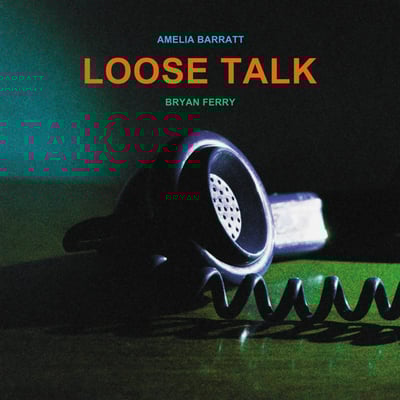
Bryan Ferry & Amelia Barratt Loose Talk
Released Mar 28, 2025 Dene Jesmond Enterprises
Early read 2 professional reviews Updated Dec 9, 2025
Mostly positive consensus
Early read based on 2 professional reviews. Bryan Ferry's Loose Talk, a collaborative record with Amelia Barratt released 2025-03-28, folds Ferry's familiar past into a set of fragmentary, synth-tinged vignettes that critics call more diversion than reinvention.
How ChoruScore worksCritics' Top Tracks
The songs critics returned to most
Landscape
1 critic mention
“genuinely haunting moments, frequently when the old demos yield a snatch of vocal, as on Landscape” — The Guardian
Cowboy Hat
1 critic mention
“the depiction of a tailor at work in Cowboy Hat seem straightforward enough” — The Guardian
Loose Talk
2 critic mentions
“it opens with a clatter of drum-machine handclaps, a sound so familiar from 80s pop” — The Guardian
Full critic consensus
Bryan Ferry's Loose Talk, a collaborative record with Amelia Barratt released 2025-03-28, folds Ferry's familiar past into a set of fragmentary, synth-tinged vignettes that critics call more diversion than reinvention. Across two professional reviews the collection earned a 70/100 consensus score, with reviewers noting both haunting atmospheres and a deliberate reworking of memory and retro references. The title track “Loose Talk” surfaces repeatedly as a focal point, its guitar-clanging finale cited alongside Ferry's atmospheric synthy backing.
Critics consistently praise how demo-like fragments become full-bodied moments: Mojo highlights Barratt's plummy, hyperreal texts and the album's measured, retrospective-minded tone, while The Guardian singles out “Landscape” and “Cowboy Hat” as standout tracks that convert lo-fi sketches into genuinely haunting songs. Reviewers agree that collaboration is central here - Barratt's cool, often menacing narration reframes Ferry's melodies, turning wordless or muffled vocals into memory-like ornaments and lending the record a conspiratorial intimacy.
The critical consensus suggests Loose Talk will appeal to those curious about Ferry revisiting his archive rather than seeking a bold new direction: praised for atmosphere, retro referencing, and select standout songs, yet described by some as an intriguing diversion. Below are the full professional reviews for readers wanting deeper context on whether Loose Talk is worth a listen and which are the best songs on the record.
Track Ratings
How critics rated each track, relative to this album (0-100). Only tracks that made critics feel something are rated.
Loose Talk
Get the next albums worth your time.
Critic-backed picks in one clean digest. No clutter.
What Critics Are Saying
Deep insights from 3 critics who reviewed this album
mu

Critic's Take
Petridis’s prose relishes the guessing game of eras while insisting Ferry’s melodies remain beautiful, those wordless or muffled vocals becoming memory-like ornaments. Barratt’s cool, unemotional narration and tentative, often menacing texts give the album a different emotional cast, so the best songs on Loose Talk feel both familiar and strangely new.
Key Points
-
The album’s core strength is transforming archival demos into fresh, atmospheric collaborations that rework Ferry’s past with Barratt’s unsettling narration.
Themes

Critic's Take
Bryan Ferry and Amelia Barratt’s Loose Talk feels like an intriguing diversion rather than a reinvention, with the title track’s guitar-clanging finale and Ferry’s synthy backing standing out. The reviewer's clipped, slightly sardonic voice praises Barratt’s plummy texts and their hyperreal, fragmentary narratives while noting the album never quite becomes the In Every Dream Home A Heartache reboot some suggested. For listeners asking what are the best songs on Loose Talk, the title track “Loose Talk” and the synth-tinged opener implied by the Retrospective inclusion are the clearest highlights in this measured, retrospective-minded set.
Key Points
-
The title track is best for its guitar-clanging finale and synth-enhanced production.
-
The album’s core strengths are Barratt’s evocative, fragmentary lyrics and Ferry’s retro synth textures.