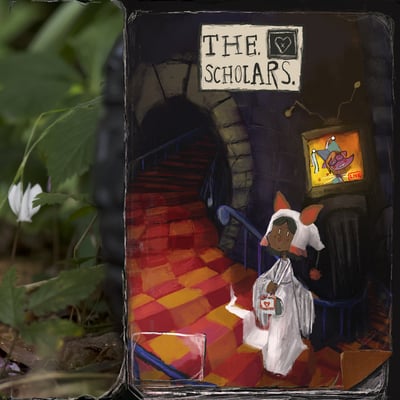
Car Seat Headrest The Scholars
Released May 2, 2025 Matador
Established consensus 12 professional reviews Updated Nov 30, 2025
Mostly positive consensus
Car Seat Headrest's The Scholars arrives as a sprawling, theatrical leap from the band's indie roots into full-blown rock opera, and critics largely agree the record's ambition yields thrilling highs even as its narrative sometimes buckles under its own weight.
How ChoruScore worksCritics' Top Tracks
The songs critics returned to most
The Catastrophe (Good Luck With That, Man)
12 critic mentions
“standout track “The Catastrophe (Good Luck With That, Man)” threatens to fall apart from sheer exuberance” — Under The Radar
Planet Desperation
12 critic mentions
“The rollicking “Planet Desperation” takes more turns than you can shake a Twin Fantasy plushie at” — Under The Radar
Gethsemane
12 critic mentions
“In the lead single “Gethsemane”, the rhythmic bass, surging guitar, and rolling drums all culminate in a rousing climax” — PopMatters
Full critic consensus
Car Seat Headrest's The Scholars arrives as a sprawling, theatrical leap from the band's indie roots into full-blown rock opera, and critics largely agree the record's ambition yields thrilling highs even as its narrative sometimes buckles under its own weight. Across 12 professional reviews the album earned a 72.17/100 consensus score, with reviewers pointing to a handful of best songs that justify the project's scope. Standouts repeatedly named include “CCF (I'm Gonna Stay With You)”, “The Catastrophe (Good Luck With That, Man)”, “Planet Desperation”, and “Gethsemane”, tracks that critics say pair muscular hooks with theatrical payoff.
The critical consensus praises the band's shift toward ensemble musicianship, classic-rock homage and ambitious world-building - reviewers consistently note literature-inflected lyrics, campus drama and themes of identity, doubt and institutional anxiety woven through the record. Many reviews celebrate how shorter, hook-forward numbers like “CCF (I'm Gonna Stay With You)” and “The Catastrophe (Good Luck With That, Man)” hold their own as standalone songs, while epic suites such as “Planet Desperation” and the “Gethsemane/Reality/Planet Desperation” sequence reward patience with cinematic climaxes.
At the same time critics are split on excess versus payoff: some praise the theatricality and musicianship as a rebirth, others find the plot and prog-leaning crescendos confusing or overlong. For readers asking "is The Scholars good" or hunting the best songs on The Scholars, the consensus suggests dipping into the frequently cited highlights first, then deciding if the record's sprawling concept and rock-opera ambitions are worth deeper investment. Below, the full reviews map where the album's ambition lands and where it overreaches.
Track Ratings
How critics rated each track, relative to this album (0-100). Only tracks that made critics feel something are rated.
CCF (I'm Gonna Stay With You)
Devereaux
Lady Gay Approximately
The Catastrophe (Good Luck With That, Man)
Equals
Gethsemane
Reality
Planet Desperation
True/False Lover
Get the next albums worth your time.
Critic-backed picks in one clean digest. No clutter.
What Critics Are Saying
Deep insights from 13 critics who reviewed this album


Critic's Take
The review elevates “Devereaux” as a true singalong and spotlights the three-song trio “Gethsemane”, “Reality” and “Planet Desperation” as the album's centerpiece - the triad that pays off the record's risks. The writer's tone is admiring and precise, celebrating collaborative songwriting and the record's ambitious, narrative-driven strengths, which answer the question of the best songs on The Scholars with clarity and enthusiasm.
Key Points
-
The three-track run of “Gethsemane,” “Reality,” and “Planet Desperation” is the album’s dramatic high point and best material.
-
The album’s strengths are its ambitious rock-opera narrative, collaborative songwriting, and successful homage to 1970s rock influences.
Themes

Critic's Take
In a voice equal parts exasperated and astonished, Car Seat Headrest on The Scholars rips the old door off its hinges and rebuilds a weird, lore-streaked rock opera. The best tracks - especially “True/False Lover” and “The Catastrophe (Good Luck With That, Man)” - are where the band’s wild ambition and messy, sacred chaos land hardest, giving the record its most divine revelations. Toledo’s one-liners and haunted refrains make the best songs on The Scholars feel like parables that suddenly stop being jokes and start meaning something real. This is an album that asks you to sit with its sprawl, and those standout tracks repay that patience with bruising, mythical payoff.
Key Points
-
The best song(s) crystallize the record’s ambition by turning messy chaos into moments that feel earned and revelatory.
-
The album’s core strengths are its mythic scope, committed messiness, and emotional honesty despite sprawling, disjointed form.
Themes

Critic's Take
Car Seat Headrest's The Scholars is at once distancing and slowly addictive, and the reviewer's eye lands on a few best songs that make the album cohere. The opener “CCF (I’m Gonna Stay With You)” is praised for its leisurely build and lyrical payoff, while “The Catastrophe (Good Luck With That, Man)” is called a standout for its sheer exuberance. The rollicking “Planet Desperation” is another best track, noted for taking more turns than you can shake a Twin Fantasy plushie at.
Key Points
-
"The Catastrophe (Good Luck With That, Man)" is the album's standout for sheer exuberance and self-referential cohesion.
-
The Scholars' core strengths are its theatrical, conceptual ambition and lyrical return to form, rewarding attentive, repeat listening.
Themes

Critic's Take
Car Seat Headrest lean into grander ambitions on The Scholars, and the best tracks - notably “Lady Gay Approximately” and “Gethsemane” - deliver immediate musical payoff within the rock-opera framework. Patrick Gill's voice here is measured but admiring, pointing out how songs like “The Catastrophe (Good Luck With That, Man)” and “Planet Desperation” marry homage and invention. The record's narrative can be labyrinthine, yet the moments of pure songwriting cut through, making queries about the best songs on The Scholars land on these vigorous, immediate numbers. Overall, the album rewards listeners who value both concept and muscular rock craft.
Key Points
-
“Gethsemane” is best for its rhythmic build, surging instruments, and a lyrical line that becomes a central mantra.
-
The album's core strength is marrying ambitious rock-opera storytelling with immediate, classic-rock-inflected songwriting and tight band performance.
Themes

Critic's Take
Car Seat Headrest's The Scholars is at once an intimate rebirth and a gleeful dive into classic-rock excess, where the best tracks read like set pieces in Will Toledo's university psychodrama. The review highlights the sprawling centerpiece “Planet Desperation” as a near-19 minute marvel, and praises the album's immediacy in its shorter first-half songs. Stylistically indebted to Bowie and The Who, the record's best songs - especially “Planet Desperation” - balance camp and mastery while letting bandmates expand Toledo's vision. The result is a collection whose standout tracks reward repeated listens and feel like emphatic answers to the fleeting internet moment that birthed the band's recent fame.
Key Points
-
The sprawling, near-19 minute “Planet Desperation” is the album's standout for its camp ambition and mastery.
-
The album's core strengths are its grandiose concept, classic-rock references, and the band's expanded, more composed sound.
Themes

Critic's Take
Car Seat Headrest's The Scholars is at once a shaggy, operatic road trip and a gleeful heap of classic-rock dynamite, with the bruising mini-epic “The Catastrophe (Good Luck With That, Man)” and the tectonic suite “Gethsemane” staking out the album's biggest victories. Fricke revels in the album's hallucinatory excesses - from the 19-minute serial hysteria of “Planet Desperation” to the yearning pop of “Devereaux” - arguing these best tracks show Toledo's arena-scaled ambitions paying off. The review points readers searching for the best songs on The Scholars to those sprawling, detail-rich climaxes, while also noting quieter triumphs like “Lady Gay Approximately” and the roadwise clarity of “Reality”.
Key Points
-
The best song is argued to be the sprawling intensity of "Planet Desperation", for its sustained hysteria, dynamics and memorable lines.
-
The album's core strengths are its operatic ambition, classic-rock dynamics, and the balance of sprawling epics with brief, tender songs.
Themes

Critic's Take
Car Seat Headrest’s The Scholars lives for big gestures, and the best songs reward that appetite - most of all the sprawling “Planet Desperation”, which reads like an 18-minute summit of Bowie-esque music-hall and arena-rock ecstasy. The shorter pieces punch just as hard: “Devereaux” snaps with slamming drums and a crisp Cars riff, while “The Catastrophe (Good Luck With That, Man)” offers clipped, Devo-like tunefulness. If you want to know the best tracks on The Scholars, start with “Planet Desperation” and then dig into the vivid immediacy of “Devereaux” and “The Catastrophe (Good Luck With That, Man)”.
Key Points
-
The sprawling 18-minute “Planet Desperation” is the album’s centerpiece for its stylistic breadth and emotional ambition.
-
The Scholars succeeds through theatrical excess, collaborative songwriting, and a hunger for spiritual and intellectual exploration.
Themes
Fa
Critic's Take
In this review I keep returning to how Car Seat Headrest attempts a grand theatrical gesture with The Scholars, and the best tracks - notably “CCF (I’m Gonna Stay With You)” and “Planet Desperation” - are the clearest evidence of that ambition. Lauren Hunter’s tone is admiring yet skeptical, praising the scale and choral theatricality of “CCF (I’m Gonna Stay With You)” while wondering if the album’s reverence for its influences weakens its sonic impact. The record’s narrative pleasures reward readers who follow along, but sonically it often feels like a pastiche of the last 25 years rather than a wholly new statement. Ultimately the best tracks on The Scholars prove Toledo’s vision can be thrilling, even if the full concept sometimes outstrips its musical payoff.
Key Points
-
The best song, “CCF (I’m Gonna Stay With You)”, is the album's clearest success for its epic scale and choral theatricality.
-
The album's core strengths are ambitious narrative scope and literary, theatrical themes, though sonically it often reveres past indie touchstones more than it reinvents them.
Themes

Critic's Take
Car Seat Headrest deliver a sprawling, sometimes bewildering rock opera on The Scholars, and the best songs — notably “CCF (I’m Gonna Stay With You)” and “Gethsemane” — show Toledo’s flair for character-driven drama. The opener “CCF (I’m Gonna Stay With You)” sets the tone with frenetic drums and discordant textures that introduce Beolco’s doubt, while “Gethsemane” is an epic, Who-tinged prog rocker that pits soft balladry against fiery rock. Other highlights, like “The Catastrophe (Good Luck With That, Man)” and “Equals”, thrive on dynamic contrasts and vivid character moments, even if the narrative requires repeated listens to untangle.
Key Points
-
The opener “CCF (I’m Gonna Stay With You)” best encapsulates the album’s tone and character-driven focus.
-
The album’s core strengths are its ambition, dynamic contrasts, and vivid character perspectives, even if the narrative is dense.
Themes

Critic's Take
The Scholars is Car Seat Headrest at their most ambitious: a bona fide rock opera that still manages to yield some of the band’s punchiest moments. Car Seat Headrest spin a sprawling university fable on The Scholars, yet songs like “CCF (I’m Gonna Stay With You)” and “The Catastrophe (Good Luck With That, Man)” prove the hooks are very much intact. The record rewards both listeners after grand narrative and those simply chasing the best tracks on The Scholars, with the former getting epic world-building and the latter getting gleefully loud, sugary jams. For best songs on The Scholars, start with “The Catastrophe (Good Luck With That, Man)” and “CCF (I’m Gonna Stay With You)” and then let the long-form pieces like “Gethsemane” and “Reality” reveal themselves over repeat plays.
Key Points
-
“The Catastrophe (Good Luck With That, Man)” is the best song because it pairs sharp, sugary hooks with gleefully loud energy.
-
The album’s core strength is balancing ambitious rock-opera world-building with genuinely punchy indie-pop songwriting.
Themes

Critic's Take
Car Seat Headrest's The Scholars finds its best moments in the muscular, anthemic rock of “CCF (I’m Gonna Stay With You)” and the propulsive suite of “Gethsemane”, songs that turn intricate compositions into full-bodied, fist-pumping payoff. Jeremy Winograd praises how the band’s transition from a solo project to a collaborative unit yields layered guitar parts and exhilarating classic-rock crunch, which makes the best tracks - notably “Equals” and “CCF (I’m Gonna Stay With You)” - resonate as the album’s highlights. Even when longer epics like “Planet Desperation” and “Reality” feel needlessly drawn out, the record’s serious musicianship and audacious rock-opera ambition keep the standout songs compelling and often thrilling.
Key Points
-
The best song is the cathartic, anthemic "CCF (I'm Gonna Stay With You)", which channels full-bodied, fist-pumping rock.
-
The album's core strengths are its intricate compositions, ensemble musicianship, and audacious rock-opera ambition.
Themes

Critic's Take
In a vividly ambivalent review voice, Car Seat Headrest’s The Scholars is praised for individual high points while criticized for narrative clutter. The reviewer singles out “The Catastrophe (Good Luck With That, Man)” and “True/False Lover” as songs that can stand alone, noting their punk-leaning pop shape and practiced hooks. But songs like “Gethsemane”, “Reality”, and “Planet Desperation” are described with frustration - long passages collapse into similar prog crescendos that bury plot and patience. The piece reads as admiration edged with exasperation, recommending listeners salvage the best tracks even as the full rock-opera conceit falters.
Key Points
-
“The Catastrophe (Good Luck With That, Man)” is best because it combines punk-leaning pop momentum with repeat-listen hooks.
-
The album’s core strength is ambitious songwriting and textured composition, but it is undermined by a confusing plot and excessive stylistic shifts.