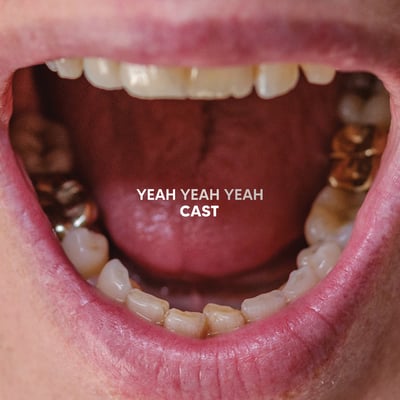
Cast Yeah Yeah Yeah
Released Jan 30, 2026 Scruff of the Neck
Consensus forming 3 professional reviews Updated Oct 1, 2026
Mostly positive consensus
Consensus is still forming across 3 professional reviews. Cast's Yeah Yeah Yeah arrives as a confident, stadium-minded return that marries Britpop revivalism with soul-tinged warmth, and critics generally find it a rewarding comeback.
How ChoruScore worksCritics' Top Tracks
The songs critics returned to most
Poison Vine
3 critic mentions
“The record begins with a bang in ‘Poisoned Vine,’ the album’s first single.” — Indie Is Not A Genre
Free Love
3 critic mentions
“The subsequent two tracks, ‘Calling Out Your Name’ and ‘Free Love,’ were also released as singles and share a cohesive spirit,” — Indie Is Not A Genre
Calling Out Your Name
2 critic mentions
“The subsequent two tracks, ‘Calling Out Your Name’ and ‘Free Love,’ were also released as singles and share a cohesive spirit,” — Indie Is Not A Genre
Full critic consensus
Cast's Yeah Yeah Yeah arrives as a confident, stadium-minded return that marries Britpop revivalism with soul-tinged warmth, and critics generally find it a rewarding comeback. Across professional reviews the record earned a 73.33/100 consensus score from three core reviews, with commentators praising the album's anthemic sweep, catchy choruses and moments of genuine tenderness. Critics consistently point to “Poison Vine”, “Free Love” and “Don’t Look Away” as the standout tracks that best capture the band's renewed momentum.
The critical consensus emphasizes themes of revival, hope and the tension between nostalgia and forward movement. Reviewers note the Mersey and Britpop identity threaded through arena-sized arrangements, while soul and gospel touches - notably the P.P. Arnold collaboration - lend depth to hooks that often read as both singalong catharsis and reflective songwriting. Tracks such as “Calling Out Your Name” and “Weight Of The World” recur in reviews as examples of rock-and-soul fusion that balance swagger with age-earned wisdom.
While most professional reviews are affectionate, they temper praise with the caveat that Yeah Yeah Yeah rarely breaks new ground; some critics flag uneven moments amid the high points. Even so, the consensus suggests Cast have crafted a tidy, well-paced comeback whose best songs make a persuasive case for their continuing relevance. For readers searching for a verdict on Yeah Yeah Yeah, the album's critical reception and its string of standout anthems indicate it is worth hearing for fans of big, melodic rock with soulfulness at its core.
Track Ratings
How critics rated each track, relative to this album (0-100). Only tracks that made critics feel something are rated.
Poison Vine
Don't Look Away
Calling Out Your Name
Free Love
Say Something New
Way It's Gotta Be (Oh Yeah)
Devil And The Deep
Weight Of The World
Teardrops
Birds Heading South
Get the next albums worth your time.
Critic-backed picks in one clean digest. No clutter.
What Critics Are Saying
Deep insights from 5 critics who reviewed this album
Ho
Critic's Take
In his characteristically rueful and affectionate tone John Walshe frames Cast’s Yeah Yeah Yeah as a career-resetting blend of rock, soul and gospel, singling out the stomping opener “Poison Vine” and the psychedelic gospel singalong “Free Love”. He praises the trio’s full-on blues-rock on “Way It’s Gotta Be (Oh Yeah)”, noting Power aping Plant’s hollers, and highlights the string-drenched sway of “Birds Heading South” as a smartphones-in-the-air moment. Walshe balances nostalgia with appraisal, admitting there’s nothing as unforgettable as the band’s past hits while arguing these best tracks show Power’s melodies still cut through. His affection for the hooks and vintage influences keeps the review buoyant even when he flags a few lesser cuts.
Key Points
-
The best song, “Poison Vine”, stands out for its stomping rock-soul production and a guest vocal that elevates it.
-
The album's core strength is its blend of ’60s-inspired guitars, catchy choruses and tremolo grooves that feel timeless.
Themes
In
Critic's Take
Sofia Lavender-Callow relishes the band’s knack for big, anthemic hooks and the spark gifted by P.P. Arnold, writing in an admiring, slightly nostalgic tone that still prizes immediacy. The result reads as a tidy, well-paced comeback record whose best tracks make a persuasive case for Cast’s ongoing relevance.
Key Points
-
The album balances anthemic Britpop energy with vulnerable, string-led moments to create a cohesive, well-paced comeback.
Themes

Critic's Take
Cast arrive on Yeah Yeah Yeah with stadium-sized ambition and a renewed swagger, and the best songs - notably “Poison Vine” and “Don’t Look Away” - wear that largesse well. Bowes savours the opener “Poison Vine” for its glam sheen and gravitas, then points to “Don’t Look Away” as anthemic, with John Power hitting impressively high notes. He also highlights “Free Love” for its unifying message and “Calling Out Your Name” for its Beatles-esque, sky-scraping production, painting a picture of a band comfortably scaling arenas. The review reads as affectionate and measured praise, arguing these best tracks prove Cast are building on momentum rather than trading on nostalgia.
Key Points
-
“Poison Vine” stands out for its glam sheen, P.P. Arnold's gravitas, and stadium-ready intent.
-
The album’s core strength is its confident, stadium-scaled songwriting that builds on recent momentum without leaning on nostalgia.
Themes

Critic's Take
Cast return on Yeah Yeah Yeah with a record that foregrounds the best songs - standout anthems like “Poison Vine” and “Teardrops” that marry sing-along choruses with unexpected tenderness. The reviewer luxuriates in the band’s jaunty Mersey roots and praises moments such as “Weight Of The World” and “Way It’s Gotta Be (Oh Yeah)” for their emotional heft and live-ready grooves. It reads as a band refreshed rather than resting on past laurels, an album stitched from swaggering stadium-ready moments and quieter, wiser reflections.
Key Points
-
Teardrops is best for its graceful melding of Bacharach sway and Britpop to create the record’s emotional centerpiece.
-
The album’s core strengths are its anthemic Mersey roots refreshed by brass, strings and seasoned songwriting that balances swagger and reflection.
Themes

Critic's Take
Cast sound comfortable and assured on Yeah Yeah Yeah, and the best songs underline that resurgence, led by “Poison Vine” and “Calling Out Your Name”. “Poison Vine” is big, upbeat and instantly catchy, its groove and P.P. Arnold harmonies making it one of the best tracks on Yeah Yeah Yeah. “Calling Out Your Name” taps into the rawness that first defined the band, and together with “Say Something New” and “Way It’s Gotta Be (Oh Yeah)” you get the album’s clearest highlights. The record doesn’t aim to reinvent Cast, it aims to make good music now, and on those terms these tracks are the best songs on Yeah Yeah Yeah.
Key Points
-
“Poison Vine” is the standout for its big, upbeat groove and P.P. Arnold-enhanced hooks.
-
The album’s core strengths are confident songwriting, polished production, and a sense of renewed energy without nostalgia.