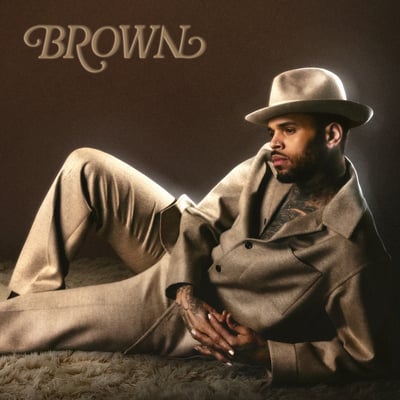
Chris Brown BROWN
Released May 8, 2026 Chris Brown Entertainment/RCA Records
Established consensus 7 professional reviews Updated Jun 25, 2026
Mostly negative consensus
Chris Brown's BROWN lands as a contentious, often frustrating entry in the singer's catalog, with critics divided between spotting occasional late-album tenderness and condemning the record's broader ethical and creative failures.
How ChoruScore worksCritics' Top Tracks
The songs critics returned to most
Holy Blindfold
1 critic mention
“Holy Blindfold," where Jon Bellion and The Monsters & Strangerz layer dream-pop textures” — Shatter The Standards
What's Love
1 critic mention
“Track 17 asks if he knows what love is.” — Shatter The Standards
Won't Let Me Leave
1 critic mention
“Won't Let Me Leave" holds for an entire verse without collapsing into a moral.” — Shatter The Standards
Full critic consensus
Chris Brown's BROWN lands as a contentious, often frustrating entry in the singer's catalog, with critics divided between spotting occasional late-album tenderness and condemning the record's broader ethical and creative failures. Across seven professional reviews that produced a 41.29/100 consensus score, reviewers repeatedly flagged the album's slick, trance-house-tinged production and overlong sequencing even as a handful of songs - notably “Holy Blindfold”, “What’s Love” and “Fallin' (feat. Leon Thomas)” - surface as the record's clearest moments of vulnerability and craft.
The critical consensus emphasizes two competing threads. Many reviewers treat BROWN as an exercise in mainstream pop homogenization and commercialism versus artistry, calling out inconsistent songwriting, heavy-handed production and an overstuffed tracklist that buries emotionally honest material. At the same time, critics who examine the songs locate reward in the back-loaded intimacy where “Holy Blindfold” and “What’s Love” earn praise for restraint and confession; The Forty Five and Shatter The Standards both single out late-track highlights such as “Fallin' (feat. Leon Thomas)” as rare instances where Brown's vocal performance lands.
Where many reviews converge most sharply is on context: several outlets foreground the surrounding controversies, arguing that the album's musical highlights cannot be disentangled from questions of accountability, violence and media spectacle. That tension - between occasional standout singles and the album's reputational and aesthetic liabilities - frames the record's reception and explains why critics call BROWN a flawed, uneven release rather than a clear comeback.
Below, the full set of professional reviews unpacks those contradictions in greater detail.
Track Ratings
How critics rated each track, relative to this album (0-100). Only tracks that made critics feel something are rated.
Leave Me Alone
Obvious
Honey Pack
It Depends (feat. Bryson Tiller)
Fallin' (feat. Leon Thomas)
Hate Me
Call Your Name (feat. Sexyy Red & GloRilla)
For The Moment
F**k and Party (feat. Vybz Kartel)
Red Rum (feat. YoungBoy Never Broke Again)
It's Not You It's Me
Cry For Me
Say Nothin'
Slow Jamz (feat. Lucky Daye)
Perfect Timing (feat. Fridayy)
In My Head
What's Love
Something In The Water
Won't Let Me Leave
#BODYGOALS (feat. Tank)
Colours
Skin To Skin
Theme Song
Your Time
It's Personal
Holy Blindfold
Present
Get the next albums worth your time.
Critic-backed picks in one clean digest. No clutter.
What Critics Are Saying
Deep insights from 28 critics who reviewed this album

Critic's Take
In a voice that alternates between theatrical intensity and tender restraint, Chlöe Bailey positions In Pieces as an album of peaks and near-misses. The critic admires how these best songs on In Pieces let Bailey's performance carry the moment, even as other tracks aim higher than they land. Overall the praise is grudging but real, naming specific highlights while noting the album's occasional excesses and box-ticking tendencies.
Themes
Th
Critic's Take
The review reads with a weary, conversational eye toward ageing and relevance, and in that voice the best tracks on BROWN are the ones that catch personal clarity - think “Fallin' (feat. Leon Thomas)” and “Slow Jamz (feat. Lucky Daye)” as moments where the singer’s reflection lands. The writer’s short, evaluative sentences and dry asides make clear that these standouts earn their place by offering vulnerability amid routine tropes. Tone stays measured but cutting, pointing to these songs as the album’s clearest instances of feeling without pretending they rescue the record entirely.
Key Points
-
The best song succeeds by offering genuine personal clarity amid the album’s familiar tropes.
-
The album’s core strength is moments of self-reflection and lyrical craft, even when wrapped in routine or controversy.
Themes

Critic's Take
I didn’t find many moments in BITCH that feel truly vital, and the review’s tone stays frank and unimpressed. The reviewer’s cadence is blunt and conversational, so the best tracks on BITCH are the ones that at least try to move the needle rather than recycle tired tropes.
Key Points
-
No specific album tracks from the provided tracklist are discussed, so no best song can be confidently extracted.
-
The review’s core strength is its candid, conversational critique of artistic choices and overall tone.
Sh
Critic's Take
Chris Brown's BROWN is safest when it stops performing confidence and lets vulnerability breathe, which makes the best songs on BROWN - like “What’s Love” and “Holy Blindfold” - feel earned and rare. The reviewer notes that after a frontloaded run of interchangeable bedroom tracks the album finally reveals honesty past track 16, so the best tracks on BROWN are the ones buried late where production and lyricism loosen their grip. These standout moments, especially “Holy Blindfold” with its dream-pop textures and “What’s Love” as a genuine confession, illustrate why returning to the back half rewards patience.
Key Points
-
The best song is "Holy Blindfold" because its arrangement gives space and patience, making it a true standout.
-
The album's core strength is occasional emotional honesty buried late, amid an overlong, bedroom-focused midsection.
Themes
So
Critic's Take
Chris Brown's BROWN rarely coalesces into the kind of cohesive statement Edward Bowser prizes, but a handful of songs stand out. The tone stays critical but specific, pointing to solid production amid muddled sequencing and lazy songwriting.
Key Points
-
The best song is highlighted for strong vocal chemistry and standout production.
-
The album’s core strengths are solid production and occasional inventive sampling, undermined by bloat and weak songwriting.
Themes

Critic's Take
Chris Brown sounds scattered on BROWN, and the best tracks only glimmer amid a bloated, uneven set. Still, the critic emphasizes that these few gems are swallowed by the album's lumbering pace and tonal whiplash, leaving the best songs stranded rather than showcased.
Key Points
-
The best song(s) are the smoother, melody-forward cuts because they provide the rare memorable hooks amid a sprawling tracklist.
-
The album's core strength is occasional polished, sax- or disco-tinged production, undermined by disjointed sequencing and sexual bravado.
Themes
Th
Critic's Take
The reviewer writes in a biting, slightly sardonic voice that locates the album within a tired trend: Chris Brown’s BROWN would, in this reading, be another entry in the mainstream's embrace of low-calorie trance-house. The critic's tone is dismissive and wry, noting the music's debt to flash-in-the-pan acts while implying a lack of substance. This makes it hard to single out standout tracks on BROWN, because the complaint is about a prevailing, bland sound rather than individual moments.
Key Points
-
No specific track is praised; the review criticizes the album's alignment with bland trance-house trends.
-
The album's core weakness is its conformity to a homogenized, low-calorie pop sound.
Themes

Critic's Take
The review is largely a metadata listing and news roundup rather than a full critical take, which leaves the listener without guidance on which songs - if any - stand out. Given the absence of concrete praise or critique for specific tracks, any attempt to name best songs on BROWN would be speculative rather than drawn from this review.
Key Points
-
The review contains no substantive discussion of individual tracks, so it offers no basis to pick a best song.
-
The piece functions as a listings/news-oriented entry rather than a critical album review with track-level evaluation.

Critic's Take
The review contains no discussion of the songs on BROWN, nor does Nancy Dillon in Rolling Stone evaluate any tracks such as “Leave Me Alone” or “Honey Pack”. Instead the piece focuses entirely on the courtroom testimony and the dog-mauling trial surrounding Chris Brown. Because there are no track-specific remarks here, readers searching for the best songs on BROWN will find no guidance in this review. The absence of musical appraisal leaves the album-level critique unaddressed in this article.
Key Points
-
The review offers no commentary on individual tracks, so no best song can be identified from this text.
-
The article's core strength is detailed reporting on the trial testimony, not musical evaluation.
Ho
Critic's Take
The review does not critique individual songs on BROWN, and so there are no best songs singled out by the Hot Press writer. The piece focuses on Chris Brown’s tour dates, ticket demand and career highlights rather than evaluating tracks, so queries about the best songs on BROWN cannot be answered from this review. For readers wanting the best tracks on BROWN, consult dedicated album reviews that analyze individual songs.
Key Points
-
The review contains no commentary on specific tracks, so no best song is identified.
-
The article emphasizes tour dates, ticket demand and Brown’s career accolades rather than the album’s songs.
Ro
Critic's Take
The review does not discuss any songs from BROWN by Chris Brown, so there are no pointers to the best songs or best tracks on BROWN to extract from this text. Because the piece focuses on concert incidents and legal fallout, the review offers no evaluative language about individual tracks such as “Leave Me Alone” or “Honey Pack”. Consequently, no track-level recommendations can be made from this review.
Key Points
-
No specific songs from BROWN are discussed in the review, so no best song can be identified.
-
The review's core strength is reportage on concert incidents and legal context, not album critique.
Cl
Critic's Take
Chris Brown is never named as a flattering beneficiary here, and the reviewer’s ire makes clear which of Brown’s songs might feel like undeserved triumphs on BROWN. The piece argues that the industry rewards musical output without requiring accountability, so the best tracks on BROWN are undermined by the artist’s unresolved history. The tone implies that any highlights - for example, “Leave Me Alone” or “Hate Me” - are compromised by the larger moral context. Ultimately the reviewer treats the album’s songs as insufficient to absolve the behaviour they chronicle and surround.
Key Points
-
The reviewer suggests the best songs are tainted because the artist has shown little accountability.
-
The album’s core issue is industry willingness to platform problematic artists without demanding visible growth.
Themes
St
Critic's Take
The reviewer writes in a measured, sometimes wry voice that prizes peaks amid excess, noting that Chris Brown’s BROWN contains true high points.
Key Points
-
The album’s core strength is its emotional summits and tightened performances, but excessive length and features dilute the highs.

Critic's Take
The review does not discuss tracks from BROWN by Chris Brown, so there are no best songs to extract. The critic instead writes about metal's relationship with mainstream culture and examples of non-metal acts adopting metal aesthetics, offering no commentary on any track on this album.
Key Points
-
No individual tracks from the album are discussed in the review, so no best song can be identified.
-
The review focuses on the interplay between metal and mainstream artists rather than this album's content.
Ok
Critic's Take
The review frames a direct Chris Brown - Ty Dolla $ign showdown and places emphasis on Brown's 2014 hit as cultural currency.
Key Points
-
The album-era strengths are chart impact, club longevity, and collaboration-driven songwriting.

Critic's Take
The review does not discuss any songs from BROWN by Chris Brown, so there are no identified best tracks on this album to recommend. The piece is an impassioned critique of bands accused of sexual misconduct and the erosion of queer safe spaces, written in a direct, personal voice recalling gigs and betrayal rather than cataloguing songs.
Key Points
-
No individual tracks from the album are discussed, so no best song can be identified.
-
The review's core strength is its vivid, personal argument about trust, safe spaces, and community accountability rather than musical assessment.
Al
Critic's Take
In his measured, occasionally scolding voice Justin Chadwick singles out the intimate moments as the best songs on The Life of Pablo, pointing to “Father Stretch My Hands, Pt. The narrative stays focused on what works - candor, vulnerability and a few luminous productions - when answering which are the best tracks on The Life of Pablo.
Key Points
-
The album's core strength is its moments of candid vulnerability amid otherwise indulgent narcissism.
Themes

Critic's Take
The review contains no focused critique of Chris Brown's BROWN or any specific songs, so there are no clear best tracks on BROWN to highlight. In short, the review does not provide the necessary discussion to determine the best songs on BROWN.
Key Points
-
The reviewer gives no substantive commentary on any tracks from BROWN, so no best song emerges.
-
The review's core strength is candid, concise verdicts, but it lacks album-specific analysis for BROWN.
Sp
Critic's Take
The reviewer writes in a sharp, sardonic voice that never lets up here, more concerned with the cultural spectacle than musical minutiae, so there are no comments about the best songs on BROWN to parse. This piece skewers the public drama around Chris Brown and focuses on television depiction rather than singling out any tracks like “Leave Me Alone” or “Hate Me”. If you search for the best songs on BROWN, the review offers no guidance, instead cataloguing media fallout and the Law & Order episode that riffed on the saga.
Key Points
-
The review does not discuss individual tracks, so no best song is identified.
-
Core strength: a sharp, sardonic commentary on media spectacle and a Law & Order episode riffing on Brown's public controversy.

Critic's Take
The writer focuses on spectacle, not songs, so any discussion of the best songs on BROWN is eclipsed by episodes of violence and public rows. This piece's voice is judgmental and incredulous, noting drama after drama rather than musical standouts, which means readers seeking the best songs on BROWN will find little guidance here. The emphasis is firmly on scandal, not sonic highlights.
Key Points
-
No individual tracks are discussed, so no best song is identified.
-
The review emphasizes scandal, violence, and public drama as the album's surrounding context rather than musical content.
Themes

Critic's Take
In this angry, forensic take Homa Khaleeli interrogates the ethics around Chris Brown rather than praise specific songs, so the best tracks on BROWN are not the point. The review consistently frames Brown as a problematic presence and dwells on the duet controversy, meaning readers searching for the best songs on BROWN will find critique of his visibility rather than a guide to standout tracks. The voice is urgent and accusatory, naming public memory, marketing to young fans and race as central concerns, which leaves musical highlights unaddressed.
Key Points
-
The review gives no musical praise; it condemns Brown's visibility and collaboration choices instead of naming standout songs.
-
Core strengths of the piece are its clear focus on controversy, accountability, and the cultural context around marketing and race.
Themes
Fa
Critic's Take
The review focuses less on songs and more on the controversy around Chris Brown's public collaborations after the Rihanna assault, so there are no takes on the best songs on BROWN. The writer's tone is reproachful and blunt, foregrounding the ethical unease of Brown teaming up with Rihanna. Because the piece centers on the remix and its explicit lyrics, it does not identify standout tracks from BROWN or recommend any best tracks on the album.
Key Points
-
The review does not name or evaluate any songs from the album; it centers on the moral and public unease of Brown collaborating with Rihanna.
-
The core strength of the piece is its clear, critical framing of the controversy rather than musical analysis.
Themes

Critic's Take
Chris Brown is framed here less as a musician and more as a public problem, and the review fixates on the discomfort around his recent collaborations. The reviewer’s tone is accusatory and unsettled, noting that pairing Brown with another pop star feels like sweeping the past under the rug. For queries about the best songs on BROWN there is no praise to extract; the text offers critique of actions and choices rather than any musical highlights. The piece centres on the controversy, not on standout tracks, arguing that collaboration choices make any talk of best tracks on BROWN feel inappropriate.
Key Points
-
No specific song is praised; the reviewer condemns the normalization of Brown through collaborations.
-
The album discussion is overshadowed by themes of accountability and public acceptance rather than musical merits.
Themes

Critic's Take
In terse, acid prose the reviewer skewers commercial trend-chasing on BROWN, singling out lifeless single choices as symptomatic rather than exceptional. The voice is contemptuous and observant, noting how a big name and slick arranging can ruin potential, as with “Leave Me Alone” and “Obvious” that feel like safe formulas rather than revelations. Read as a critique of the industry, the best tracks on BROWN are those that resist the no-risk polish, but the review suggests few truly escape the corporate blandness. The tone is admonitory, specific, and often sarcastic, making clear why these songs fail to be exciting in this context.
Key Points
-
The reviewer treats the album’s singles as symptomatic of industry safe bets, making the most-discussed tracks fall short.
-
Core strength noted is occasional melodic or harmonic competence, but it is overwhelmed by formulaic production and lack of event.
Themes
Re
Critic's Take
This review contains no discussion of the songs on BROWN, so there are no best tracks to recommend from Chris Brown here. The text is a roundup of music news and events, not a critique of the album, and it never mentions any track from BROWN. Consult a different review that directly addresses the album for definitive best-track guidance.
Key Points
-
No individual tracks from BROWN are discussed, so the review contains no basis to rank or call out a best song.
-
The review is a general music news roundup rather than an album critique, so strengths of the album are not addressed.

Critic's Take
This review contains no discussion of Chris Brown or BROWN and therefore cannot answer which are the best songs on BROWN or name best tracks on BROWN. The text instead obsessively analyzes Neutral Milk Hotel, so there are no reviewer endorsements of any tracks from Chris Brown to cite as standouts. Because the critic never mentions songs from BROWN, I cannot identify best songs on BROWN in the reviewer’s voice.
Key Points
-
No specific tracks from Chris Brown’s BROWN are discussed, so no best song can be identified.
-
The review focuses on Neutral Milk Hotel; its core strength is vivid, visceral lyrical and instrumental analysis.

Critic's Take
The writer's voice is observational and anecdotal, focused on touring history and recording context rather than singling out specific songs. Because the text centers on background, production and the Abrams Brothers' development, it cannot answer which are the best songs on BROWN from this review alone.
Key Points
-
No specific tracks from the provided tracklist are discussed, so the review offers no basis to pick a best song.
-
The review's core strength is its detailed background on touring, recording context and collaborators, not song-level critique.
Th
Critic's Take
This review does not actually discuss specific tracks from BROWN, nor does William Brownlee analyze any song titles from Chris Brown in the body of the text provided. Because the reviewer lists BROWN among month highlights without track-level commentary, there are no best songs on BROWN identified here.
Key Points
-
No individual track is discussed, so no best song can be extracted from this review.
-
The review mentions the album as a highlighted release but provides no track-level analysis, indicating general endorsement without specifics.