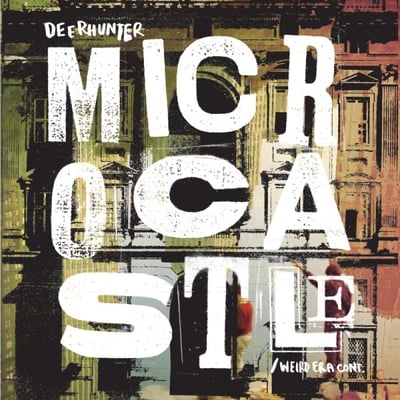
Deerhunter Microcastle
Released Aug 1, 2008 kranky
Established consensus 32 professional reviews Updated Aug 27, 2026
Broadly positive consensus
Deerhunter's Microcastle arrives as a vivid recalibration of the band's palette, trading some of their earlier murk for sharper pop thrusts wrapped in dream-like atmospheres.
How ChoruScore worksCritics' Top Tracks
The songs critics returned to most
Nothing Ever Happened
8 critic mentions
“the excellent "Nothing Ever Happened," which lets zigzagging guitars and keyboards tussle over one of Microcastle's most memorable melodies” — AllMusic
Never Stops
8 critic mentions
“Bradford Cox and company get even more accessible on the bittersweet "Never Stops” — AllMusic
Saved By Old Times
5 critic mentions
“an almost bluesy number that narrates some kind of sci-fi nightmare called “Saved By Old Times.” — Slant Magazine
Full critic consensus
Deerhunter's Microcastle arrives as a vivid recalibration of the band's palette, trading some of their earlier murk for sharper pop thrusts wrapped in dream-like atmospheres. Across 32 professional reviews the record earned an 81.44/100 consensus score, and critics repeatedly point to the muscular immediacy of “Nothing Ever Happened” and the catch-driven propulsion of “Never Stops” as the album's clearest touchstones. Those songs, alongside praises for “Little Kids” and “Saved By Old Times”, anchor why searchers ask about the best songs on Microcastle.
Reviewers consistently emphasize the balance between ambient blur and pop clarity: motorik rhythms, strong bass riffs and shoegaze textures sit beside tighter melodies and reduced reverb, producing moments of transcendence and bittersweet nostalgia. Several critics highlight sequencing and pacing as integral to the record's emotional arc, with closing cuts like “Twilight At Carbon Lake” providing cathartic payoff after hushed mid-album lullabies. Across the professional reviews many note Bradford Cox's fragile vocal contrast with Lockett Pundt's woozy contributions, framing the album as both more accessible and firmly experimental.
Not without nuance, some critics flagged minor flow issues where the experimental bonus material or track placement undercut momentum, but the prevailing critical consensus portrays Microcastle as a refined, confident step forward - a shoegaze-tinged, ambient-pop collection that deepens Deerhunter's songwriting while preserving their peculiar, uneasy charm. For readers asking whether Microcastle is worth listening to, the reviews suggest its standout tracks and disciplined restraint make it one of the band's most compelling statements to date.
Track Ratings
How critics rated each track, relative to this album (0-100). Only tracks that made critics feel something are rated.
Cover Me Slowy
Agoraphobia
Never Stops
Little Kids
Microcastle
Calvary Scars
Green Jacket
Activa
Nothing Ever Happened
Saved By Old Times
Neither of Us, Uncertainly
Twilight At Carbon Lake
Get the next albums worth your time.
Critic-backed picks in one clean digest. No clutter.
What Critics Are Saying
Deep insights from 32 critics who reviewed this album
Ti

Critic's Take
Deerhunter sound more like pop archaeologists than mere noise merchants on Microcastle, and the reviewer's excitement is clear: the best songs - “Nothing Ever Happened” and “Saved By Old Times” - are presented as achingly immediate, muscular pop amid bleak atmosphere. Marc Hogan's sentences move from comparative analysis to visceral admiration, praising the album's knack for turning krautrock, garage-punk and ambient haze into straightforward, urgent songs. He points to “Green Jacket” and “Microcastle” as central, quieter moments that deepen the record rather than dilute its momentum. The result is a record whose best tracks feel like call-to-arms singles and interior lullabies at once, making clear why listeners ask about the best songs on Microcastle and the best tracks on Microcastle.
Key Points
-
The best song is "Nothing Ever Happened" because it is framed as a fist-pumping, immediate single with strong songwriting and big guitars.
-
The album's core strength is marrying experimental textures with concise, urgent pop songs that balance atmosphere and directness.
Themes


Critic's Take
Deerhunter's Microcastle finds Bradford Cox choosing warmth over abrasion, and the best songs on Microcastle - notably “Nothing Ever Happened” and “Little Kids” - show the band as resolutely melodic and pleasurable. The reviewer's voice marvels at how “Nothing Ever Happened” recasts Deerhunter as savvy, inclusive regurgitators of indie-rock history, while “Little Kids” seduces with glistening riffs and melded vocals. Mid-album lullabies like “Calvary Scars”, “Green Jacket” and “Activa” operate as a hushed caesura that proves the band can temper experimentation with humility. Overall, Microcastle is praised as an eminently likeable album that prioritizes accessible songcraft without abandoning the band's peculiarities.
Key Points
-
“Nothing Ever Happened” is best for encapsulating Microcastle's accessible, invigorating pop side.
-
The album's core strength is balancing experimental tendencies with warmly traditional indie-rock songcraft.
Themes

Critic's Take
Deerhunter's Microcastle finds the band leaning into immediacy without losing its woozy adventurousness. The reviewer praises upbeat moments above all - “Never Stops” emerges as a pulsing, revelatory masterpiece, while “Agoraphobia” captures Bradford Cox's uneasy, paranoid edge. The record balances meditative textures and direct rock attack, and the uptempo songs are called the album's genuine anthems. In short, for listeners asking about the best songs on Microcastle, start with “Never Stops” and then hear “Agoraphobia” for Cox's unsettled vocal focus.
Key Points
-
The best song is "Never Stops" because the reviewer calls it a "pulsing, revelatory masterpiece" with shimmering guitars and hypnotic vocals.
-
Microcastle's core strength is balancing meditative ambience and direct, anthemic uptempo songs without sacrificing adventurousness.
Themes
mu
Dr
Critic's Take
Deerhunter’s Microcastle feels like a careful revelation, the band sanding rough edges down into something that actually wins over non-believers. The review’s voice lingers on how “Never Stops” and “Agoraphobia” crystallize that shift - “Never Stops” with its whitewash of sound and “Agoraphobia” with a mirrored guitar lead giving unusual symmetry. The title track Microcastle is singled out for Cox’s plaintive tenor and a reversed-instrument midpoint that shows songwriting craft. Closing cut “Twilight At Carbon Lake” is praised as a cathartic finale, bursting into blistering guitars after restraint, which underpins why these are often named the best songs on Microcastle.
Key Points
-
Never Stops is the best song for its insouciant melody wrapped in a whitewash of sound.
-
Microcastle’s strengths are tighter songwriting, emotional range, and a softer, more digestible production.
Themes

Critic's Take
Deerhunter's Microcastle finds its best songs in the balance between drift and hook, with “Microcastle” itself shifting from a slow-motion surf rock ballad into a flame and “Nothing Ever Happened” standing out for its memorable melody. The reviewer's voice celebrates how pop clarity and warped psychedelia coexist, pointing to “Little Kids” and “Saved By Old Times” as moments where jangly guitars and sly acid-pop mischief pay off. This is an album where the best tracks on Microcastle feel both immediate and dreamily uncanny, proof that Deerhunter became more accessible without losing their fever-dream identity.
Key Points
-
The best song is "Nothing Ever Happened" for its memorable melody and tussling guitars and keyboards.
-
The album's core strength is blending pop clarity with fever-dream psychedelia and polished studio work.
Themes
Am

Critic's Take
Deerhunter come through on Microcastle with an emphasis on songs that balance ambience and pop sensibility, and the review clearly elevates “Nothing Ever Happened” and “Never Stops” as the best tracks. The writer praises “Nothing Ever Happened” for its "most breathtaking" opening guitar line and calls it a likely Song of the Year contender, while “Never Stops” is described as possibly the catchiest thing the band has recorded. Lesser-seen pleasures like Lockett Pundt-led “Agoraphobia” and the closing “Twilight At Carbon Lake” are noted for atmosphere and payoff, so searches for best songs on Microcastle will routinely point to those key moments. The tone remains celebratory but measured, crediting cleaner pop direction without erasing Deerhunter's signature textures.
Key Points
-
“Nothing Ever Happened” is best for its breathtaking opening guitar line and status as a Song of the Year contender.
-
The album's core strengths are its refined guitar textures, ambient-pop moments, and cleaner pop songwriting that still retain Deerhunter’s signature atmosphere.
Themes
Xl
Ti
En

Critic's Take
Deerhunter's Microcastle feels like a deliberate plunge into shoegazing's darker waters, and the review makes clear which are the best songs on Microcastle. The reviewer's praise centers on “Agoraphobia” for its claustrophobic line "I want only to see four walls made of concrete," and on “Nothing Ever Happened” as an "astonishing motorik wig-out" that ranks among the year's finest. The narrative frames these tracks as moments where the band's seductive noisescapes become transcendent in their asphyxiating beauty. The critic also flags the experimental bonus disc as proof the band are just getting started, bolstering why these tracks stand out.
Key Points
-
The best song is "Nothing Ever Happened" for its "astonishing motorik wig-out" and year-end standout status.
-
The album's core strengths are its morbid, seductive noisescapes and experimental ambition.
Themes
Re
Critic's Take
Deerhunter's Microcastle feels like a band finally at ease, its best songs staking a persuasive claim. The sensational “Nothing Ever Happened” (what a song!) and “Never Stops” extend an olive branch to those raised on Sonic Youth and My Bloody Valentine, and they are among the best tracks on Microcastle. Meanwhile “Little Kids” and “Green Jacket” condense the group's rockist strategies into iridescent pools of hazy glory, making them standout moments. The record's seductive amalgamation of disparate elements is why listeners hunting for the best songs on Microcastle will keep returning to these tracks.
Key Points
-
The best song is "Nothing Ever Happened" because the reviewer calls it "sensational" and an emphatic highlight.
-
The album's core strength is its seductive amalgamation of ambient punk and indie rock, yielding dream-like, refined atmospheres.
Themes

Critic's Take
Deerhunter on Microcastle feel like a band who have learned to stitch sadness into popcraft, and the best tracks - notably “Cover Me Slowy” and “Agoraphobia” - show that melancholic mania refined into immediacy. The opener “Cover Me Slowy” is praised as a lush ballad that balances sad and happy, and “Agoraphobia” is helpfully likened to a magic-eye picture for listeners who shy from noise. Throughout the record Deerhunter shed reverb and tighten their songwriting, making these songs the clearest examples of the album's gains.
Key Points
-
The best song is "Cover Me Slowy" because it is called a lush ballad with a perfect sad/happy balance.
-
The album's core strength is tighter songwriting and shedding reverb to produce a cohesive, striking amalgam.
Themes
Sp
Critic's Take
Deerhunter make a record here that trades the scatter of side projects for a focused, consistent statement on Microcastle. The album’s best songs - “Never Stops” and “Nothing Ever Happened” - pair lyrics about boredom and entrapment with an ecstatic rush of sound, pushing Bradford Cox’s fragile voice toward transcendence. Lockett Pundt’s contributions, especially on “Little Kids”, add woozy surge and depth, while quieter moments like “Saved By Old Times” supply a strangely comforting, imagistic closure. This is an album that balances vulnerability and muscle, making the best tracks on Microcastle feel both urgent and oddly consoling.
Key Points
-
“Never Stops” is the album’s standout for turning boredom into an ecstatic rush of sound.
-
Microcastle’s core strengths are focused songwriting, dynamic rhythm work, and a balance of fragility and propulsion.
Themes


Sp
Th

Critic's Take
Deerhunter steer Microcastle into a brighter, pop-oriented terrain, where tracks like “Nothing Ever Happened” and “Microcastle” crystallize the record's newfound clarity. The reviewer relishes how “Nothing Ever Happened” becomes a defining, lively focal point with Josh Fauver's bass driving the joy, and how “Microcastle” unfurls into a sunset-like build. There is praise for the jubilant “Never Stops”, balanced by a critique that some sequencing - the placement of experimental pieces - weakens flow. Overall the album is seen as a confident, well-executed step toward open, free indie-pop with a shoegaze finish.
Key Points
-
“Nothing Ever Happened” is the album's best song because its bass-led riffs and controlled guitars create a defining, gorgeous moment.
-
Microcastle's core strength is its successful shift toward poppier, clearer production while retaining shoegaze textures.
Themes
Gi
Pr
NO
Ar
Co

Co

