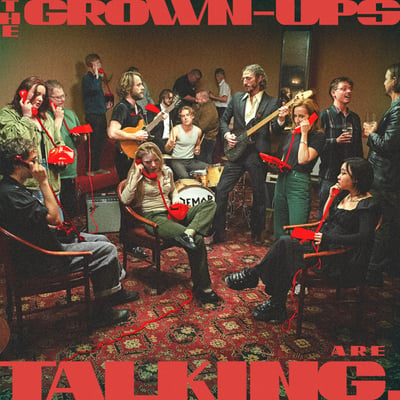
Demob Happy The Grown-Ups Are Talking
Released Feb 13, 2026 Milk Parlour Records
Consensus forming 4 professional reviews Updated Jul 13, 2026
Broadly positive consensus
Consensus is still forming across 4 professional reviews. Demob Happy's The Grown-Ups Are Talking cuts a clear line between bruising rock energy and urgent introspection, and critics largely agree it's a confident, emotionally charged chapter for the band.
How ChoruScore worksCritics' Top Tracks
The songs critics returned to most
No Man Left Behind
4 critic mentions
“Swiftly followed by " No Man Left Behind ", the track’s thumping bass underpins an incredibly serious discussion on the high rate of suicide” — Indie Is Not A Genre
Judas Beast
3 critic mentions
“Another highlight on the album is the tenacious " Judas Beast ", a pure-bred rock’n’roll track oozing with Demon Happy's usual branding” — Indie Is Not A Genre
Who Should I Say Is Calling?
2 critic mentions
“the wild blues of ‘Who Should I Say Is Calling” — Clash Music
Full critic consensus
Demob Happy's The Grown-Ups Are Talking cuts a clear line between bruising rock energy and urgent introspection, and critics largely agree it's a confident, emotionally charged chapter for the band. Across four professional reviews the record earned a 76.25/100 consensus score, with reviewers emphasizing the Joshua Tree sessions, desert influence and a newfound equilibrium in songwriting and production. The quick verdict implied by that score: the album is worth hearing for its strongest moments and thematic depth rather than chart-friendly singles alone.
Reviewers consistently point to a handful of best songs that crystallize the album's tension between explosive noise and contemplative calm. “No Man Left Behind” is repeatedly singled out for its harrowing focus on masculine mental health and grief, while “Judas Beast” and “Give It All To Me” get praise for marrying loose, electrifying guitar work to lyrical vulnerability. Critics also name “Somethings Gotta Give” and “Who Should I Say Is Calling?” as key moments where the band balances grit, bluesy stomp and reflective lyricism.
While some write-ups lean into the record's atmospheric backstory and recording context more than micro-reviewing every track, the critical consensus highlights maturity, songwriting growth and an authentic, desert-born mood. Some critics note the occasional overreach in production emphasis, but most agree that these best tracks make The Grown-Ups Are Talking a meaningful, often powerful statement in Demob Happy's catalog. Scroll down for full reviews and track-by-track notes if you want the detailed reading behind the score.
Track Ratings
How critics rated each track, relative to this album (0-100). Only tracks that made critics feel something are rated.
Power Games
No Man Left Behind
Judas Beast
Don't Hang Up
Who Should I Say Is Calling?
Miracle Worker Pt. 1
Miracle Worker Pt. 2
Somethings Gotta Give
Little Bird
Give It All To Me
Get the next albums worth your time.
Critic-backed picks in one clean digest. No clutter.
What Critics Are Saying
Deep insights from 5 critics who reviewed this album

Critic's Take
Demob Happy arrive on The Grown-Ups Are Talking sounding oddly liberated, and the best songs prove it. The bruised clarity of “Judas Beast” and the uneasy tenderness of “No Man Left Behind” stand out as the album's emotional cores, while the rustic finality of “Give It All To Me” closes things with uncanny resonance. Jack Butler-Terry's tone is measured but glowing, praising the band's songwriting and Marcantonio's range as reasons these are the best tracks on The Grown-Ups Are Talking. The record feels like a band shedding affectation and finding a truer, more compelling center in these cuts.
Key Points
-
The best song is 'Judas Beast' because it crystallizes the album's themes of betrayal with unflinching emotional clarity.
-
The album's core strengths are assured songwriting, vocal range, and a newfound authenticity across its standout tracks.
Themes

Critic's Take
The band’s fourth record, The Grown-Ups Are Talking, finds Demob Happy leaning into desert-born revelation and raw feeling, and the best songs on the album prove it. Lead highlights are “Judas Beast”, a track the reviewer calls a highlight and impossible to resist thanks to its loose, electrifying guitar and rock'n'roll vocals, and “Give It All To Me”, which closes the album with a calm, contemplative confession recorded amid coyotes. Equally essential is “No Man Left Behind”, a harrowing, emotive consideration of male suicide that anchors the record with genuine feeling. The result is an album where the rock and blues stomp sits alongside tender vulnerability, making these the best tracks on The Grown-Ups Are Talking for anyone seeking both muscle and heart.
Key Points
-
Judas Beast is the standout due to its loose, electrifying guitar and irresistible rock'n'roll vocals.
-
The album's core strengths are its blend of desert-born atmosphere, candid vulnerability and varied rock and blues textures.
Themes
In
Critic's Take
In a career-reflective turn, Demob Happy make their point plainly on The Grown-Ups Are Talking, where opener “Power Games” ignites the record and “No Man Left Behind” carries its hardest emotional punches. Joshua Allen writes with practical admiration, noting the molten riffs and Marcantonio's vocal urgency on “Power Games” and the raw, necessary subject matter of “No Man Left Behind” that gives the album real weight. He also singles out the tenderness of “Somethings Gotta Give” and the focused introspection of “Give It All To Me”, framing the record as mature and self-aware rather than indulgent. The result is a collection whose best songs balance fire and feeling, making clear which tracks drive the album's emotional core.
Key Points
-
No Man Left Behind is the album's emotional peak because of its raw subject matter and epic solo.
-
The album's core strengths are its balance of molten rock energy and candid, mature emotional themes.
Themes
Fa
Critic's Take
Demob Happy sound simultaneously bruising and buoyant on The Grown-Ups Are Talking, and the review repeatedly points to a handful of best songs that crystallise that tension. Kelly Murphy singles out “Who Should I Say Is Calling?” as the standout, calling it an anchor that gives the album context, while opener “Power Games” and single “No Man Left Behind” supply the record's most explosive moments. The prose balances praise and close reading - noting the loud, distorted guitars and groovy rhythms as well as the album's slower, grunge-tinged breaths like “Somethings Gotta Give”. Altogether, these best tracks on The Grown-Ups Are Talking define a confident chapter for the band that pairs confrontation with contemplative bliss.
Key Points
-
The best song is “Who Should I Say Is Calling?” because it anchors the album and contains the title lyric, giving context and weight.
-
The album’s core strengths are its blend of explosive, distorted rock and quieter, grunge-tinged contemplative moments that balance each other.
Themes

Critic's Take
In a clipped, promotional register the review frames Demob Happy and The Grown-Ups Are Talking as a band consolidating their sound and history, with the press-release prose stressing the Joshua Tree sessions and DIY label move. The piece highlights recording location and lineage more than song-by-song sparkle, so the best tracks on The Grown-Ups Are Talking are not parsed in detail here. Still, references to the album’s production and touring pedigree suggest the record’s strengths lie in atmosphere and seasoned performance rather than single-minded pop hooks. This reads like a contextual primer, useful for queries about the best songs on The Grown-Ups Are Talking only insofar as it situates the album’s origins and intent.
Key Points
-
No individual songs are discussed; the review emphasizes recording location and band history instead of best tracks.
-
The album’s core strengths are its Joshua Tree recording atmosphere and the band’s established touring and release pedigree.