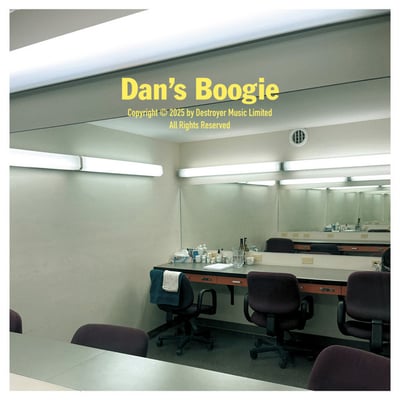
Destroyer Dan’s Boogie
Released Mar 28, 2025 Merge Records
Established consensus 11 professional reviews Updated Dec 9, 2025
Strong critical consensus
Destroyer's Dan’s Boogie arrives as a compact, career-spanning statement that repackages Dan Bejar's sly theatricality into nine vivid songs.
How ChoruScore worksCritics' Top Tracks
The songs critics returned to most
Cataract Time
10 critic mentions
“Cataract Time’, meanwhile, offers contrasting moods between the desperation and brokenness of the lyrics” — The Quietus
The Same Thing as Nothing at All
10 critic mentions
“the iridescent bursts of Your Blues -style MIDI orchestration illuminates the panoramic opener "The Same Thing As Nothing At All” — Paste Magazine
Dan's Boogie
9 critic mentions
“the opera house is a jam space for the desperate and insane", as on the title track of Dan’s Boogie” — The Guardian
Full critic consensus
Destroyer's Dan’s Boogie arrives as a compact, career-spanning statement that repackages Dan Bejar's sly theatricality into nine vivid songs. Critics largely agree the record refines longstanding motifs into a concise distillation of past styles and restless experimentation, and that its best songs stake the album's claims: “Cataract Time”, “The Same Thing as Nothing at All”, “Dan's Boogie” and “Bologna” recur as standout moments across reviews.
Across 11 professional reviews the consensus score sits at 84.55/100, a figure that underscores widespread critical praise for the album's lush production, dream-like soundscapes and sardonic worldview. Reviewers consistently praise the opener “The Same Thing as Nothing at All” and the eight-minute centerpiece “Cataract Time” for their opulent arrangements and emotional heft, while “Hydroplaning Off the Edge of the World” and “Bologna” earn acclaim for marrying baroque-pop flourishes with noirish atmosphere. Critics note a deliberate synthesis of Bejar's eras - glam, synth sheen and baroque pop - yielding moments of surprising tenderness amid improvisational risk.
Not all responses are unqualified: some critics point to occasional mid-album lulls and fragments of indulgent improvisation, but most agree that those risks amplify the record's sense of ambition and character study. The critical consensus frames Dan’s Boogie as both a retrospective reimagining and a confident, concise next chapter in Destroyer's catalogue, a record that rewards repeated listens and highlights the best songs on Dan’s Boogie as clear entry points into its strange, lovely world.
Track Ratings
How critics rated each track, relative to this album (0-100). Only tracks that made critics feel something are rated.
The Same Thing as Nothing at All
Hydroplaning Off the Edge of the World
The Ignoramus of Love
Dan's Boogie
Bologna
I Materialize
Sun Meet Snow
Cataract Time
Travel Light
Get the next albums worth your time.
Critic-backed picks in one clean digest. No clutter.
What Critics Are Saying
Deep insights from 12 critics who reviewed this album

Critic's Take
Destroyer’s Dan’s Boogie feels like a gorgeous ruined palace where the best tracks - “Cataract Time”, “The Ignoramus of Love” and the title song “Dan's Boogie” - reveal Bejar’s knack for strange lyrical koans. Laura Snapes’ voice finds him at once acerbic and warm, the arrangements luxuriant, and those songs stand out because they marry weird detail with genuine feeling. If you want a short answer to what are the best tracks on Dan’s Boogie, start with “Cataract Time” and the oddly calming “The Ignoramus of Love” for their tenderness and scope. The title track remains essential - a vivid city-scene emblem - and the closer “Travel Light” quietly seals the album’s outlook with grace.
Key Points
-
Cataract Time is the best song for its striking sweetness and tender lyricism.
-
The album’s core strength is Bejar’s blend of lyrical surprise and luxuriant arrangements that turn chaos into beauty.
Themes

Critic's Take
Destroyer's Dan’s Boogie is presented as a distilled, career-spanning statement where the best tracks - notably “Hydroplaning Off the Edge of the World” and “Bologna” - feel like high points. The narrative frames the album as both familiar and newly essential, a short but purposeful record that synthesizes the band’s signature motifs. This account answers which are the best tracks on Dan’s Boogie by spotlighting those songs that most convincingly rework Destroyer’s catalog.
Key Points
-
The album's core strength is its synthesis of Destroyer’s career motifs into a concise, purposeful statement that feels both familiar and newly essential.
Themes

Critic's Take
Destroyer have always liked to unlearn and recalibrate, and on Dan’s Boogie that contrarian process yields some of their richest moments yet. The review revels in the sumptuous opener “The Same Thing as Nothing at All”, and singles out “Bologna” as a spine-tingling baroque-pop highlight with Portishead-like orchestral spikes. Jeremy Allen’s voice is admiring and analytic, noting how Simone Schmidt takes the lion’s share while songs like “Cataract Time” and “I Materialize” twist mood and vaudeville theatrics to great effect. Overall the best tracks on Dan’s Boogie are presented as evidences of a band both mischievous and magnficent, expert at turning long experience into fresh, labyrinthine music.
Key Points
-
The best song work is in the opener and “Bologna” where orchestration, bass and narrative voice converge to striking effect.
-
The album’s core strengths are its reinvention-through-unlearning approach, baroque-pop orchestration, and Bejar’s sardonic, labyrinthine songwriting.
Themes

Critic's Take
Destroyer sounds like he’s cleaned the dust off old glories on Dan’s Boogie, and the best tracks - “The Same Thing as Nothing At All”, “Bologna” and “Cataract Time” - read like top-tier entries. Ultimately the triumvirate of “Bologna”, “Cataract Time” and percussion-led “Sun Meet Snow” are what make Dan’s Boogie rank highly in his catalogue.
Key Points
-
The album's strengths are theatrical, atmospheric songwriting and standout tracks that rescue otherwise autopilot stretches.
Themes

Critic's Take
In a career-highlight turn on Dan’s Boogie, Destroyer yields its best tracks like “Hydroplaning Off the Edge of the World” and “Cataract Time” as surreal, ecstatic showpieces that cement Bejar’s stature. Zara Hedderman revels in the album’s technicolor production and lyric-rich banquet, praising “Hydroplaning Off the Edge of the World” as a five-minute aural and narrative feast and “Cataract Time” as an eight-minute opus of transcendence. The opener “The Same Thing As Nothing At All” also gets singled out as an awe-striking introduction that links Destroyer’s past and present. Overall the best songs on Dan’s Boogie are celebrated for marrying vivid, surreal lyricism with John Collins’ gleaming arrangements, making the record feel like both a reckoning and a gift.
Key Points
-
The best song, "Hydroplaning Off the Edge of the World," is best for its surreal five-minute aural narrative and career-highlight lyricism.
-
The album’s core strengths are Bejar’s vivid, surreal lyricism and John Collins’ technicolor production blending synth-pop, jazz, and new wave.
Themes

Critic's Take
Destroyer's Dan’s Boogie reads like morning-after music, and the review insists the best songs - notably “Sun Meet Snow” and “Cataract Time” - capture that easy, lived-in glamour. Sophie Kemp writes with amused affection, calling the title moments tasteful and unshowy while celebrating the album's obsession with beauty and its funny, wiser tone. The narrator voice of the record comes through most clearly on “Sun Meet Snow” where Bejar is "in the zone," and on “Cataract Time” which she likens to watching snow drift; those tracks are presented as the album's emotional peaks. The critic frames these best tracks as evidence that Dan’s Boogie is understated control rather than flashy pastiche, the sort of record you wear sunglasses to on the train after a long night.
Key Points
-
The best song is "Cataract Time" because its eight-minute, intimate scope unfolds into a hypnotic, emotionally clear centerpiece.
-
The album's core strengths are its controlled production, obsession with beauty, and an easy, lived-in glamour that favors understatement.
Themes

Critic's Take
Destroyer’s Dan’s Boogie is a compact, magnetic record where the best songs - notably “Sun Meet Snow”, “Cataract Time” and “Hydroplaning Off The Edge Of The World” - distill Bejar’s dream-like soundscapes into thrilling, often sublime moments. The reviewer revels in the album’s juxtaposition of graceful rhythms and melancholic discordance, singling out “Sun Meet Snow” for its sway between serenity and distorted chaos and “Cataract Time” for its opulent, enveloping arpeggios. There is praise for memorable melodic hooks in “Hydroplaning Off The Edge Of The World” and for the record’s leanness, clocking a tight runtime while refining Destroyer’s craft. The tone is admiring and measured, presenting the best tracks as definitive highlights on a superb fourteenth album.
Key Points
-
Cataract Time is the standout for its opulent, enveloping eight-minute bliss.
-
The album’s core strengths are dream-like soundscapes, melancholic discordance, and refined, concise songwriting.
Themes
mu

Critic's Take
In a typically flourish-filled turn, Destroyer's Dan’s Boogie finds its best songs in the subtler corners - notably “Dan's Boogie” and “Sun Meet Snow”, where Bejar's jazzy, alt-pop balladry crystallizes. This is an album that rewards immersion, and those standout ballads are why it sticks with you.
Key Points
-
The title track's jazzy minimalism and emotional vulnerability make it the album's best song.
-
Dan’s Boogie excels in ambitious production balanced by intimate songwriting, creating an immersive nine-track statement.
Themes


Critic's Take
Destroyer's Dan’s Boogie finds Daniel Bejar improvising his way into some of the album's best moments, notably “Hydroplaning Off the Edge of the World” and the eight-minute “Cataract Time”. The record loves to shift genres - glam, country, synth-pop - and those shifts make songs like “The Ignoramus of Love” and “Dan's Boogie” hit with particular character. Production is lush and occasionally dissonant, which suits Bejar's sardonic voice and lets the centerpiece “Cataract Time” breathe. Even when improvisation misfires, as on parts of “Hydroplaning Off the Edge of the World”, the album frequently rewards patience with surprising tenderness.
Key Points
-
The eight-minute "Cataract Time" is the album’s centerpiece because of its jazzy filigrees and sax solo.
-
The album’s strengths are genre-hopping arrangements, Bejar's sardonic voice, lush production, and moments of genuine tenderness.
Themes

Critic's Take
Destroyer's Dan’s Boogie feels like a deliberate glance back across Dan Bejar's catalogue, compact and slyly ambitious. For listeners asking what the best tracks on Dan’s Boogie are, the album's title track and the lean, exploratory cuts stand out as touchstones of Bejar's range. It is, in the reviewer's tone, a succinct introduction to everything that makes Destroyer great, equal parts retrospective and gateway.
Key Points
-
The title track best encapsulates the album's retrospective synthesis and concise ambition.
-
The album's core strength is its compact, genre-spanning survey of Dan Bejar's stylistic range, making it a strong introduction.