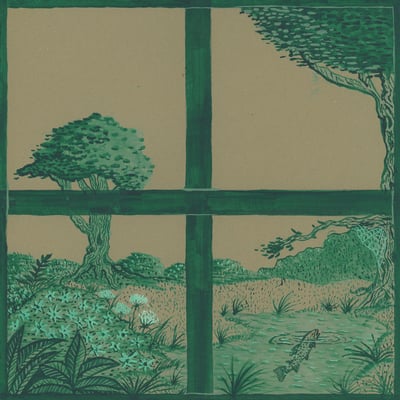
Dirty Projectors, David Longstreth & s t a r g a z e Song Of The Earth
Released Apr 4, 2025 New Amsterdam/Nonesuch
Consensus forming 4 professional reviews Updated Nov 30, 2025
Mostly positive consensus
Consensus is still forming across 4 professional reviews. Dirty Projectors's Song Of The Earth stages David Longstreth's most ambitious reach yet, a 24-part orchestral chamber-pop suite that pits pastoral beauty against climate anxiety and societal critique.
How ChoruScore worksCritics' Top Tracks
The songs critics returned to most
Summer Light
1 critic mention
“the album starts well with "Summer Light," where the female singers set the template” — Pitchfork
Blue of Dreaming
1 critic mention
“The song " Blue of Dreaming", a lullaby David Longstreth wrote for his newborn daughter, is tender.” — PopMatters
Raven Ascends
1 critic mention
“Nowhere is this harmoniousness more tender than on instrumental pieces "Spiderweb at Water’s Edge" and "Raven Ascends” — The Line of Best Fit
Full critic consensus
Dirty Projectors's Song Of The Earth stages David Longstreth's most ambitious reach yet, a 24-part orchestral chamber-pop suite that pits pastoral beauty against climate anxiety and societal critique. Critics agree the record contains luminous moments - particularly “Blue of Dreaming”, “Summer Light” and “Raven Ascends” - that distill Longstreth's tension between fragility and urgency, even as the whole sometimes splinters under its own invention. Across four professional reviews the album earned a 67.5/100 consensus score, a sign that reviewers found the project provocative and uneven in equal measure.
The critical consensus highlights recurring themes: orchestral experimentation and classical crossover, Gaia consciousness and environmental crisis, and a contrast of beauty and discord that animates the best songs on Song Of The Earth. Reviewers consistently praised tracks where strings and breath instruments unclench - “Blue of Dreaming” and “Raven Ascends” emerge as tender anchor points, while “Summer Light” and collaborative pieces like “Twin Aspens” and “At Home” register as standout songs for their moments of harmonic clarity. At the same time, critics note that collage-heavy pieces such as “Uninhabitable Earth, Paragraph One” or “Gimme Bread” can overwhelm narrative focus, making parts of the record feel diffuse.
Taken together, professional reviews suggest Song Of The Earth is worth hearing for its daring orchestration and striking high points, even if its sprawling ambition will divide listeners; the collection reads as an urgent, occasionally fractious meditation on interdependence, fatherhood, and a world in peril. Below are the full reviews that flesh out how and why certain tracks rise above the album's glorious clutter.
Track Ratings
How critics rated each track, relative to this album (0-100). Only tracks that made critics feel something are rated.
Summer Light
Gimme Bread
At Home
Circled in Purple
Our Green Garden
Walk the Edge
Opposable Thumb
More Mania
Spiderweb at Water’s Edge
Mallet Hocket
So Blue the Lake
Dancing on Our Eyelids
Same River Twice
Armfuls of Flowers
Twin Aspens
Uninhabitable Earth, Paragraph One
Kyrie/About My Day
Shifting Shalestones
Appetite
Bank On
Paper Birches, Whole Scroll
Raven Ascends
Blue of Dreaming
Raised Brow
Get the next albums worth your time.
Critic-backed picks in one clean digest. No clutter.
What Critics Are Saying
Deep insights from 5 critics who reviewed this album

Critic's Take
Dirty Projectors' Song Of The Earth feels like a fragile Eden, its best songs locating beauty in the brink of collapse. Overall the best songs on Song Of The Earth are the ones that make the pastoral feel precarious and necessary - both intimate and unignorable.
Key Points
-
The best songwork balances pastoral orchestration with urgent thematic bluntness, notably in the instrumentals and the title-referencing protest song.
-
The album’s strengths are its orchestral arrangements and the tension between beauty and ecological precarity.
Themes

Critic's Take
Woronzoff’s voice balances admiration and critique, noting that despite avoiding a simple "climate change opera" label the record dwells insistently in that thematic tension. Overall she presents the album as daring, sincere, and rewarding with repeated listens, urging engagement rather than passive consumption.
Key Points
-
The album’s core strengths are ambitious orchestration, thematic depth around climate and coexistence, and emotional range from tenderness to societal critique.
Themes


Critic's Take
The result is an album whose high points feel vividly rewarding in ways that answer the question of the best tracks on Song of the Earth, even if the whole hour often feels splintered and wearing.
Key Points
-
The album's core strength is its inventive orchestration and dense ensemble writing, even when those qualities produce fragmentation rather than unity.
Themes

Critic's Take
David Longstreth takes a dizzying left turn on Song Of The Earth, where jazzy orchestral improvisations and baroque pop collide with climate-minded themes. It warns that fans might find the set too diffuse or hectic, yet cannot deny the record's sheer ambition.
Key Points
-
The album's core strengths are its ambition, orchestral experimentation, and willingness to take radical stylistic turns.