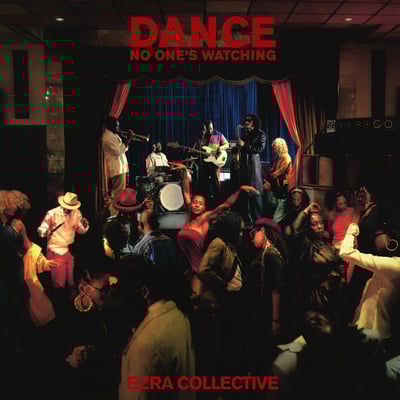
Ezra Collective Dance, No One's Watching
Released Sep 27, 2024 Partisan Records
Established consensus 8 professional reviews Updated Oct 2, 2026
Broadly positive consensus
Ezra Collective's Dance, No One's Watching arrives as a jubilant, dance-first statement that stitches London jazz to Afrobeat, highlife and neo-soul with contagious momentum.
How ChoruScore worksCritics' Top Tracks
The songs critics returned to most
The Herald
5 critic mentions
“Leading into the fast-paced tempo of The Herald , predecessor and aptly named Intro slumbers” — The Line of Best Fit
Shaking Body
5 critic mentions
“The only sign, perhaps, of newfound stardom on ‘Dance, No One’s Watching’ is the voice note from Ian Wright on the Latin-influenced ‘Shaking Body’.” — New Musical Express (NME)
Ajala
4 critic mentions
“Much of that comes from the epic Ajala which kicks off with a candid yet predictable dialogue from Koleoso” — The Line of Best Fit
Full critic consensus
Ezra Collective's Dance, No One's Watching arrives as a jubilant, dance-first statement that stitches London jazz to Afrobeat, highlife and neo-soul with contagious momentum. Across eight professional reviews the record has earned a strong critical reception, carrying an 82.5/100 consensus score that reflects critics' praise for its live energy, communal spirit and deft guest turns.
Critics consistently flag several standout tracks as proof of the album's strengths: “Ajala” repeatedly surfaces for its pounding grooves and horn-driven ecstasy, while “The Herald” and “Everybody” are singled out for their kinetic pulse and quieter, spiritual counterpoint. Reviewers also praise “God Gave Me Feet For Dancing” for Yazmin Lacey's neo-soul warmth and “Streets is Calling (feat. M.anifest and Moonchild Sanelly)” for its late-album highlife rush and collaborative spark. Across the reviews, themes of community and youth, live-to-studio translation, improvisational bravura and genre fusion recur, with many critics noting how the band balances dancefloor immediacy with moments of introspection.
While most professional reviews celebrate the record's joyous sequencing and commercial accessibility, some criticism points to the band embracing bigger, pop-leaning ambitions more overtly than on earlier work. Even so, the critical consensus suggests Dance, No One's Watching stands as a confident, celebratory chapter in Ezra Collective's catalogue - an album that both honors live performance roots and offers clear standout songs that make the case for why it is worth seeking out.
Below, detailed reviews unpack how these best songs and guest moments shape a record built for movement and communal celebration.
Track Ratings
How critics rated each track, relative to this album (0-100). Only tracks that made critics feel something are rated.
Intro
The Herald
Palm Wine
cloakroom link up. (Act 1)
God Gave Me Feet For Dancing (feat. Yazmin Lacey)
Ajala
The Traveller
in the dance. (Act 2)
N29
No One's Watching Me (feat. Olivia Dean)
our element. (Act 3)
Hear My Cry
Shaking Body
Expensive
Streets is Calling (feat. M.anifest and Moonchild Sanelly)
lights on. (Act 4)
Why I Smile
Have Patience
Everybody
Get the next albums worth your time.
Critic-backed picks in one clean digest. No clutter.
What Critics Are Saying
Deep insights from 9 critics who reviewed this album
mu
Fa
Critic's Take
The record's standouts - “The Herald”, “God Gave Me Feet For Dancing” and “Streets is Calling” - crystallize the album's strengths: euphoric afrobeat flourishes, velvet vocals and joyous interplay. Ben Forrest's tone is celebratory and slightly reverent, noting how these tracks make you move while showcasing the band's improvisational dexterity and taste for guest sparks. This is a record that rewards whole-album listening, but these tracks answer the question of the best songs on Dance, No One's Watching with persuasive, dancefloor-ready confidence.
Key Points
-
The Herald is the best track for its euphoric afrobeat-influenced jazz and nostalgic Nigerian funk echoes.
-
The album's core strengths are its danceable grooves, inventive collaborations, and seamless album-as-journey sequencing.
Themes
Ho
Critic's Take
Ezra Collective return with Dance, No One's Watching, a gleaming celebration of unbridled freedom that makes the case for the best tracks on Dance, No One's Watching with persuasive, rhythmic force. The reviewer singles out “The Herald” as a "mighty exercise in blood-pumping rhythm” and “Everybody” as its contemplative, spiritual counterpart, positioning those songs as the album's heart. The tone is celebratory and precise, guiding readers toward the best songs on the record while keeping the reviewer’s lively cadence intact.
Key Points
-
The Herald is the album's kinetic centerpiece because of its blood-pumping rhythm and radiant energy.
-
The album's core strength is its celebration of dance, freedom and West African church-inflected grooves.
Themes

Critic's Take
The record's highlights also include the epic momentum of “Ajala” and the anthemic sweep of “Hear My Cry”, which together map the album's mix of mellow and rapid sonics. Overall, the best tracks deliver communal, joyous urgency while keeping the group's signature warmth intact.
Key Points
-
The album's core strength is its blend of spiritual, communal dance motifs with accessible, melodic songwriting and eclectic sonic touches.
Themes


Critic's Take
Ezra Collective ask you to move on Dance, No One's Watching, and the best tracks - notably “Ajala” and “Everybody” - make that plea irresistible with pounding grooves and joyous horn lines. Ben Lee’s review praises the record’s pivot into hard funk, dub and highlife, singling out “Ajala” for its irresistible energy and “Everybody” for its euphoric, celebratory payoff. The album reads as a communal invitation to dance and belong, equal parts big-room ambition and late-night soul.
Key Points
-
“Ajala” is best for its irresistible highlife and Afrobeat energy that keeps listeners moving.
-
The album's core strengths are its dancefloor-ready grooves, communal spirit, and successful fusion of jazz with Afrobeat, funk and neo-soul.
Themes

Critic's Take
Nugent writes with giddy admiration, celebrating how horns, Tony Allen-style drums and Joe Armon-Jones’s keys make “Ajala” an apex of ecstatic interplay. Overall the record is praised as their most joyous yet, a triumphant follow-up that traffics in irresistible rhythms and gleeful genre-melding.
Key Points
-
“Ajala” is the best song because it is described as the party’s apex with ecstatic horns and irresistible rhythms.
-
The album’s core strength is its joyous, dance-first fusion of calypso, dub, Afrobeat, jungle and carnival delivered with live energy.
Themes

Critic's Take
Dan McCarthy writes with bright, affectionate clarity, framing the record as an ode to dance and the city - a set that mirrors the highs and lows of a night out and thrives when it lets the crowd in.
Key Points
-
The best song is driven by memorable featured vocals and dancefloor immediacy, making it a highlight of the album.
-
The album's core strengths are its live energy, cross-cultural influences, and celebration of London and global dance traditions.
Themes
Th
Critic's Take
He also highlights quieter pieces like “Why I Smile” and “Everybody” as deeply emotive, suggesting the album balances celebration with introspection. The review reads as confident: these are songs crafted for listening as much as for the dancefloor.
Key Points
-
The Herald is the best for sheer kinetic Afrobeat syncopation driven by the Koleoso rhythm section.
-
The album's core strengths are its rhythmic variety and balance between dancefloor energy and quiet, emotive moments.