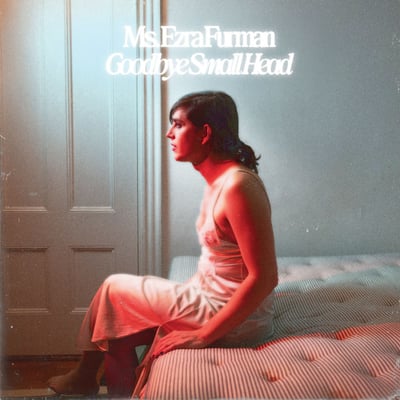
Ezra Furman Goodbye Small Head
Released May 16, 2025 Bella Union
Consensus forming 3 professional reviews Updated Nov 30, 2025
Mostly positive consensus
Consensus is still forming across 3 professional reviews. Ezra Furman's Goodbye Small Head arrives as a bracing, theatrical chronicle of identity, fury and fragile hope — critics agree the record trades polish for visceral immediacy.
How ChoruScore worksCritics' Top Tracks
The songs critics returned to most
You Mustn't Show Weakness
3 critic mentions
“with its skittish drums, eulogic cello, and haunting vocals, ‘You Mustn’t Show Weakness’ is the potent pinnacle” — DIY Magazine
I Need the Angel
3 critic mentions
“the album ends with an electric cover of Alex Walton’s “I Need the Angel”, bowing out intensely” — The Line of Best Fit
A World of Love and Care
3 critic mentions
“Human dignity was supposed to be a guarantee for all / Who gets left out of your dreams of a good society?” — DIY Magazine
Full critic consensus
Ezra Furman's Goodbye Small Head arrives as a bracing, theatrical chronicle of identity, fury and fragile hope — critics agree the record trades polish for visceral immediacy. Across three professional reviews the collection earned a 66.67/100 consensus score, with reviewers repeatedly pointing to moments where string arrangements and abrasive samples amplify themes of trans experience, dissociation and self-discovery. For those asking "is Goodbye Small Head good," the quick verdict from the critical consensus is that its highs are essential even if the whole is uneven.
Reviewers consistently name standout tracks that crystallize the album's emotional logic. “You Mustn’t Show Weakness”, “I Need the Angel” and “A World of Love and Care” are praised across reviews for pairing raw vocal grit with orchestral or sampled textures, while “Submission” and “Jump Out” also emerge as key moments of defiance and release. Critics note the record's strength lies in its combustible contrasts - moments of theatrical catharsis, string-laden tenderness, and pointed societal critique - even as some pieces feel deliberately chaotic rather than cohesively resolved.
Taken together, professional reviews frame Goodbye Small Head as a bold reinvention: a record where vulnerability and anger coexist, and where Furman's advocacy and identity work surface through inventive arrangements. Readers looking for the best songs on Goodbye Small Head will find the listed tracks repeatedly singled out; those seeking a full, consistently polished statement may find the album intentionally rough at the edges. Below follow the full reviews that shaped this critic consensus.
Track Ratings
How critics rated each track, relative to this album (0-100). Only tracks that made critics feel something are rated.
Grand Mal
Sudden Storm
Jump Out
Power of the Moon
You Mustn't Show Weakness
Submission
Veil Song
Slow Burn
You Hurt Me I Hate You
Strange Girl
A World of Love and Care
I Need the Angel
Get the next albums worth your time.
Critic-backed picks in one clean digest. No clutter.
What Critics Are Saying
Deep insights from 4 critics who reviewed this album

Critic's Take
Ezra Furman’s Goodbye Small Head is, in Daisy Carter’s urgent phrasing, a record of unflinching honesty that makes its best songs hit like confessions. Carter frames other standout moments - the blood-stained white flag of “Submission” and the godforsaken resignation of “Slow Burn” - as lyrical high points that balance defiance with fragility. This framing answers the question of the best tracks on Goodbye Small Head by privileging emotional intensity and textural daring above all else.
Key Points
-
The best song is “You Mustn’t Show Weakness” because it combines evocative strings, skittish drums and haunting vocals into the record's emotional apex.
-
The album's core strengths are raw lyrical vulnerability and bold textural reinvention, mixing strings, sampling and ragged vocal intimacy.
Themes
mu
Fa
Critic's Take
Everything spills out of Ezra Furman on Goodbye Small Head, a record that finds liberation inside collapse and rewards recklessness. The best songs, like “Submission” and “Power of the Moon”, drive that mix of fury and wonder. Kelly Murphy writes in close, sensory sentences, reveling in images of snow and shattered control, and the triumphant, wounded rock finale that makes tracks such as “You Mustn’t Show Weakness” stick. The record’s standout moments land where raw vocal grit meets theatrical staging, so when “Submission” radiates authenticity it feels earned.
Key Points
-
‘Submission’ is the album’s best track because it radiates an authentic, glistening intensity and received the highest praise.
-
Goodbye Small Head’s core strengths are its raw vocal urgency, theatrical moments, and defiant engagement with disorder and self-discovery.
Themes

Critic's Take
Ezra Furman's Goodbye Small Head feels intrinsically brave, and the best tracks - notably “Jump Out” and “Grand Mal” - show why those songs stand out. Lepore's prose leans on vivid, empathetic observation, praising Furman's soaring voice and string-laden arrangements that turn vulnerability into triumph. The review emphasises that the album's high points are those that pair aching subject matter with buoyant musical lifts, so listeners searching for the best songs on Goodbye Small Head will find “Jump Out” and “Grand Mal” especially essential. Ultimately the record is commended for turning rage and uncertainty into catharsis, making these standout tracks feel necessary rather than indulgent.
Key Points
-
The best song is “Jump Out” for its buoyant strings, panicked vocal delivery, and immediate emotional impact.