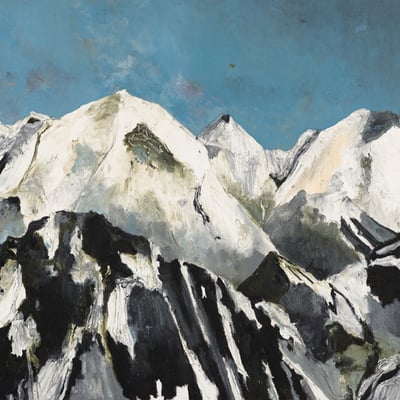
Félicia Atkinson Space as an Instrument
Released Oct 25, 2024 Shelter Press
Consensus forming 3 professional reviews Updated Dec 31, 2025
Broadly positive consensus
Consensus is still forming across 3 professional reviews. Félicia Atkinson's Space as an Instrument opens as a study in scale and hush, a record where piano minimalism and ambient texture map interior landscapes.
How ChoruScore worksCritics' Top Tracks
The songs critics returned to most
Thinking Iceberg
3 critic mentions
“The central track, the thirteen-minute ‘Thinking Like an Iceberg’, is edited from a live performance” — The Quietus
The Healing
3 critic mentions
“She talks over a lone piano playing a melancholy tune, the faint flutter of bird song, and the sounds made by a human rustling a sound recorder.” — The Quietus
Pensées Magiques
3 critic mentions
“Atkinson’s intimate soundscapes and layers of consequential and inconsequential noise” — The Quietus
Full critic consensus
Félicia Atkinson's Space as an Instrument opens as a study in scale and hush, a record where piano minimalism and ambient texture map interior landscapes. Across three professional reviews, critics point to the album's tension between beauty and withholding, and to moments that feel both fragile and vast; the consensus suggests the record rewards close, patient listening rather than instant comfort. With a consensus score of 81.33/100 from 3 reviews, reviewers consistently highlight the album's layered field recordings, spoken-word fragments, and found sounds that turn small gestures into expansive atmospheres.
Critics single out a cluster of standout tracks as the album's focal points. “Thinking Iceberg” (also cited as “Thinking Like an Iceberg” in one review) is described as the unsettling, majestic centerpiece, while “The Healing” and “Pensées Magiques” emerge as intimate high points where murmured French, portable piano and birdsong coalesce. Other praised pieces include “Sorry” and “Shall I Return to You”, which reviewers say offer moments of consoling tenderness amid the record's deliberate instability. Professional reviews note an avant-garde restraint throughout: the production often withholds resolution, privileging atmosphere, fragility and climate-inflected field recordings over conventional melodic payoff.
Taken together, the critical consensus frames Space as an Instrument as a quietly masterful exploration of space and interiority. Some reviewers emphasize its demanding nature, but they also call it gorgeous and strangely addictive, marking it as an essential listen for those curious about the best songs on Space as an Instrument and the album's delicate interplay of texture and voice. The summary below unpacks these perspectives in full.
Track Ratings
How critics rated each track, relative to this album (0-100). Only tracks that made critics feel something are rated.
The Healing
This Was Her Reply
Thinking Iceberg
La Pluie
Sorry
Shall I Return to You
Pensées Magiques
Get the next albums worth your time.
Critic-backed picks in one clean digest. No clutter.
What Critics Are Saying
Deep insights from 3 critics who reviewed this album

Critic's Take
In her quietly insistent voice, Félicia Atkinson makes Space as an Instrument sound like an inhabited place, where tracks such as “The Healing” and “Pensées Magiques” emerge as the best songs on Space as an Instrument because they fold spoken fragments and piano into a weathered, intimate architecture. The reviewer lingers on the album's layered phone recordings and piano playing, noting how those elements make certain pieces feel like centerpieces rather than background ambience. There is a measured reverence throughout, which explains why listeners searching for the best tracks on Space as an Instrument will find themselves returning to those moments of tenderness and texture.
Key Points
-
The best song is praised for folding phone-recorded spoken word and piano into an intimate, layered centerpiece.
-
The album’s core strengths are its textured atmospheres, use of found recordings, and delicate piano-spoken-word interplay.
Themes

Critic's Take
The review praises how Atkinson blends portable-device piano, birdsong and rustle to undercut standard musical practice, making these tracks the album's most compelling moments. Overall the reviewer calls the record "gorgeous, masterly and strangely addictive," recommending these standout pieces for anyone searching for the best tracks on Space as an Instrument.
Key Points
-
The album’s core strength is its blending of field recordings, whispered French and lo-fi piano to create precisely located aural spaces.
Themes

Critic's Take
Félicia Atkinson’s Space as an Instrument finds its best tracks in moments that feel like epistemic epiphanies rather than comforts, with “Thinking Iceberg” towering as the record’s unsettling centerpiece and “Sorry” and “Shall I Return to You” offering those rare, hard-won consolations. Colin Joyce’s sentences fold observation into sensation, insisting that the album’s pleasures are earned and framed by instability - he elevates the long, ghostly drift of “Thinking Iceberg” while idly admiring the glacial tenderness of “Sorry”. The review thus answers the question of the best tracks on Space as an Instrument by privileging pieces that balance alien intensity with fleeting melody, making “Thinking Iceberg” the record’s most vital listen.
Key Points
-
“Thinking Iceberg” is best because it is the record’s unsettling, meticulously described centerpiece that crystallizes the album’s alien intensity.
-
The album’s core strength is its deliberate tension between beauty and withholding, making moments of melody feel hard won.