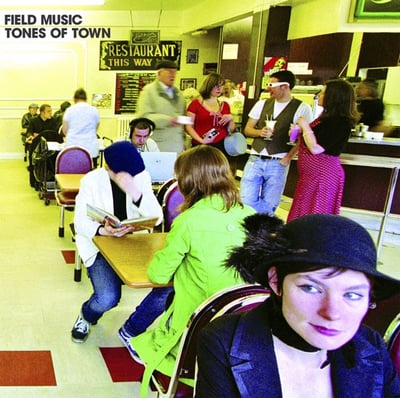
Field Music Tones of Town
Released Jan 22, 2007 Memphis Industries Ltd
Established consensus 20 professional reviews Updated Aug 25, 2026
Broadly positive consensus
Field Music's Tones of Town announces itself as a quietly ambitious collection where clever popcraft and unease coexist, and critics largely agree the record rewards patience.
How ChoruScore worksCritics' Top Tracks
The songs critics returned to most
Place Yourself
2 critic mentions
“The ethereal intro to ‘Place Yourself’ deftly changes the style once again and the words and music just seem to pleasantly wash over you” — Drowned In Sound
A House Is Not a Home
6 critic mentions
“A House Is Not a Home”, selected as the second single, is a radical shift” — PopMatters
In Context
3 critic mentions
“The bracing first single "In Context", which is even more invigorating out of context, kicks off with a heavy drum loop” — Pitchfork
Full critic consensus
Field Music's Tones of Town announces itself as a quietly ambitious collection where clever popcraft and unease coexist, and critics largely agree the record rewards patience. Across 20 professional reviews the album earned a 79.9/100 consensus score, with reviewers repeatedly pointing to songs such as “A House Is Not a Home”, “In Context” and the title track “Tones of Town” as standout moments that braid harmonies, piano flourishes and pointed social observation.
Critics praise the band's sophisticated arrangements and tasteful restraint: commentators note pastoral abstraction and sunshine-pop veneers that mask darker themes like anti-capitalism, rural loneliness and the grind of working life. Reviews from outlets including Hot Press, Pitchfork and PopMatters highlight how “A House Is Not a Home” and “In Context” turn melodic sweetness into braided menace, while songs such as “Place Yourself” and “Closer At Hand” supply the chiming hooks and harmonies that make the best songs on Tones of Town linger.
While some critics register a trade-off between immediacy and complexity - arguing the record at times favors intricate arrangements over explosive payoff - the prevailing critical consensus describes a confident, risk-taking follow-up that rewards repeated listens. Reviewers consistently salute the Brewis brothers' knack for controlled experimentation and social commentary, positioning Tones of Town as a sophisticated, understated high point in Field Music's early catalog and a record worth exploring for anyone asking whether Tones of Town is good.
Track Ratings
How critics rated each track, relative to this album (0-100). Only tracks that made critics feel something are rated.
Give It Lose It Take It
Sit Tight
Tones of Town
A House Is Not a Home
Kingston
Working to Work
In Context
A Gap Has Appeared
Closer At Hand
Place Yourself
She Can Do What She Wants
Outro
Place Yourself (Version One)
Get the next albums worth your time.
Critic-backed picks in one clean digest. No clutter.
What Critics Are Saying
Deep insights from 20 critics who reviewed this album
Dr
Critic's Take
Field Music sound fully realised on Tones of Town, and the best songs on Tones of Town - “Give It Lose It Take It”, “A Gap Has Appeared” and “Closer At Hand” - show that absurdly clever yet intrinsically simple pop can be utterly thrilling. The opener “Give It Lose It Take It” hooks you with a chiming intro and joyous guitar riff, while “A Gap Has Appeared” enchants with soft muted vocals and lush strings. My personal favourite, “Closer At Hand”, delights from the first chord with chiming guitars and a mind-blowingly ace chorus, proving this is as perfect a pop album as you are likely to hear.
Key Points
-
Closer At Hand is the standout because it delights from the first chord with chiming guitars and a superb chorus.
-
The album’s core strengths are clever, catchy pop songwriting, lush harmonies and inventive arrangements exploring themes of home and dislocation.
Themes

Ti

En
Co
Critic's Take
Field Music soundly deepen their psych-pop craft on Tones of Town, where the best tracks - “A House Is Not a Home” and “A Gap Has Appeared” - turn pastoral prettiness into something bleaker and more compelling. Ed Power's prose zeroes in on how “A House Is Not a Home” rides a "swell of self-hate," and how “A Gap Has Appeared” evokes rural loneliness, making them the best songs on Tones of Town because melody is braided with menace. Lesser highlights like “Kingston” and “Working to Work” win attention for their skewer of capitalism, their ambition rescued by exquisite songcraft. Ultimately this is an album to fall slowly in love with, its standout tracks revealing depth beneath the nostalgic glow.
Key Points
-
A House Is Not a Home is best for turning pastoral melody into a "swell of self-hate".
-
The album's core strengths are intricate psych-pop arrangements that hide anxiety beneath nostalgic atmospherics.
Themes

Critic's Take
Field Music sound emboldened on Tones of Town, and the review finds their push into pastoral abstraction utterly thrilling rather than self-sabotaging. Thompson praises the album's opening and the band's weird harmonies, implying that tracks like “Tones of Town” and “Give It Lose It Take It” exemplify that daring. The voice is admiring and precise, noting bravery without loss of momentum, and pointing listeners toward the best songs on Tones of Town as proof of the Brewis brothers' wholeheartedness. Overall the best tracks are framed as confident, harmony-rich high points that justify repeated listens.
Key Points
-
The title track is the album's best example of its pastoral abstraction and harmonic daring.
-
The album's core strengths are adventurous songwriting, intricate harmonies, and sustained momentum.
Themes

Critic's Take
Field Music present Tones of Town as a study in restraint, where the pleasures are small and steady rather than volcanic. The reviewer's voice delights in describing how “Give It Lose It Take It” opens with syncopated three-time and 70s synth fills, yet laments that no track really attempts greatness. He singles out “A House Is Not a Home” and “Kingston” for their piano parts, but the tone remains wry: uniformly accomplished, stubbornly inoffensive. For listeners asking which are the best songs on Tones of Town, the reviewer points to those piano-driven moments as the album's clearest pleasures.
Key Points
-
The best song moments are the piano-driven tracks, especially “A House Is Not a Home” which sustains its tune.
-
The album's core strength is consistent, tasteful arrangements and restraint, though that restraint keeps any song from becoming great.
Themes
mu
Critic's Take
Field Music's Tones of Town pinballs between warm nostalgia and sharp social observation, and the best tracks show that tension most clearly. “A House Is Not a Home” wears country-rock like a retro mask while making damning points about modern life, and “Place Yourself” rides vaudevillesque melodies into the album's most buoyant moments. The title track, “Tones of Town”, and opener “Give It Lose It Take It” also crystallize the urgent rhythms and time-obsessed lyrics that make these the best songs on Tones of Town. The record's sunshine-pop and dreamy harmonies keep the critique fleet-footed, so searchers for the best tracks on Tones of Town will find these moments the most memorable.
Key Points
-
The best song, "A House Is Not a Home", uses country-rock to deliver the album's sharp social critique.
-
The album's core strengths are its blend of nostalgic melodies, urgent rhythms, and incisive commentary on modern life.
Themes

Th


Q

Critic's Take
Field Music return with Tones of Town, a record where the best tracks - “In Context”, “A House Is Not a Home” and “Tones of Town” - marry baroque ambition with clever hooks. Marc Hogan's voice prizes craft over bombast, noting how “In Context” ignites with a drum loop while “A House Is Not a Home” is a percussion-happy standout that crystallizes the album's themes. Though the record sometimes sacrifices immediacy for complexity, its best songs reward repeat listens with meticulous arranging and melodic payoff.
Key Points
-
The best song, "In Context", is the most invigorating single and exemplifies the album's inventive arrangements.
-
Tones of Town's core strengths are meticulous baroque arrangements and clever hooks that reward attentive listening.
Themes

Critic's Take
Field Music never slams you over the head, but on Tones of Town the best tracks - “In Context” and “A House Is Not a Home” - reveal why patience is rewarded. Raper’s measured praise points to tight arrangements and small experimental touches, from the beatbox breakdown in “Sit Tight” to the synth coda on “She Can Do What She Wants”, that lift these songs into little obsessions. The reviewer keeps returning to the album’s coiled pop charm, noting that repeated listens unlock the lush, disciplined craft that makes these the best songs on Tones of Town.
Key Points
-
“In Context” is the best track because of its disciplined structure and lush arrangement.
-
The album’s core strength is subtle, sophisticated songwriting that rewards repeated listens.