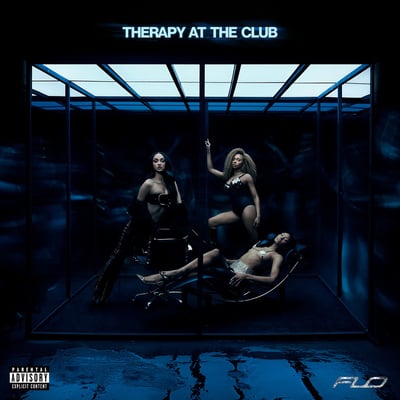
FLO THERAPY AT THE CLUB
Released Aug 7, 2026 EMI
Established consensus 5 professional reviews Updated Oct 1, 2026
Split critical consensus
FLO's THERAPY AT THE CLUB opens like a tipsy confessional that trades in club-ready sass and close-knit harmonies, and critics largely agree its strongest moments prove the trio's vocal craft and pop instincts.
How ChoruScore worksCritics' Top Tracks
The songs critics returned to most
Floating
3 critic mentions
“ballads ‘Floating’ and ‘Miss U Missing Me’ are lovely vocal showcases” — New Musical Express (NME)
I can’t be high around you anymore
2 critic mentions
“and 'I can’t be high around you anymore' is perhaps their best” — DIY Magazine
Call Me
1 critic mention
“Call Me’, a falsetto rife tirade of desires built from vocal interplay adds heft” — Clash Music
Full critic consensus
FLO's THERAPY AT THE CLUB opens like a tipsy confessional that trades in club-ready sass and close-knit harmonies, and critics largely agree its strongest moments prove the trio's vocal craft and pop instincts. Across five professional reviews the record earned a 64/100 consensus score, with reviewers repeatedly pointing to mid-album ballads and early hooks as the collection's clearest victories. Songs cited most often as standouts include “I can’t be high around you anymore”, “Floating”, “Cry Ugly” and “Don’t Break Her Heart”—tracks praised for vocal layering, emotional specificity and moments of modern R&B nostalgia.
The critical consensus frames THERAPY AT THE CLUB as a record of pleasing contrasts: club-pop energy and Y2K-tinged production sit beside intimate balladry and girl-group harmonies. Reviewers commend polished highlights such as “Remedied” and “Call Me” for their textural ambition, while several critics note the 16-track runtime dilutes momentum, arguing a tighter edit would have sharpened impact. Praise centers on themes of intoxicated relationships, sisterhood and vocal vulnerability; criticism focuses on stylistic variety tipping toward crowding and unfinished ideas.
Taken together the professional reviews present a mixed but affirmative picture: THERAPY AT THE CLUB contains must-listen moments that showcase FLO's growing maturity and mainstream ambition, even if the record's sprawling sequencing keeps it from feeling fully realized. For readers wondering "is THERAPY AT THE CLUB good" or searching for the best songs on THERAPY AT THE CLUB, the consensus points you toward the album's harmonized ballads and hook-forward singles as its most rewarding rewards. Below, detailed reviews unpack where those highs land and why the record feels both promising and uneven within FLO's evolving British R&B revival.
Track Ratings
How critics rated each track, relative to this album (0-100). Only tracks that made critics feel something are rated.
Side Effects
Small Doses
Cry Ugly
Leak It
Touché
I can’t be high around you anymore
Sober
Therapy at the Club
Remedied
Pose
Call Me
Sex In Peace
Floating
Miss u Missing me
Don’t Break Her Heart
Haterbooth
Get the next albums worth your time.
Critic-backed picks in one clean digest. No clutter.
What Critics Are Saying
Deep insights from 9 critics who reviewed this album


Critic's Take
FLO mostly level up on THERAPY AT THE CLUB, with best songs like “Therapy at the Club” and “I can’t be high around you anymore” showing their strength in silken harmonies and vulnerability. The reviewer's eye lingers on album centrepiece “Therapy at the Club” as an old-school girl-group moment with lyrics that cut deep, and on the intimate highlight “I can’t be high around you anymore” as a tender standout. Pop-forward singles such as “Leak It” and “Touché” push them toward mainstream success, though the second half’s scattershot choices undercut cohesion. Overall, the best tracks on THERAPY AT THE CLUB prove FLO can balance R&B soul and pop ambition, even if the album gets messy by the end.
Key Points
-
The best song is the album centrepiece “Therapy at the Club” for its old-school girl-group vibes and cutting lyrics.
-
The album's core strengths are silky harmonies, strong R&B moments, and successful pop experimentation despite a scattershot second half.
Themes

Critic's Take
FLO's THERAPY AT THE CLUB finds its best songs in the softer, more revealing moments, where the trio's harmonies truly land. The reviewer's pick for best tracks - “Floating” and “Miss U Missing Me” - are described as poised, dreamy ballads that explore vulnerability in relationships. Equally significant is “Call Me”, a falsetto-rich tirade of desire that adds heft and honesty to the album's take on modern love. The narrative keeps the album's club confessional energy but privileges these quieter showcases as the collection's emotional center.
Key Points
-
The best song moments are the softer ballads that showcase FLO's harmonies, especially “Floating” and “Miss U Missing Me”.
-
The album's core strengths are vocal synergy, intricate harmonies, and a blend of club energy with intimate vulnerability.
Themes

Critic's Take
FLO take you through THERAPY AT THE CLUB like a slightly tipsy confessional, and the best songs - “Pose”, “Remedied” and “Floating” - show why. The reviewer's ear lingers on “Pose” for its pared-back Pump Up the Jam interpolation and on “Remedied” for the jaunty big-band horns that lift an anxious beat. Equally, the trio's balladry lands hard on “Floating”, where their harmonies soar and chemistry is most evident. Even so, the album's 16 mid-paced tracks mean the highs cool into a drag, making these standouts feel like islands of clarity rather than a sustained sweep.
Key Points
-
Floating is the album’s standout for vocal chemistry and soaring harmonies.
-
The album’s strength is its cohesive theme and strong balladry, but its mid-paced length dims momentum.
Themes

Critic's Take
In a measured, appreciative tone Otis Robinson frames FLO's THERAPY AT THE CLUB as a continuation of the trio's slick R&B apprenticeship, singling out “Cry Ugly” as an effortlessly deft pre-drinks soundtrack and “I can’t be high around you anymore” as perhaps their best, a track that recalls storytelling forebears. He also flags “Haterbooth” as the album's most ear-piquing offering and notes “Pose” as a light swerve that diversifies the record. The voice is steady and approving, emphasising vocality, suave R&B connoisseurship and modest growth rather than major stylistic gambles. This keeps the focus on the best tracks on THERAPY AT THE CLUB as refined examples of FLO's strengths rather than radical reinventions.
Key Points
-
“I can’t be high around you anymore” is highlighted as perhaps FLO's best for its storytelling and maturity.
-
The album's core strengths are vocal craftsmanship, suave R&B production, and modest creative growth.
Themes

Critic's Take
FLO’s THERAPY AT THE CLUB often feels like a shot of adrenaline, and the review makes clear the best tracks are those that pair vivid production with vocal tension. Paul Attard praises “Remedied” for its "rich vocal layering" and radiant turn-of-the-century production, and points to “Cry Ugly” and “Don’t Break Her Heart” as moments where confrontational lyrics and tense arrangements land. The criticism is consistent: big ideas and hooks are frequently undercut by abrupt structural choices, so the best songs are the ones that actually let their hooks breathe. This framing answers searches for the best songs on THERAPY AT THE CLUB by naming “Remedied”, “Cry Ugly”, and “Don’t Break Her Heart” as standout moments driven by vocal force and production.
Key Points
-
“Remedied” is best for marrying rich vocal layering with radiant Y2K production despite a truncated structure.
-
The album’s core strengths are vocal tension and bold stylistic shifts, though many ideas feel underdeveloped.
Themes

Critic's Take
FLO’s THERAPY AT THE CLUB bristles with club-ready sass and craft, and the best songs on the album - “Small Doses”, “Sober” and “Don’t Break Her Heart” - show why. The review leans on vivid, pop-drenched praise, noting the Phrygian sass of “Small Doses” and calling “Sober” sublime, while saving its highest praise for “Don’t Break Her Heart” as a top, number-one tune. The voice is admiring and slightly playful, celebrating immaculate harmonies, sly swagger and moments of pure pop craftsmanship that make these tracks standouts.
Key Points
-
The album’s core strengths are immaculate harmonies, confident British R&B swagger and inventive club-ready production.
Themes

Critic's Take
On FLO's THERAPY AT THE CLUB the best songs sit squarely in the opening run, notably “Cry Ugly” and “Leak It”, which combine sly humour and Pussycat Dolls-style braggadocio to show the trio at full flush. The review leans on how those tracks marry impeccable harmonies with irresistible hooks, while quieter moments like “Miss U Missing Me” let the voices breathe and emerge as another clear highlight. The critic registers inconsistency across the 16-track runtime, arguing that a firmer edit would reveal a ten-track pop album of real quality. Overall the take on best tracks on THERAPY AT THE CLUB emphasizes catchy, characterful early moments and a stripped-back late gem.
Key Points
-
The best songwork is front-loaded: "Cry Ugly" and "Leak It" pair humour and braggadocio with irresistible hooks.
-
The album's strengths are impeccable harmonies and moments of vocal clarity, though crowded production undermines consistency.
Themes

Critic's Take
FLO lean into plush harmonies and 2000s pop-R&B nostalgia on THERAPY AT THE CLUB, and the best songs - like “I can’t be high around you anymore” and “Haterbooth” - show the trio at their most emotionally savvy and club-ready. Vrinda Jagota’s take frames these tracks as seventh-date confessions and funk-pop heaters, where woozy beats and searing electric guitar make the strongest moments feel lived-in and immediate. The record’s warmest victories, from the yearning of “Miss u Missing me” to the protective camaraderie of “Don’t Break Her Heart”, are as much about female companionship as they are about romance. Jagota privileges songs that translate feeling into texture, so the best tracks on THERAPY AT THE CLUB are those that pair polished harmonies with narrative specificity.
Key Points
-
The best song emphasizes emotional specificity paired with polished harmonies, exemplified by “I can’t be high around you anymore”.
-
The album’s core strength is lush, 2000s-inflected pop-R&B that centers female friendship and self-expression.