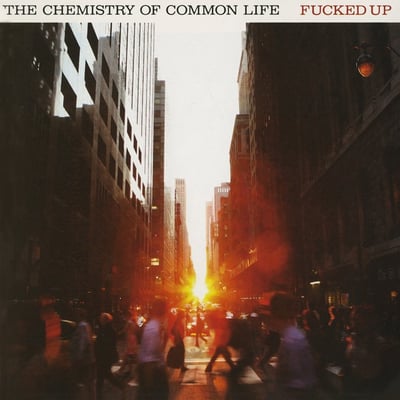
Fucked Up The Chemistry of Common Life
Released Oct 13, 2008 Matador
Established consensus 27 professional reviews Updated Aug 25, 2026
Broadly positive consensus
Fucked Up's The Chemistry of Common Life stakes a startling claim: hardcore ferocity and melodic ambition can coexist without compromise.
How ChoruScore worksCritics' Top Tracks
The songs critics returned to most
The Chemistry of Common Life
8 critic mentions
“furthering the message of the title track that the magic in our lives is still often a result of nature” — Pitchfork
Son the Father
6 critic mentions
“When frontman Pink Eyes...makes his grand entrance 1.5 minutes into the massive album opener "Son the Father” — Pitchfork
Twice Born
5 critic mentions
“Twice Born’ goads us into putting our "hands up if you think you’re the only one" before a choir sneers” — New Musical Express (NME)
Full critic consensus
Fucked Up's The Chemistry of Common Life stakes a startling claim: hardcore ferocity and melodic ambition can coexist without compromise. Across 27 professional reviews the record earned an 80.56/100 consensus score, and critics consistently point to a handful of tracks - “Son the Father”, “The Chemistry of Common Life”, “Twice Born”, “No Epiphany” and “Magic Word” - as the clearest expressions of the band's daring blend of noise and nuance.
Reviewers praise the album's sonic density and genre-blending, noting how shoegaze-tinged guitars, synth flourishes and tribal percussion push songs from pure aggression into unexpectedly melodic territory. Many critics highlight themes of death, birth and religious questioning, describing moments of hallucinogenic imagery and searching skepticism that give the record a meditative counterpoint to its onstage chaos. The consensus argues that when Fucked Up lean into roomy arrangements and layered production - as on “Son the Father” and the title track - the music becomes both cathartic and eerie; when the band holds back, tracks like “Twice Born” and “No Epiphany” land as anthemic and immediate.
Not all reviews are unqualified. Some critics praise the ambition while warning that sprawling arrangements occasionally tip into excess, and a minority found sections overlong or indulgent. Still, professional reviews overwhelmingly admire the band's reinvention of hardcore, calling out the balance of fury and grace, communal dynamics and melodic hooks. For readers wondering whether The Chemistry of Common Life is worth a listen, the critical consensus suggests a challenging, often rewarding record whose best songs emerge as must-listen moments and proof that Fucked Up's punk reinvention carries real artistic risk and payoff.
Track Ratings
How critics rated each track, relative to this album (0-100). Only tracks that made critics feel something are rated.
Son the Father
Magic Word
Golden Seal
Days of Last
Crooked Head
No Epiphany
The Peaceable Kingdom
Black Albino Bones
Royal Swan
Twice Born
Looking For God
The Chemistry of Common Life
Get the next albums worth your time.
Critic-backed picks in one clean digest. No clutter.
What Critics Are Saying
Deep insights from 27 critics who reviewed this album

Xl

Critic's Take
Fucked Up’s The Chemistry of Common Life reads like a defiant manifesto, loud and meticulous at once, and the best tracks make that paradox sing. The opener “Son the Father” and the title closer “The Chemistry of Common Life” form a melodic bookend that rewards repeat listens, while the synth-laced “Golden Seal” reveals the album’s hidden subtleties.
Key Points
-
The best song moments come from the pairing of the opener and closer, which form a melodic bookend.
-
The album’s strength is its blend of unapologetic loud punk and hidden subtleties, like background synths and layered melodies.
Themes

Critic's Take
Fucked Up sound at once brutally immediate and curiously meditative on The Chemistry of Common Life, and the best tracks show that tension. The review’s praise centers on “Twice Born” for its wall of screeching guitars into a calm riff, and “Looking For God” as the instrumental counterpoint that reframes the album’s dynamics. Daniel Rivera’s voice is blunt and vividly descriptive, noting how the band feeds off one another to make songs like “Magic Word” erupt from tribal percussion into explosive aggression. Read as a whole, the album’s best songs exemplify Chemistry’s blend of fury and lushness, the exact qualities that make them the top tracks on the record.
Key Points
-
The best song, "Twice Born", is best for its violent guitars and drumming that resolve into a calm, defining instrumental riff.
-
The album’s core strength is its successful fusion of hardcore aggression with meditative, shoegaze textures, producing organic, creative contrasts.
Themes
mu
Sp
Pr
Co

Critic's Take
Fucked Up make a convincing case that the best tracks on The Chemistry of Common Life are muscular and surprisingly melodic, particularly “Son the Father” and “No Epiphany”.
Key Points
-
The best song is driven by muscular guitars and anthemic chorus, exemplified by "Son the Father" being called tactile and pummeling.
-
The album's core strengths are its communal production, layered guitars, and the blending of hardcore energy with melodic, anthemic arrangements.
Themes

Critic's Take
Fucked Up's The Chemistry of Common Life feels like a restless search that pays off in moments - the best songs on The Chemistry of Common Life are the visceral anthens “Son the Father” and “Twice Born”. Matthew Fiander writes with a mix of awe and precision, praising how those standouts hit you in the gut while the band also slips into moody indie on “Black Albino Bones” and cinematic scope on “Royal Swan”. The reviewer's eye for production and layered excess explains why these tracks register as the album's high points, propelled by Pink Eyes' caustic delivery and big, bracing arrangements.
Key Points
-
The best song(s) like "Son the Father" and "Twice Born" succeed by combining Pink Eyes' caustic delivery with massive, layered production to create unstoppable anthems.
-
The album's core strengths are its thematic spiritual searching and its musical versatility, ranging from moody indie to cinematic post-rock and noisy experiments.
Themes

Critic's Take
Fucked Up on The Chemistry of Common Life revel in contradiction, and the best songs - “Crooked Head”, “No Epiphany” and the title track - make that case loud and clear. The reviewer revels in the band’s violence and intelligence, calling “Son The Father” a back-alley fight and praising how “The Chemistry of Common Life” explodes with joyous shrieking energy. Mid-album gems like “Looking For God” and “Black Albino Bones” are noted for unexpected melody and dark playfulness, which is why listeners hunting the best tracks on The Chemistry of Common Life should start there. The tone is admiring and astonished, insisting these are not dumb punks but a startlingly talented punk rock band.
Key Points
-
The best song(s) stand out by blending punishing hardcore with unexpectedly anthemic, melodic moments.
-
The album’s core strength is its intelligent contradictions: aggression married to melody and depth.
Themes

Critic's Take
On Fucked Up’s The Chemistry of Common Life the best songs are muscular and strangely melodic, particularly “Twice Born” and “No Epiphany”. Sean Caldwell revels in the band's anthemic fury and lush vocal backdrops, praising “Twice Born” for its rallying cry and “No Epiphany” for its harmonized vocals, while noting the title track closes energetically. The review frames these as the standout tracks that show how punk can be both aggressive and imaginatively arranged, making them the best tracks on The Chemistry of Common Life for listeners seeking fervent hooks and raw passion.
Key Points
-
“Twice Born” is the best song due to its anthemic rallying cry and engaging vocal delivery.
-
The album's core strength is combining hardcore fury with surprising melodic and experimental touches.

Critic's Take
Fucked Up deliver a record that channels live chaos into brutal, exhilarating songs on The Chemistry of Common Life. The reviewer's voice singles out “Magic Word” as an undeniable anthem and the title track “The Chemistry of Common Life” as equally towering, arguing both deserve national-anthem status. The tone is ecstatic and slightly unhinged, insisting that primal, raw energy makes these the best tracks on the album. This is praise delivered with wit and menace, and it frames the best songs as the ones that most vividly capture the band’s confrontational live spirit.
Key Points
-
The best song is praised for anthem-like status and sheer awesomeness, making it a standout.
-
The album’s core strength is channeling live, primal chaos into raw, exhilarating hardcore punk recordings.
Themes


Q
Ti

Critic's Take
Fucked Up make a defiant case on The Chemistry of Common Life, and the reviewer's voice relishes the album's sprawling ambition. The review singles out the layered production and the lush shoegaze textures as the chief reasons why the best tracks stand out, with Mike Haliechuk's dozens of guitars creating massive washes that lift songs like “Looking For God” into something epic. The record rejects punk dogma - short, raw immediacy gives way to meticulous arrangements and a violent-yet-effortless vocal delivery that makes songs such as “Looking For God” and “The Chemistry of Common Life” feel like the album's high points. Listening for the best songs on The Chemistry of Common Life means following those dense layers and Pink Eyes' signature howl, which the reviewer frames as integral to the album's success.
Key Points
-
The best song is praised for combining dense, shoegaze-style layering with Pink Eyes' powerful vocals, exemplified by "Looking For God".
-
The album's core strengths are its anti-formula ambition and meticulously layered, lush production that pushes punk into expansive territory.
Themes
Sp
NO
Ar

Dr
Critic's Take
Fucked Up's The Chemistry of Common Life makes clear that the best songs are those that marry brutality with unexpected flourishes - chief among them “Son the Father” and “Royal Swan”. The review frames these tracks as emblematic of the album's inventiveness and immersive intensity, explaining why listeners asking for the best songs on The Chemistry of Common Life should start there.
Key Points
-
The best song, “Son the Father”, is best because it pairs delicate instrumentation with explosive hardcore payoff.
-
The album's core strengths are its inventive surprises and tightly constructed songs that fuse diverse influences with intense riffage.
Themes
Co

Critic's Take
Fucked Up's The Chemistry of Common Life feels like the band stretching into something more epic while holding on to its hardcore core. Marticorena notes recurring motifs of birth, death and re-living that give the album cohesion, and he highlights the contrast between dirty aggression and eerie female voices as a defining strength. For listeners searching for the best songs on The Chemistry of Common Life, tracks such as “The Chemistry of Common Life” and “The Peaceable Kingdom” crystallize that uneasy, trippy balance. The record is trippy but grounded, a pain-and-beauty push that makes those moments stand out rather than dissolve into noise.
Key Points
-
The title track best encapsulates the album’s trippy, scientific bent balanced with hardcore aggression.
-
The album’s core strength is its thematic unity around birth, death and re-living, plus the tension between eerie vocals and dirty aggression.
Themes

Critic's Take
Fucked Up sound like a band torn between punk immediacy and arty indulgence on The Chemistry of Common Life. The reviewer singles out “The Chemistry of Common Life” as one of the best songs for its relentless drum fills and anthemic contours, and praises “Black Albino Bones” for its fast, fun melody. The piece argues the best tracks succeed when the band lets go of contrivance and simply rocks, but overall the album is hampered by turgid, overlong arrangements that undercut its experimental flourishes.
Key Points
-
The title track is best for its relentless drum fills, acoustic touches, and anthemic, ascending contours.
-
The album's strength is occasional melodic payoff amid bold instrumentation, but is weakened by overlong, haphazard arrangements.