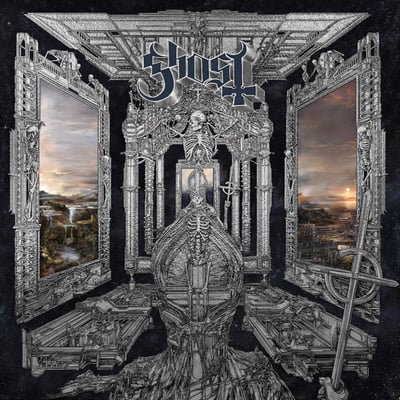
Ghost Skeletá
Released Apr 25, 2025 Loma Vista Recordings
Established consensus 10 professional reviews Updated Aug 27, 2026
Broadly positive consensus
Ghost's Skeletá arrives as a widescreen, 1980s‑tinged concept record that trades some of the band's earlier mystique for arena-ready melodrama and frank meditations on mortality.
How ChoruScore worksCritics' Top Tracks
The songs critics returned to most
Satanized
9 critic mentions
“The album’s darkest song, the swinging lead single “Satanized”, is as heavy as Skeletá gets” — PopMatters
Lachryma
9 critic mentions
“Lachryma allows sadness to seep in, accompanied by Sabbath -worshipping weight.” — Kerrang!
Umbra
8 critic mentions
“artfully combining a lavish synth intro straight out of Rick Wakeman's bag of tricks” — PopMatters
Full critic consensus
Ghost's Skeletá arrives as a widescreen, 1980s‑tinged concept record that trades some of the band's earlier mystique for arena-ready melodrama and frank meditations on mortality. Across ten professional reviews the critical consensus lands positive but measured, with a 76/100 consensus score from 10 reviews that praises vivid songwriting and several undeniable highlights while noting a mid-album slump and occasional overblown production.
Critics consistently point to a front-loaded trio of standouts as the best songs on Skeletá. “Satanized” is repeatedly named for its dark seduction and muscular hooks, “Lachryma” for chiming arpeggios and a high-gloss glam chorus, and “Peacefield” or “Umbra” for their sweeping, AOR-inflected drama depending on the reviewer. Reviewers praise the record's retro rock and 80s AOR influences, theatrical storytelling, and emotional core—themes of mortality, sorrow and seductive blasphemy recur—while several critics flag filler, compressed production and a loss of earlier taboo-tinged mystery as limiting factors.
Taken together the professional reviews frame Skeletá as a confident, occasionally contradictory chapter in Ghost's catalogue: a record where arena-sized ambition yields memorable single moments and strong songwriting even as revivalist tendencies and uneven sequencing blunt its full impact. For readers wondering whether Skeletá is worth a listen, the critic consensus suggests the album is worth hearing for “Satanized”, “Lachryma” and “Peacefield” or “Umbra”—tracks that best capture the record's blend of theatricality and melancholy—before deciding whether the broader concept holds together.
Track Ratings
How critics rated each track, relative to this album (0-100). Only tracks that made critics feel something are rated.
Peacefield
Lachryma
Satanized
Guiding Lights
De Profundis Borealis
Cenotaph
Missilia Amori
Marks Of The Evil One
Umbra
Excelsis
Get the next albums worth your time.
Critic-backed picks in one clean digest. No clutter.
What Critics Are Saying
Deep insights from 11 critics who reviewed this album
Fa
Critic's Take
From the off, Ghost's Skeletá feels like a band rummaging through its former glories rather than reinventing them, yet a few songs still soar. The best tracks on Skeletá are plainly “Lachryma”, “Satanized” and “Umbra”, each stopping the record from collapsing under its own ambitions. Kelly Murphy's ear clings to those moments of melodic clarity and theatrical charm, even as the rest of the album drifts into reheated stadium-rock gestures. For readers asking what the best songs on Skeletá are, return to “Lachryma” and “Satanized” first - they most clearly rekindle Ghost's old magic.
Key Points
-
‘Lachryma’ is the album highlight because it marries a heavy riff with a compelling melody that lingers.
-
Skeletá's core strength is its occasional melodic theatricality, though the record overall leans on nostalgia more than innovation.
Themes

Critic's Take
The Pope is dead, long live Ghost - on Skeletá Tobias Forge doubles down on 80s pomposity and arena grandeur, and the best songs on the record prove it. Opening cut “Peacefield” is the immediate hook, a bona fide banger that sets the tone, followed closely by the moody swoon of “Lachryma” and the era-defining “Satanized” which cements the album's strengths. The reviewer relishes guitar work and vocal production while flagging ballads like “Guiding Lights” and “Excelsis” as momentum-sapping choices, but overall celebrates Skeletá as a thrilling, honest chapter in Ghost's catalogue.
Key Points
-
The best song is "Peacefield" because it opens as an immediate arena-ready banger and establishes the album's tone.
-
The album's core strengths are 80s-inspired songwriting, strong guitar work, and stellar vocal production, balanced by occasional momentum-sapping ballads.
Themes


Critic's Take
Ghost's Skeletá finds its strength in a handful of tracks that reshape expectations, notably “Cenotaph” and “Umbra”. Liberty Dunworth writes with measured admiration, praising how “Cenotaph” leans into a feel-good pop flair while “Umbra” embraces glam-rock, making them two of the best tracks on Skeletá. The review also highlights opener “Peacefield” and closer “Excelsis” as emotionally resonant moments, arguing the best songs here reward patience and repeated listens. Overall the critic positions these standouts as evidence that the best songs on Skeletá signal a promising new chapter for the band.
Key Points
-
The best song is a standout that redefines expectations, with “Cenotaph” especially praised for its feel-good pop flair.
-
The album's core strengths are genre-blending and emotional introspection, rewarding patience and repeated listens.
Themes

Critic's Take
In a voice equal parts affectionate and wry, Ghost on Skeletá trade in big-hair nostalgia and candid mortality, and the best songs - notably “Lachryma” and “Missilia Amori” - do the most work. Andy Crump frames “Lachryma” as where Ghost’s aggression and experience collide, a highlight that turns Hot Topic poetry into something mature. He singles out “Missilia Amori” and “Marks Of The Evil One” as stomping, arena-ready moments, while “Excelsis” supplies the blunt, painfully honest summary of mortality that gives the record its heart. The result is a modern-metal throwback that feels reflective rather than derivative.
Key Points
-
“Lachryma” is the best song because its aggressive maturity and memorable riff transform juvenile imagery into genuine emotional heft.
-
Skeletá’s core strengths are its nostalgic '80s prog-metal revivalism balanced with candid, introspective lyrics about mortality and vulnerability.
Themes
Critic's Take
The best tracks on Skeletá are the ones that marry spectacle with tenderness, and Sam Law finds that balance most vividly in “Peacefield”, “Satanized” and “Guiding Lights”. He writes like a fan who has watched Tobias Forge push Ghost from flamboyantly-lit retro rock into something more introspective - observing how a children’s choir lifts into a heart-stopping chorus on “Peacefield”, how “Satanized” waltzes as a lead single with blessed black wings, and how “Guiding Lights” gains poignancy from washed-out AOR textures. The review champions these best songs as proof that Skeletá is Ghost's deepest, most intriguing statement yet, without abandoning the old theatrical thrills. Overall, queries about the best songs on Skeletá should point to those three tracks as the album's emotional and melodic centres.
Key Points
-
The best song is "Peacefield" because its children’s choir and power chorus crystallize Ghost’s blend of spectacle and sincere emotion.
-
The album’s core strengths are melding retro AOR textures with introspective themes, producing poignant, theatrical rock.
Themes

Critic's Take
Ghost's Skeletá finds Tobias Forge leaning into a restrained, melancholic take on his trademark glam-metal-pop fusion, and the best songs on Skeletá reward that restraint. “Lachryma” dazzles with chiming arpeggios and a high-gloss glam chorus, while “Umbra” is named outright as the album's high point, melding lavish synths, cowbell, and a wild lead interplay into five spellbinding minutes. “Satanized” supplies the record's heaviest menace, but otherwise the record's quieter, moodier cuts make this one feel more wistful than campy. The result is often gorgeous, sometimes corny, and occasionally given to filler, yet these best tracks show Forge's skill as a songwriter and melodist.
Key Points
-
“Umbra” is the album standout, blending synth, cowbell, and wild leads into a perfect five-and-a-half-minute centerpiece.
-
Skeletá’s strength lies in melodic, 1980s-inflected songwriting and melancholic atmosphere, though its measured tone sometimes drains Ghost’s usual energy.
Themes
Critic's Take
Ghost return as gleaming revivalists on Skeletá, where the best tracks - “Satanized”, “Lachryma” and “Peacefield” - flaunt irresistible AOR hooks and poppy shock-rock charm. The reviewer revels in the trio's cornea-sizzling hat-trick up front, praising their earworm choruses and stadium-ready melodies while lamenting the record's subsequent slump.
Key Points
-
The best song(s) excel through immediate, earworm choruses and stadium-ready AOR hooks, exemplified by "Satanized" leading the charge.
-
Skeletá’s core strengths are its polished retro revivalism and accessible, catchy melodies, offset by an inconsistent mid-album slump.
Themes

Critic's Take
Ghost return with Skeletá, an ambitious concept record whose best songs - notably “Guiding Lights” and “Satanized” - showcase the band at their most anthemic and widescreen. The album leans into vivid storytelling and melodic heft, with “Guiding Lights” using angelic backing harmonies to bring its lyrics to life and “Satanized” standing out as a powerful single. Musically the record often soars, from the synth-tinged funk of “Umbra” to the heartfelt balladry of “Excelsis”, even if the lyrics sometimes fall back on hard rock tropes. Overall, fans will find the best tracks here rewardingly cinematic and tuneful, even as the concept's blunt edges limit broader appeal.
Key Points
-
The best song is best because its harmonies and anthemic lift bring the album's concept to life.
-
The album’s core strengths are ambitious production, tight melodies, and successful sonic experimentation.
Themes

Critic's Take
Steve Erickson finds the best songs on Skeletá to be the arena-ready pieces like “Peacefield” and “De Profundis Borealis”, which land as decent slices of '80s stadium rock but are blunted by the album's weary production. He notes that “Umbra” also has sparks of that AOR sheen, yet the persistent compression and repetitive synth-and-guitar palette keep these best tracks from achieving real bite.
Key Points
-
The best song(s) shine as polished '80s stadium-rock numbers like "Peacefield" because they capture familiar, arena-ready hooks.
-
The album's core strength is its knack for crafting instantly familiar-sounding pop-metal songs, undermined by repetitive production and loss of mystique.
Themes
Cl
Critic's Take
There is a delicious sleight-of-hand at work on Skeletá, where Ghost trade in big, melodic rock and theatrical mythos rather than pure metal extremity. The review repeatedly flags “Satanized” as a highlight - its tale of dark seduction is called out as a moreish taste - while tracks like “Marks Of The Evil One” and “Missilia Amori” supply air-punching choruses and camp humour that make them among the best tracks on Skeletá. Even the snarling, pulsing “Umbra” gets a nod for its tempo and breathless imagery, so fans searching for the best songs on Skeletá will find this record consistently bewitching. Overall, the album leans into charm and melody, tempting listeners into a night of sweet soft-metal abandon rather than hostile darkness.
Key Points
-
Satanized is the standout for its seductive tale and status as the moreish lead single.
-
The album’s core strengths are theatrical mythos, melodic hooks, and campy charm rather than extreme metal ferocity.