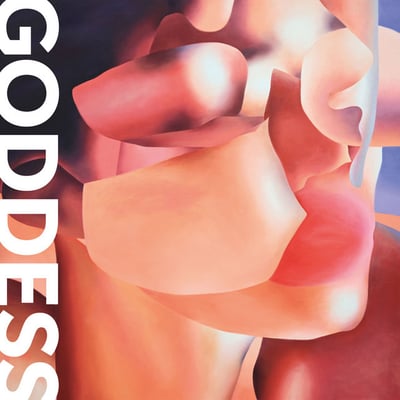
Goddess Goddess
Released May 30, 2025 Bella Union
Consensus forming 3 professional reviews Updated Nov 29, 2025
Mostly positive consensus
Consensus is still forming across 3 professional reviews. Goddess's Goddess opens as a study in feminine energy, equal parts lustful grit and reflective poise, and critics largely agree the record stakes a confident claim even when its ambitions wobble.
How ChoruScore worksCritics' Top Tracks
The songs critics returned to most
Fuckboy
2 critic mentions
“The star of the show, however, is ‘Fuckboy’, on which the cut-glass accent of multi-disciplinary artist Salvia jars with the industrial noise of menacing basslines and ‘80s drum sounds.” — DIY Magazine
Animal
1 critic mention
“The same is true of the single ‘Animal’, sung by Delilah Holliday, a hymn to instinct” — The Quietus
22nd Century
1 critic mention
“The closing track, ‘22nd Century’ ... is the kind of epic belter that would fit into the Brel/Walker axis.” — The Quietus
Full critic consensus
Goddess's Goddess opens as a study in feminine energy, equal parts lustful grit and reflective poise, and critics largely agree the record stakes a confident claim even when its ambitions wobble. Across three professional reviews the consensus score sits at 66.67/100, with reviewers praising the album's curation of guest vocalists and its tension between ambient sweep and punchy, industrial-inflected production. The quick verdict in reviews: notable, occasionally brilliant, sometimes uneven.
Track Ratings
How critics rated each track, relative to this album (0-100). Only tracks that made critics feel something are rated.
Little Dark
Shadows
Animal
Fuckboy
Golden
Bad Child
Darling Boulevard
Diamond Dust
Bounce
22nd Century
Get the next albums worth your time.
Critic-backed picks in one clean digest. No clutter.
What Critics Are Saying
Deep insights from 3 critics who reviewed this album
Fa
Critic's Take
Goddess's self-titled debut, Goddess, is presented as a record of introspective sweep and playful anger, and the review lingers on that paradox. Tom Taylor writes in sinuous, descriptive bursts that celebrate the album's ambient worlds woven with punchy poetry, noting how collaborators like Bess Atwell and Shingai refresh each track without stealing the spirit. The best songs on Goddess are framed as those that balance immediacy with expansiveness, where hooks arrive amid neo-classical and industrial-pop textures. Read as the best tracks on Goddess, the album's highlights are the moments that feel both profound and cheekily immediate, the cuts that slap the listener and then beguile them into deeper thought.
Key Points
-
The best moments balance punchy immediacy with expansive, introspective soundscapes.
-
The album's core strengths are its collaborative variety, poetic lyricism, and a blend of ambient and industrial-pop textures.
Themes

Critic's Take
Goddess’s self-titled debut feels pleasingly straightforward, a collaborative patchwork that highlights its best tracks without artifice. The reviewer repeatedly returns to the star track “Fuckboy”, praising Salvia’s cut-glass delivery against menacing industrial bass, and cites “Little Dark” and “Shadows” as moments where vocal contrast and space make the songs stand out. The voice-driven choices - from Izzy B Phillips on “Diamond Dust” to the percussive club pull of “Bounce” - explain why people ask about the best songs on Goddess and why “Fuckboy” emerges as the clear centerpiece.
Key Points
-
The best song is “Fuckboy” because Salvia’s jarring delivery and industrial bass make it the record’s standout moment.
-
The album’s core strengths are its vocal-driven collaborations, smart use of space and dramatic production choices.

Critic's Take
Goddess's Goddess is at once curated and combustible, and the reviewer's pick of best tracks lands on “Animal” and “Fuckboy” because they most clearly enact the album's stated feminine energy. The writing praises “Animal” as a hymn to instinct and notes the single's faux-apology for being more compelling, while “Fuckboy” is singled out for its no-nonsense coldness and robotic carnality. The closer, “22nd Century”, is another highlight, Harriet Rock unleashing defiant, loving optimism that rounds the record into an epic finale. Overall the album's coherence is said to come from mood and theme rather than genre, making those songs the clearest exemplars of its aims.
Key Points
-
The best song is “Animal” because it is praised as a hymn to instinct and showcases Delilah Holliday's compelling presence.
-
The album's core strength is its thematic and mood coherence, achieved through curated guest vocalists rather than a single musical style.