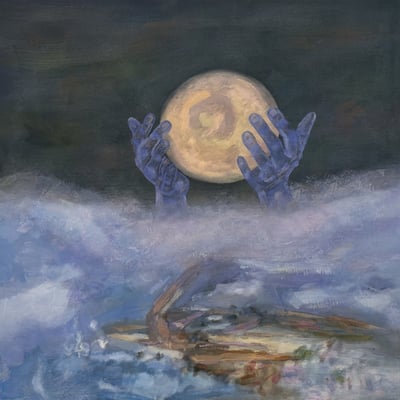
Great Grandpa Patience, Moonbeam
Released Mar 28, 2025 Run For Cover Records
Established consensus 8 professional reviews Updated Nov 30, 2025
Broadly positive consensus
Great Grandpa's Patience, Moonbeam arrives as a reconciliatory, emotionally charged comeback that frames grief and family as the record's driving forces.
How ChoruScore worksCritics' Top Tracks
The songs critics returned to most
Doom
7 critic mentions
“The ominous strumming, coupled with lead singer Al Menne’s vocals on “Doom” evoke a Radiohead-like dread” — Under The Radar
Junior
6 critic mentions
“soar across single “Junior,” where the band stands back in awe, and envy, of a boy lost in his imagination” — Under The Radar
Kid
6 critic mentions
“Patience, Moonbeam closes with the only remnant ... “Kid,” a heartbreaker written in the aftermath of a lost pregnancy” — Pitchfork
Full critic consensus
Great Grandpa's Patience, Moonbeam arrives as a reconciliatory, emotionally charged comeback that frames grief and family as the record's driving forces. Across eight professional reviews the band earns a 79.86/100 consensus score, and critics repeatedly point to songs like “Junior”, “Doom”, “Kid” and “Never Rest” as the album's clearest statements of purpose. Those tracks reveal the group's newfound unity - intimate vocal collisions, roomy acoustic moments and sudden surges of electric drama - that make the best songs on Patience, Moonbeam feel both cathartic and earned.
Reviewers consistently praise the album's balance of tenderness and experimentation. Several critics highlight “Junior” as a drum-forward, singalong centerpiece and “Doom” as the gut-punch of the collection, while the lullaby textures of “Never Rest” and the devastating closer “Kid” supply consolation after rupture. Across these professional reviews the bandroom interplay, Al Menne's elastic lead vocal and the record's flirtations with alt-country, folk and off-kilter pop textures are singled out as evidence of inventive songcraft rather than scattershot genre-hopping. Critics note collaboration and family themes underpin the songs, making emotional stakes feel lived-in rather than theatrical.
While some reviews observe stylistic restlessness that keeps the record from a single, dominant mood, the consensus suggests Patience, Moonbeam is a rewarding, rousing statement of growth and patience. For readers asking whether Patience, Moonbeam is good or what the best songs are, the critic consensus points to “Junior”, “Doom” and “Kid” as standout tracks that justify repeated listens and confirm the band's rebirth.
Track Ratings
How critics rated each track, relative to this album (0-100). Only tracks that made critics feel something are rated.
Sleep
Never Rest
Junior
Emma
Ladybug
Kiss the Dice
Doom
Task
Top Gun
Patience, Moonbeam
Ephemera
Kid
Get the next albums worth your time.
Critic-backed picks in one clean digest. No clutter.
What Critics Are Saying
Deep insights from 7 critics who reviewed this album

Critic's Take
There is a warm, familial glow at the heart of Great Grandpa's Patience, Moonbeam, and the best tracks - like “Junior”, “Never Rest” and “Kid” - make that glow feel earned. The record is often luminous rather than flashy, cultivating rootsy freak-folk and alt-country textures that let the strongest songs breathe and reveal themselves over repeated listens. Ultimately, the tender closing “Kid” cements the album's emotional stakes, proving that the band's collaborative heart is this record's chief strength.
Key Points
-
The best song is "Kid" because its personal subject matter and delicate melody deliver the album's emotional climax.
-
The album's core strengths are its familial collaboration, rootsy folk-alt-country textures, and patient songwriting that rewards repeated listens.
Themes

Critic's Take
In a clear-eyed celebration of Great Grandpa's growth, Rob Moura finds the best tracks on Patience, Moonbeam to be the emotionally jagged “Never Rest” and the ebullient country-tinged “Junior”. Moura writes with attentive warmth about how songs like “Doom” and album-closer “Kid” stitch grief and release into muscular hooks and expansive arrangements. The reviewer's measured admiration emphasizes the band’s unity and adventurousness, making this record’s best songs feel earned rather than accidental.
Key Points
-
“Never Rest” is the album’s emotional apex because of its collaborative build and unexpected, lustrous climax.
-
The album’s core strengths are unity of songwriting, stylistic breadth from country to electronic textures, and strong production.
Themes

Critic's Take
On Patience, Moonbeam Carlo Thomas hears a cohesive, ambitious leap rather than a scattershot experiment, and he keeps returning to moments like “Never Rest” and “Ladybug” as proof. He praises the collaborative spirit that lets five members shape 12 songs, so the best tracks - notably “Never Rest” and “Ladybug” - feel both adventurous and assured. The review emphasizes Al Menne and Pat Goodwin's vocal collision, which makes centerpiece tracks like “Doom” and single “Junior” land with emotional clarity. Thomas frames the album as one where quieter, gracious pieces balance darker, noisy peaks, marking these named songs as the best tracks on Patience, Moonbeam because they most vividly showcase that range.
Key Points
-
“Never Rest” stands out for its country-tinged opening, dramatic chord shifts, and a grungy riff that ties past and present.
-
The album’s core strength is its collaborative ambition: assured vocals, varied textures, and a balance between softer tracks and noisy climaxes.
Themes

Critic's Take
Great Grandpa's Patience, Moonbeam is a record that trades blunt catharsis for aching tenderness, and the reviewer's ear keeps returning to the bruising centerpiece “Doom” and the reprise of “Emma” that makes that pain feel earned. The writing highlights how the band allowed themselves to be more collaborative and less producer-driven, which lets songs like “Doom” and “Emma” breathe in pastoral acoustic moments before detouring into off-kilter rhythms. For listeners asking about the best tracks on Patience, Moonbeam, the review makes clear that “Doom” is the album's gut-punch and “Emma” its haunting echo, both emblematic of the record's balance of hope and rupture. The tone throughout suggests these songs are the emotional lodestars that make the album its most affecting and memorable selves.
Key Points
-
The best song is "Doom" because the review calls it a gut-punch reprise that crystallizes the album's emotional core.
-
The album's core strengths are its tender vulnerability, nostalgic instrumentation, and balanced contrasts between comfort and rupture.
Themes

Critic's Take
Jonathan Bernstein hears Great Grandpa returning triumphant on Patience, Moonbeam, and he singles out “Kid”, “Junior” and “Emma” as the record’s most compelling moments. Bernstein’s sentences are exuberant and specific - he praises the bandroom interplay and Al Menne’s vocal shifts, arguing that the best tracks turn off-kilter arrangements into irresistible hooks. He points to “Kid” as a devastating closer and “Junior” as a drum-forward showcase, while crediting “Emma” for turning a throwaway line into something profound. The narrative remains celebratory and analytical, answering who sings the best songs on Patience, Moonbeam while keeping the reviewer’s keen, exacting voice.
Key Points
-
The best song, "Kid", is the album’s devastating closer that combines processed a capella and multi-part arrangements to powerful effect.
-
The album’s core strengths are inventive songcraft, diverse influences, and a strong melodic sense anchored by expressive vocals.
Themes

Critic's Take
Great Grandpa's Patience, Moonbeam feels like a band reconciling distance and household change, and the record's best tracks - “Task”, “Junior”, and “Doom” - showcase that emotional payoff. The reviewer lingers on how “Task” opens with reunion awkwardness turned triumphant, how “Junior” builds to singalong euphoria, and how “Doom” delivers the album's heaviest, most cathartic riff. The album is sumptuous and dramatic throughout, even as its stylistic restlessness - from the hyperpop of “Ladybug” to the trip-hop of “Ephemera” - keeps it from coalescing into a single dominant mood. Overall, these standout songs make Patience, Moonbeam rewarding and rousing, if occasionally diffuse in focus.
Key Points
-
“Task” is the best song because it turns reunion awkwardness into a triumphant, emotionally resonant opener.
-
The album's core strengths are dramatic, payoff-driven songwriting and rich, eclectic arrangements, even if its styles sometimes clash.
Themes

Critic's Take
Great Grandpa return with Patience, Moonbeam, and the best songs here are those that marry intimacy with a sudden surge of electricity - especially “Junior” and “Doom”. The reviewer’s voice treats these tracks as proof the band can write quietly compelling songs and then pivot into thrilling rock textures, which makes songs like “Task” and “Kid” further evidence of the album’s adventurous range.
Key Points
-
The best song is "Doom" because its dramatic Radiohead-like shift and heavy outro make it the album’s most striking moment.
-
The album’s core strengths are solid songwriting, Menne’s distinctive voice, and tasteful shifts between intimate acoustic textures and unexpected rock or electronic touches.