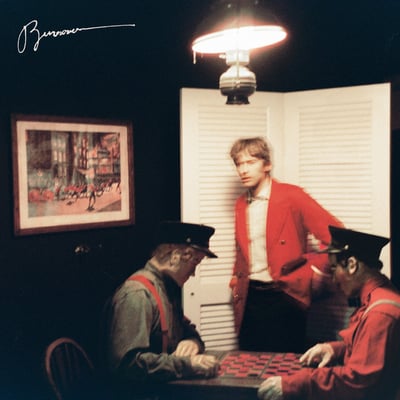
Greg Freeman Burnover
Released Aug 22, 2025 Transgressive Records
Consensus forming 3 professional reviews Updated Nov 24, 2025
Broadly positive consensus
Consensus is still forming across 3 professional reviews. Greg Freeman's Burnover arrives as a restless, place-driven statement that refines the oversized emotions of his debut into punchier, cinema-tinged songs.
How ChoruScore worksCritics' Top Tracks
The songs critics returned to most
Wolf Pine
3 critic mentions
“the swirling nine-minute closer "Wolf Pine" about an old tree in Burlington simmers with horns” — The Line of Best Fit
Point and Shoot
2 critic mentions
“The respective meltdowns of “Point and Shoot” and “Rome, New York” let compressed feelings finally explode” — Paste Magazine
Gulch
3 critic mentions
“shouting “Guitars! Guitars! Guitars!” to announce a rubber-burning guitar solo that spins out into honking distortion and brass ribbons, as Freeman does on “Gulch.” — Pitchfork
Full critic consensus
Greg Freeman's Burnover arrives as a restless, place-driven statement that refines the oversized emotions of his debut into punchier, cinema-tinged songs. Across three professional reviews the record earned an 82.33/100 consensus score, and critics single out vivid, character-led pieces such as “Point and Shoot”, “Rome, New York”, “Wolf Pine” and “Gulch” as the best songs on Burnover. Reviewers praised Freeman's magnetic, slightly grating voice and narratives rooted in Upstate New York landscapes, where heartache, violence and small-town consequences give the lyrics a velocity that matches the music's alt-country revival and slacker-rock bite.
Critics consistently note dense lyrical references and evocative storytelling: tracks like “Rome, New York” and “Point and Shoot” compress longings until they explode, while the nine-minute “Wolf Pine” and the smoldering “Curtain” reward patience with slow-burn payoff. Production shifts between lo-fi intimacy and fuller, cinematic arrangements, so reviewers highlight both the record's homespun elegy and its occasional, widescreen ambition. Some critics point to moments where bold textures verge on excess, but the consensus suggests Freeman largely balances risk and narrative heft.
Taken together, the professional reviews frame Burnover as an immersive sophomore LP that cements Freeman's voice in an alt-country and slacker-rock conversation about belonging and loss. For readers asking "is Burnover good?" the critical consensus and repeated praise for standout tracks indicate it is a rewarding, occasionally volatile collection worth close listens.
Track Ratings
How critics rated each track, relative to this album (0-100). Only tracks that made critics feel something are rated.
Point and Shoot
Salesman
Rome, New York
Gallic Shrug
Burnover
Gulch
Curtain
Gone (Can Mean a Lot of Things)
Sawmill
Wolf Pine
Get the next albums worth your time.
Critic-backed picks in one clean digest. No clutter.
What Critics Are Saying
Deep insights from 3 critics who reviewed this album

Critic's Take
Greg Freeman’s Burnover stakes a claim with its best songs - leaner, punchier versions of the oversized emotions of his debut - most notably “Rome, New York” and “Point and Shoot”. Anna Pichler writes in keen, observant bursts, singling out how the meltdowns in “Point and Shoot” and “Rome, New York” let compressed feelings finally explode, and how the lo-fi intimacy of “Sawmill” recalls Sparklehorse. The record’s surging, cinematic arrangements and Freeman’s gratingly shrill, magnetically confident voice make these tracks the best songs on Burnover, songs that demand study and reward repeated listens. Overall, the album reads like an emphatic (re)introduction: restlessly composed, emotionally volatile, and memorably melodic.
Key Points
-
The best song(s) like “Point and Shoot” and “Rome, New York” are best for their emotional meltdowns and cinematic build-ups.
-
The album’s core strengths are magnified vocals, dense lyricism, and dynamic, cinematic arrangements that reward close listening.
Themes

Critic's Take
In a voice that toys with sly, homespun elegy, Greg Freeman makes Burnover feel inevitable, its best tracks - “Burnover”, “Rome, New York” and “Gulch” - staking his claim in heartland slacker rock. Freeman’s songs read like short, shadowed road movies, and the title cut’s somber harmonica and allegory stick longest. On “Rome, New York” a faraway keyboard and strings yield to a desperate vocal that turns small detail into big feeling. “Gulch” announces itself with a shouted, rubber-burning guitar solo that proves Freeman can burn and charm at once.
Key Points
-
The title track “Burnover” is best for its allegorical storytelling and somber harmonica anchoring the album’s themes.
-
Freeman’s core strengths are vivid regional storytelling, blending slacker rock and alt-country, and transforming small details into emotional weight.
Themes

Critic's Take
From the first gasp of chaos in Burnover the best songs stake their claim - chief among them “Point and Shoot” and the nine-minute slow burn “Wolf Pine”. Attila Peter writes in an observant, slightly bemused tone, admiring Freeman's knack for vivid, place-driven storytelling and guitar textures that alternate between fuzzed-out menace and plaintive twang. The review pinpoints highlights like “Curtain” and “Salesman” as expansive, character-driven centrepieces that reward patience, while noting that quieter moments such as “Gallic Shrug” reveal a heartbreaking restraint. Overall the critic frames Greg Freeman's sophomore LP as a fertile, immersive record whose best tracks fuse narrative heft with bold musical risk.
Key Points
-
The best song, "Wolf Pine", is the album's emotional climax because its slow-burn structure and instrumental build create a simmering, unforgettable close.
-
The album's core strengths are evocative, place-driven storytelling paired with gritty, varied guitar textures that balance alt-country restraint and fuzzed-out indie rock.