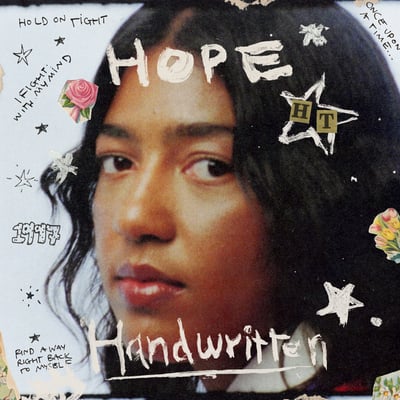
Hope Tala Hope Handwritten
Released Feb 28, 2025 PMR Records
Consensus forming 4 professional reviews Updated Dec 10, 2025
Mostly positive consensus
Consensus is still forming across 4 professional reviews. Hope Tala's Hope Handwritten arrives as a quietly assured debut that marries dream pop guitars with sunlit, bossa-tinged R&B and intimate lyricism.
How ChoruScore worksCritics' Top Tracks
The songs critics returned to most
Lights Camera Action
3 critic mentions
“The bright Lights Camera Action quotes Maya Angelou and has the serenity and sunshine of early Corinne Bailey Rae” — The Guardian
Thank Goodness
3 critic mentions
“the summery ‘Thank Goodness’, on which Hope expresses her gratitude for “dodging a bullet” after the end of a romantic entanglement” — DIY Magazine
Breaking Isn’t What a Heart Is For
3 critic mentions
“Another highlight comes with ‘Breaking Isn’t What a Heart Is For’, in which Hope’s voice takes on a breathy quality as she sighs: “I knew it might get messy / When we both felt so intensely” — DIY Magazine
Full critic consensus
Hope Tala's Hope Handwritten arrives as a quietly assured debut that marries dream pop guitars with sunlit, bossa-tinged R&B and intimate lyricism. Across four professional reviews the record earns a 72.5/100 consensus score, and critics consistently point to a handful of standout songs that define its charms: “Lights Camera Action”, “Thank Goodness” and “Growing Pains (Prologue)” emerge as the best songs on Hope Handwritten, while “Breaking Isn’t What a Heart Is For” and “Lose My Mind” supply the album's most affecting balladry.
The critical consensus highlights Tala's consistent songwriting and genre-blending instincts. Reviewers praise the joyous R&B hooks and groovy bass of “Lights Camera Action” and the emotionally precise peaks found on “Thank Goodness” and “Breaking Isn’t What a Heart Is For”. Several critics frame the collection as a coming-of-age statement about personal growth, faith and friendship, noting recurring themes of writer's block, vulnerability and self-confidence. Across the four professional reviews, voices from Clash, NME, The Guardian and DIY commend Tala's silken falsetto and spoken-word tenderness even as some note a measured delivery that occasionally flattens larger emotional highs.
Taken together, the reviews suggest Hope Handwritten is worth listening to for its craft and warm tonal palette: an assured debut that balances introspection and joyous hooks, with clear standout tracks that answer the question of what the best tracks on Hope Handwritten are.
Track Ratings
How critics rated each track, relative to this album (0-100). Only tracks that made critics feel something are rated.
Growing Pains (Prologue)
Jumping the Gun
Lights Camera Action
Magic or Medicine
Breaking Isn’t What a Heart Is For
I Can’t Even Cry
Thank Goodness
Survival
Phoenix
Fall Too Hard
Lose My Mind
Bad Love God
A Story To Tell/Where I Begin
Miracle
Shiver
Heartbeat (the end)
Get the next albums worth your time.
Critic-backed picks in one clean digest. No clutter.
What Critics Are Saying
Deep insights from 4 critics who reviewed this album

Critic's Take
Hope Tala's Hope Handwritten is framed here as a heavenly debut, with the best tracks standing out for craft and feeling. The review singles out “Lights Camera Action” for its joyous R&B hooks and places “Thank Goodness” and “Fall Too Hard” among the sparkling dream pop highlights. The gorgeous ballad “Breaking Isn’t What A Heart Is For” is presented as one of the album's luxurious emotional centers. Overall the critic praises the album's remarkable consistency and innumerable highlights, making these songs the best tracks on Hope Handwritten for style and substance.
Key Points
-
The best song, “Lights Camera Action”, is best for its joyous R&B hooks and clear melodic craft.
-
The album's core strengths are consistent songwriting, a blend of R&B, dream pop guitars, and lush balladry across 16 tracks.
Themes

Critic's Take
Hope Tala’s Hope Handwritten finds its best moments in intimate, confessional songs like “Growing Pains (Prologue)” and “Lose My Mind”, where her spoken-word tenderness and silken falsetto make the lyrics land. The review praises the album as a coming-of-age record that turns breakup lines into timeless mantras, singling out “Breaking Isn’t What A Heart Is For” and “Thank Goodness” as emotionally precise peaks. Overall the reviewer frames the best tracks as those that showcase Tala’s eloquent writing and genre-morphing voice, making queries about the best songs on Hope Handwritten answerable by pointing to these standout moments.
Key Points
-
The best song moments are intimate tracks like "Growing Pains (Prologue)" and "Lose My Mind" where Tala’s spoken word and falsetto connect emotionally.
-
The album’s strengths are eloquent, literate songwriting, vocal versatility, and tasteful genre blending across neo-soul, pop and R&B.
Themes

Critic's Take
In her debut Hope Handwritten, Hope Tala leans into warm, bossa-tinged R&B to land her best moments. Summer-ready “Thank Goodness” is another standout, a relatable relief-song about dodging a bullet after a romance, and together these songs show why listeners ask about the best tracks on Hope Handwritten and which songs are the best on Hope Handwritten.
Key Points
-
“Lights Camera Action” is the best track for its upbeat R&B and groovy bassline making it the catchiest moment.
-
The album’s core strengths are warm bossa-influenced production, candid lyricism, and uplifting, introspective songwriting.
Themes

Critic's Take
Hope Tala’s Hope Handwritten finds its best songs in the sunlit, reflective moments - notably “Lights Camera Action” and “Survival”. Katie Hawthorne writes with a measured, observant voice, praising the honeyed bossa-nova and breathy R&B that make “Lights Camera Action” a highlight and “Survival” a moving exploration of heritage. The standout “Bad Love God” is flagged as the record’s delicious odd-one-out, where a sexy bassline and conflicted lyrics break the album’s mellow spell. Still, Hawthorne notes that the consistently level-headed delivery flattens some of the larger emotional peaks, especially in the mid-album love songs.
Key Points
-
Bad Love God is the best because its ominous bassline and flirtatious, conflicted lyrics break the album’s mellow consistency.
-
The album’s core strengths are its honeyed bossa-nova, breathy R&B vocals, and reflective songwriting rooted in heritage and intimacy.