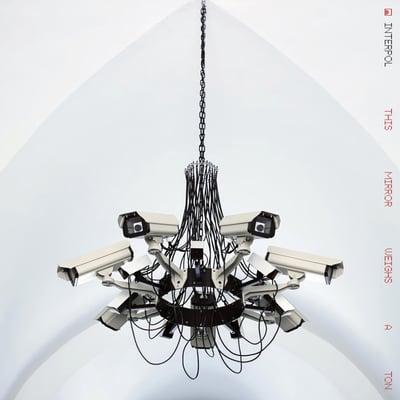
Interpol This Mirror Weighs a Ton
Released Aug 28, 2026 Partisan Records
Established consensus 12 professional reviews Updated Oct 3, 2026
Broadly positive consensus
Interpol's This Mirror Weighs a Ton arrives as a late-career reinvigoration that balances noir moods with newfound rhythmic openness, earning praise across the board for its ambition and atmosphere.
How ChoruScore worksCritics' Top Tracks
The songs critics returned to most
This Mirror Weighs a Ton
10 critic mentions
“the title track, released as a single, was surely the band’s most interesting song in more than a decade” — Pitchfork
See Out Loud
10 critic mentions
“Twitchy, paranoid rockers like "See Out Loud" and "Wings on Fire" can stand with the best tracks” — Pitchfork
Iron City
9 critic mentions
“Iron City , where there’s "memories degraded" in Central Park during a conversation between a human and AI” — Record Collector
Full critic consensus
Interpol's This Mirror Weighs a Ton arrives as a late-career reinvigoration that balances noir moods with newfound rhythmic openness, earning praise across the board for its ambition and atmosphere. Critics point to the cinematic title cut “This Mirror Weighs a Ton” as a centerpiece—haunting, spacious and repeatedly named among the best songs—while propulsive highlights like “See Out Loud” and the eerie “Iron City” supply much of the album's renewed energy and melodic payoff. Across 12 professional reviews the record holds a 79/100 consensus score, a signal that reviewers generally regard it as a strong, if occasionally uneven, addition to Interpol's catalog.
Reviewers consistently note Andrew Wyatt's production as decisive, expanding the band's noir textures with orchestral sweeps, trip-hop electronics and punchy percussion that foreground democratic band dynamics and fresh vocal interplay. Critics praised Paul Banks' impassioned baritone on the title track, Daniel Kessler's instrumental nuance on “See Out Loud” and “Iron City”, and Sam Fogarino's rhythmic turns on songs such as “Wings On Fire”. Themes that recur in the reviews include melancholic post-punk atmosphere, nocturnal cityscapes, reflection on ageing and domestic life, and a creative tension between studio embellishment and minimalist grit.
While some critics flag mid-album dips and a few uneven detours, the prevailing critical consensus emphasizes creative growth, textured instrumentation and moments of genuine reinvention. For readers searching for an Interpol review that answers "is This Mirror Weighs a Ton good" and "what are the best songs on This Mirror Weighs a Ton", the consensus points to “This Mirror Weighs a Ton”, “See Out Loud” and “Iron City” as essential listens—and positions the record as a rewarding, late-stage resurgence rather than a mere nostalgia piece.
Track Ratings
How critics rated each track, relative to this album (0-100). Only tracks that made critics feel something are rated.
This Mirror Weighs a Ton
See Out Loud
Iron City
Wounded Soldier
Wings On Fire
Ever the Actor
So Rides the Reindeer
Darling Thoughts
Wake Up
Enemy
Bird and The Serpent
Sudden
Get the next albums worth your time.
Critic-backed picks in one clean digest. No clutter.
What Critics Are Saying
Deep insights from 15 critics who reviewed this album

Critic's Take
Interpol sound rejuvenated on This Mirror Weighs a Ton, and the best tracks on the album - “This Mirror Weighs a Ton” and “Bird and the Serpent” - show why. The title track is positively ethereal, all delicate plucks, trip-hop electronics, and angelic backing vocals that usher in a newfound smoothness. “Bird and the Serpent” blends old and new perfectly, building patiently to an epic hook and a tranquil, flute-laced outro that feels quintessentially Interpol. The record overall is chilled, experimental, and rewarding, even if it leaves you craving a touch more of the shout-out-loud classics.
Key Points
-
The title track stands out as the album’s mission statement, ethereal and arguably a crowning sonic achievement.
-
The album's core strengths are its atmospheric production, successful electronic experiments, and a softened, rejuvenated vocal approach.
Themes
St
Critic's Take
Interpol return with This Mirror Weighs a Ton, a record that finally blossoms into daring textures while still honoring their noir-pop roots. The review revels in the best songs on This Mirror Weighs a Ton, singling out “This Mirror Weighs a Ton” for its weightless trip-hop groove and “Wake Up” for its bongo fury and live-ready momentum. Beau Waddell’s prose frames these as victories born of restraint - Andrew Wyatt’s production gives the band room to breathe and retool their palette. The critic’s voice celebrates the album as a fruitful alliance between new and old, recommending listeners seek out these top tracks for proof that Interpol can still surprise.
Key Points
-
The title track is best for its adventurous trip-hop/post-rock production and sense of renewal.
-
The album’s core strength is marrying classic Interpol noir with danceable, experimental textures and topical lyrics about technology.
Themes

Critic's Take
Interpol sound re-energised on This Mirror Weighs a Ton, and the reviewer's enthusiasm centres on a trio of highlights that make it one of their strongest late-career statements. He praises Paul Banks’ performance on the moody title track, calling it arguably the best of his career, and singles out “Iron City” for Daniel Kessler’s piano and “Wings On Fire” for Sam Fogarino’s sophisticated drumming. The piece reads as a careful, measured reclaiming of form - not Bright Lights or Antics, but convincingly Interpol at their renewed best. Overall, the review reasons why fans searching for the best songs on This Mirror Weighs a Ton should start with “This Mirror Weighs a Ton”, “Iron City”, and “Wings On Fire”.
Key Points
-
The title track is best for Paul Banks’ vocal performance, presented as arguably the best of his career.
-
The album’s core strengths are renewed energy, strong drumming, and tasteful instrumental highlights that signal a late-career resurgence.
Themes

Critic's Take
Interpol's This Mirror Weighs a Ton feels like a band rebalanced, and the best tracks - “See Out Loud”, “This Mirror Weighs a Ton”, “Sudden” - show why. The record trades the trio's brutalist focus for immaculate rhythms, orchestral sweeps and unexpected vocal handoffs, which makes “See Out Loud” a muscular standout and “This Mirror Weighs a Ton” a breathtaking shoegaze-tinged centerpiece. This is an Interpol that opens up, experiments, and in doing so reveals some of the best songs on This Mirror Weighs a Ton without losing its identity.
Key Points
-
“See Out Loud” stands out for its muscular momentum and a thrilling vocal handoff that renews the band's dynamic.
-
The album's core strengths are its democratic songwriting, orchestral ambience, and successful genre diversions that refresh Interpol's sound.
Themes
Th
Critic's Take
Hi everyone, Theftthony Fantano here, and I found the best songs on This Mirror Weighs a Ton to be the driving “See Out Loud” and the haunting “Iron City”. I praise “See Out Loud” for its driving, groovy post-punk momentum and Paul Banks sounding laser-sharp. “Iron City” earns mention for a genuinely haunting chorus and one of the prettiest, most infectious instrumentals here. The title track opens with a wavy, enchanting patience, while “Wounded Soldier” and “Wings On Fire” broaden the record with polished, cinematic textures.
Key Points
-
The best song is “See Out Loud” for its driving post-punk momentum and confident vocals.
-
The album’s core strengths are textured instrumentation, refined production, and emotive, dismal moods borne of experience.
Themes

Critic's Take
Interpol sound unexpectedly revitalised on This Mirror Weighs a Ton, the record trading some of its past gloom for sharper energy and brighter production. The reviewer singles out “See Out Loud” as the album's propulsive, multi-layered highlight and praises “Wings On Fire” for its hard-hitting, funky danceability. The title track is noted for being eerie and spatially ambitious, setting a mood that the band then balances with classic post-punk drive. In the back half the record dips, but it finishes strong with “Bird and The Serpent” and the piano-led “Sudden” providing a satisfying close.
Key Points
-
See Out Loud is the best track because it crystallises Interpol's propulsive, multi-layered post-punk energy.
-
The album's core strength is sounding revitalised, blending eerie atmospherics with sharper, more upbeat production.
Themes

Critic's Take
Interpol sound inward-looking on This Mirror Weighs a Ton, and the title track is singled out as a highlight, its spacious cinematic sweep making it one of the best tracks on the album. In Lee Campbell's measured, reverent voice, songs like “See Out Loud” and “Wake Up” are praised for fresh vocal turns and catchy, tribal hooks that prove the band still deliver. He admits a rare misstep in “So Rides the Reindeer”, but returns to the album's architecture and sonic significance as reasons this record comes close to their early work.
Key Points
-
The title track is best for its cinematic sweep and vivid lyricism, marking it as the album's standout.
-
The album's strengths are introspective songwriting, sonic architecture, and a return to their New York-rooted sound.
Themes

Critic's Take
Interpol's This Mirror Weighs a Ton feels like survival literature set to nocturnal guitars, and the reviewer's eye lingers on “Iron City” and “Wounded Soldier” as the album's sharpest sketches of memory and war. The writing points out how trip-hop rhythms and jazz-flecked synths expand the band's palette, so the best songs on This Mirror Weighs a Ton are those that marry that fresh production with Banks' narrowed narrative - notably “Iron City” and “Wounded Soldier”. The tone is measured and approving, insisting the LP breaks the spell of past reliance while still wearing Interpol's familiar shadows proudly.
Key Points
-
The best song is best because it pairs Banks' widened narrative with fresh trip-hop and jazz-tinged production, making the themes feel vivid.
-
The album's core strengths are its thematic focus on memory and survival and its successful expansion of Interpol's sonic palette.
Themes

Critic's Take
Interpol’s This Mirror Weighs a Ton finds its clearest moments in songs like “This Mirror Weighs a Ton” and “Iron City”. The title track treats self-reflection as a physical burden, trading guitar-first architecture for warped bass and immense sound design, while “Iron City” roots those concerns in a solitary walk and eerie meditations on identity. The album balances adventurous production with lyricism that turns psychology into geography, and tracks such as “Wake Up” and “See Out Loud” show how playful percussion and layered vocals broaden Interpol’s sound. Overall, these best tracks make the album feel cohesive and morally engaged rather than derivative or merely nostalgic.
Key Points
-
The title track is best for its ambitious sound design that reframes self-reflection as a physical burden.
-
The album’s core strength is marrying adventurous production with lyricism that turns psychology into geography.
Themes
Re
Critic's Take
Interpol return with This Mirror Weighs a Ton, an album that foregrounds night-time rumination and a tasteful appetite for change. The title track is singled out as "one of the very best" for its spacious, hypnotic groove and sumptuous backing vocals, while “Wounded Soldier” shimmers superbly in the dark and feels like a thematic centre. The reviewer also highlights “See Out Loud” as excitable, angular post-punk and praises “Bird And The Serpent” for its extended, propulsive outro - these are the best songs on This Mirror Weighs a Ton because they balance invention with the band’s core strengths. The tone throughout is appreciative, emphasizing renewed creativity and the emotional depth of these standouts.
Key Points
-
The title track is best for its hypnotic groove, sumptuous backing vocals and boldness within Interpol’s sound.
-
The album’s core strengths are nocturnal atmospherics, tighter songwriting, and inventive new textures like Truax’s basslines and extended outros.
Themes

Critic's Take
In his characteristically wry and measured voice, Interpol’s This Mirror Weighs a Ton is praised for moments of real invention but framed as a near-miss. The review singles out “This Mirror Weighs a Ton” as the album’s most interesting song, a grainy, haunted single thatsuggested rebirth, while also elevating “Enemy” and “See Out Loud” as among the best tracks on This Mirror Weighs a Ton, noting Banks’s baritone and Wyatt’s studio flourishes. The tone is admiring yet frustrated - the record is one of Interpol’s stronger late-career efforts, even as the band rarely departs from familiar terrain. Fans searching for the best songs on This Mirror Weighs a Ton will find the title track, “Enemy”, and “See Out Loud” standing out for invention, melody, and production detail.
Key Points
-
The title track is best for its minimalist production and haunting invention.
-
The album’s strengths are Banks’s commanding baritone and tasteful studio flourishes that embellish familiar Interpol textures.
Themes

Critic's Take
The record is beguiling in mystery and often returns to familiar Interpol territory: Interpol's This Mirror Weighs a Ton finds its clearest moments in “See Out Loud” and “Iron City”, where strident bass, minor-chord choruses and a black-and-white NYC mood feel unmistakably vintage. Matt Young leans into the ASMR shuffle of drums and circular guitar picking, praising how “See Out Loud” delivers a taste of Antics-era swagger while “Iron City” settles into lovelorn contemplation. He also flags mid-album detours like “Wounded Soldier” and the uneven “Wings On Fire” before noting redeeming late-stage textures on “Wake Up” and the martial pulse of “Bird and The Serpent”.
Key Points
-
“See Out Loud” is the best track for channeling Antics-era Interpol energy with a thrilling chorus and guest verse.
-
The album's core strengths are moodiness, atmospheric guitar work, and moments of tight structure amid experimental detours.
Themes
Ho
Critic's Take
Interpol's This Mirror Weighs a Ton
Key Points
-
The title track is best for its cinematic opening and embrace of darkness.
-
The album's core strengths are stylish production, renewed energy, and songs that blend post-punk mood with indie-disco propulsion.
Themes

Critic's Take
Interpol have long cast a long, beautifully dark shadow and on This Mirror Weighs a Ton that shadow refines rather than resurrects old glories. The opening title track, “This Mirror Weighs A Ton”, arrives as a haunting prologue, stripped back and unsettling, setting the album's polished, subterranean sheen. “Wings On Fire” is a slow-burning standout, wrapping Paul Banks' monotone in claustrophobic ambience, while “Iron City” drives on industrial-tinted basslines and noir textures. The genuine surprise is “See Out Loud”, with Daniel Kessler's uncommon lead vocal injecting anxious, late-career vitality, making it one of the best tracks on This Mirror Weighs a Ton.
Key Points
-
Daniel Kessler's lead vocal on "See Out Loud" provides an unexpected, late-career highlight that cuts through the album's gloom.
-
The album's strength lies in its refined, atmospheric production and noir-tinged textures rather than instant indie anthems.
Themes

Critic's Take
In Jeremy Allen's wry, conversational voice the best songs on This Mirror Weighs a Ton are presented as proofs of Interpol's long-awaited growth. He singles out the title track “This Mirror Weighs a Ton” for its creeping fog of sound and Brad Truax's whale-like bass, and praises “Iron City” as "icy and majestic" for its AI critique and overlapping vocals. Allen also flags “Wake Up” and “See Out Loud” as dancefloor-capable highlights, noting the band's new openness and surprising adoption of playful West African guitar and cowbells on the former. The review reads like a relieved fan's appraisal, delighted by expansionism yet still anchored in Interpol's trademark wiry guitar aesthetic.
Key Points
-
The title track is best for its creeping atmosphere and unusual bass textures.
-
The album's core strength is its sonic expansion grafted onto Interpol's trademark wiry guitars and sharper lyrical focus.