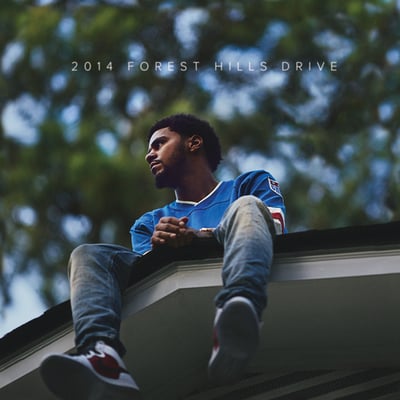
J. Cole 2014 Forest Hills Drive
Released Dec 9, 2014 Roc Nation Records LLC
Established consensus 10 professional reviews Updated Feb 21, 2026
Mostly positive consensus
J.
How ChoruScore worksCritics' Top Tracks
The songs critics returned to most
G.O.M.D
1 critic mention
“album standout "G.O.M.D" reminds us that, stylistic confusion aside, Cole can spit.” — The Line of Best Fit
Love Yourz
7 critic mentions
“The tracklist swaps s's for z's ("Wet Dreamz," "A Tale of 2 Citiez," "Love Yourz").” — Pitchfork
Apparently
6 critic mentions
“Apparently,” with a piano-based arrangement that recalls Elton John’s “Bennie and the Jets,” is similarly unsparing” — Los Angeles Times
Full critic consensus
J. Cole's 2014 Forest Hills Drive stakes a personal claim on fame, family and self-examination, and critics agree the record rewards close attention even as it divides opinion. Across ten professional reviews the album earned a 65.4/100 consensus score, with praise concentrated on narrative songs and moments of stripped-down honesty rather than its occasional showmanship. Critics consistently point to the record's tension between braggadocio and vulnerability as its central drama.
Track Ratings
How critics rated each track, relative to this album (0-100). Only tracks that made critics feel something are rated.
Intro
January 28th
Wet Dreamz
03' Adolescence
A Tale Of 2 Citiez
Fire Squad
St. Tropez
G.O.M.D
No Role Modelz
Hello
Apparently
Love Yourz
Note To Self
Get the next albums worth your time.
Critic-backed picks in one clean digest. No clutter.
What Critics Are Saying
Deep insights from 11 critics who reviewed this album
Critic's Take
J. Cole leans into memory and maturation on 2014 Forest Hills Drive, and the best songs - notably “January 28th” and “No Role Modelz” - crystallize his strengths. Kellan Miller writes with a measured, laudatory tone, praising how tracks like “Wet Dreamz” and “Apparently” blend candid storytelling with hip-hop braggadocio. The record avoids radio pandering, favoring intimate vignettes and collaborative production that amplify Cole's lyricism. Fans searching for the best tracks on 2014 Forest Hills Drive will find them in these vividly recounted highlights.
Key Points
-
The best song(s) are those that combine candid storytelling with confident statements, exemplified by "January 28th" and "No Role Modelz".
-
The album's core strengths are intimate nostalgia, cohesive production, and Cole's balance of sentimentality and braggadocio.
Themes

Critic's Take
J. Cole frames 2014 Forest Hills Drive as a standstill moment between childhood and success, and the review makes clear the best tracks are the narrative-driven cuts. The review elevates “January 28th” and “03' Adolescence” for their coming-of-age storytelling, and praises “A Tale Of 2 Citiez” and “Fire Squad” for their production grit. There is also attention to the sing-song experiments like “St. Tropez” and the relationship ballad “No Role Modelz”, which show Cole shining without features and carrying his story forward.
Key Points
-
The best song(s) stand out for narrative depth and strong production, notably "A Tale Of 2 Citiez" which supplies sonic heat and gritty East Coast energy.
-
The album's core strengths are cohesive storytelling, personal reflection on growth and gratitude, and Cole carrying the record without features.
Themes

Critic's Take
There is a real risk-taking honesty at the heart of J. Cole's 2014 Forest Hills Drive, and the best tracks - especially “Wet Dreamz” and “Love Yourz” - show him at his most grounded and affecting. The album trades bravado for introspection, so the best songs on 2014 Forest Hills Drive are the ones that commit to story and spiritual clarity, rather than the showy club cuts. In the reviewer's voice, the record is uneven but often brilliant, with “Apparently” and “Love Yourz” serving as emotional apexes that vindicate Cole's risk. Commit to it and you unearth subtle gems throughout; skim it and you miss what makes the best tracks on 2014 Forest Hills Drive truly resonate.
Key Points
-
The best song is "Love Yourz" because it delivers spiritual closure, memorable lines, and a simple, effective instrumental.
-
The album's core strengths are its storytelling, introspection, and exceptional engineering despite some indulgent, self-sabotaging moments.
Themes

Critic's Take
J. Cole sounds most compelling on 2014 Forest Hills Drive when he combines personal detail and social observation, which makes songs like “January 28th” and “Love Yourz” the album's emotional center. The reviewer lingers on Cole's surgical self-reckoning in “Apparently” and the sly cultural provocation of “Fire Squad”, arguing those tracks best show why listeners search for the best songs on 2014 Forest Hills Drive. Overall, the record succeeds by keeping its feet on the street while asking bigger questions about race, fame and fulfillment.
Key Points
-
The best song is most often the one that marries personal detail with wider social urgency, exemplified by "January 28th".
-
The album's core strengths are authenticity, observational detail, and a balance of self-critique with empathy.
Themes

Critic's Take
In a voice part celebratory, part corrective, Pitchfork's Craig Jenkins frames J. Cole's 2014 Forest Hills Drive as an album that soars in moments like “03' Adolescence” and “No Role Modelz” but often overreaches. He admires Cole's technical flashes on “G.O.M.D.”, “Fire Squad”, and “A Tale of 2 Citiez”, yet repeatedly insists the record sells itself as a classic before it has earned that status. The review balances praise for the production and memorable singles with blunt critique of self-aggrandizement, making clear which best tracks actually land and which merely aim for grandeur.
Key Points
-
The best song moments land when Cole tells personal stories with emotional clarity, notably on "03' Adolescence".
-
The album's core strengths are its production, technical flashes, and nostalgic self-mythology, offset by overreach and self-aggrandizement.
Themes
NO

Critic's Take
Maya Hambro’s take is frank and unsentimental: J. Cole on 2014 Forest Hills Drive feels listless at times, yet it contains clear best tracks. The review singles out “G.O.M.D” as an album standout where Cole can still spit with callous fury, and “Wet Dreamz” as a cringe-worthy but honest storytelling moment — these two are the best songs on 2014 Forest Hills Drive because they reclaim the emotional investment the rest of the record often lacks. Hambro’s voice is measured but critical, noting imitation and lapses, while conceding that Cole’s humanity makes the record forgivable.
Key Points
-
The best song is “G.O.M.D” because it restores Cole's fierce flow and passion.
-
The album's core strength is Cole’s humanity and storytelling, which shine despite stylistic confusion and imitation.
Themes

Critic's Take
J. Cole never fully commits to extremes on 2014 Forest Hills Drive, and the best songs - notably “Love Yourz” and “A Tale Of 2 Citiez” - show why. The record flirts with menace and tenderness, with “A Tale Of 2 Citiez” carrying menace in its twisted soul loop while “Love Yourz” is the most touching moment, ending on plain, ache-filled advice. Cole’s missteps - the third verse of “January 28th” and awkward lines on “Wet Dreamz” - undercut otherwise promising production, but when the beats and sentiment align the album earns its memorable highs. Overall the album’s best tracks reward close listens even as the middling material makes the whole feel uneven.
Key Points
-
“Love Yourz” is the best song because it delivers the album’s most genuine emotional payoff.
-
The album’s core strength is occasional inspired production and poignant moments amid uneven writing.
Themes

Critic's Take
J. The reviewer hears Cole as an entertaining braggart whose reflections on growing up and success are compelling, so the best songs - notably “Love Yourz” and “Note To Self” - work because they balance confidence with self-questioning. Yet when he downplays fortune it sometimes reads as disingenuous, making his contradictions less interesting than peers, which affects how standout tracks land. Overall the best tracks are those that foreground honesty and restraint rather than showmanship.
Key Points
-
The best song is “Love Yourz” because it crystallizes the album's weary, reflective center.
-
The album's core strengths are honest self-reflection and confident lyricism, tempered by occasional disingenuousness.
Themes
Th
Critic's Take
J. Cole arrives on 2014 Forest Hills Drive with his vocals front and center, but the review finds that even when he strips back hooks and instrumentals the record largely rests on his baseline technical ability. The reviewer is skeptical about whether that technical competence translates into compelling rap or lyricism, implying songs like “No Role Modelz” and “Love Yourz” feel exposed rather than elevated. The tone stays measured and diagnostic, pointing out strengths in craft while denying that they add up to sustained engagement on the best tracks of 2014 Forest Hills Drive.
Key Points
-
The best song works are those that survive when stripped to Cole's vocals, but the reviewer feels few do.
-
The album's core strength is J. Cole's technical competence, while its weakness is a lack of compelling lyricism beyond that craft.
Themes

Critic's Take
Michael White writes in a wry, evaluative tone that the best songs on 2014 Forest Hills Drive - notably “No Role Modelz” and “Apparently” - show Cole at his most charming, with strong flows and improved singing that often distract from his clumsy lyrics. He praises the hooks and production while criticizing frequent lyrical missteps, arguing that tracks like “Wet Dreamz” are awkward but that songs in the album’s middle find a comfortable, soulful groove. The reviewer frames these highlights as evidence that Cole is comfortable in his skin even as the album fails overall.
Key Points
-
The best song is best because its strong flows and production mask Cole's lyrical clumsiness.
-
The album’s core strengths are hooks, production, and moments of genuine charm amid uneven lyricism.