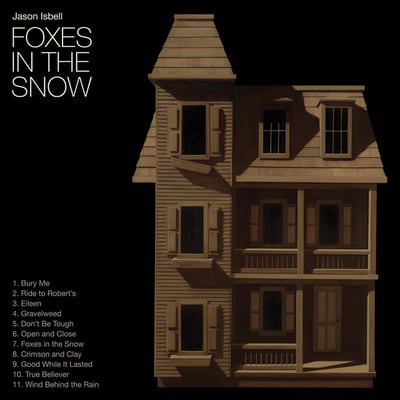
Jason Isbell Foxes In The Snow
Released Mar 7, 2025 Southeastern Records
Established consensus 13 professional reviews Updated Oct 2, 2026
Broadly positive consensus
Jason Isbell's Foxes In The Snow arrives as a lean, emotionally precise statement that foregrounds voice and guitar to examine heartbreak, redemption, and small-town truths.
How ChoruScore worksCritics' Top Tracks
The songs critics returned to most
True Believer
10 critic mentions
“All your girlfriends say I broke your fucking heart / and I don’t like it,” he sings on “True Believer.” — Paste Magazine
Gravelweed
8 critic mentions
“I was a gravelweed and I need you to raise me / You couldn’t reach me once I felt like I was raised.” — Paste Magazine
Crimson and Clay
7 critic mentions
“You could strip me of everything I own / Just leave me with the memories of my Alabama home,” — Paste Magazine
Full critic consensus
Jason Isbell's Foxes In The Snow arrives as a lean, emotionally precise statement that foregrounds voice and guitar to examine heartbreak, redemption, and small-town truths. Across professional reviews, critics point to a stripped-down aesthetic that sharpens Isbell's storytelling and makes songs like “True Believer”, “Gravelweed” and “Crimson and Clay” the record's clearest high points. The consensus suggests the record often feels intimate and immediate, turning domestic detail and sober reflection into resonant, quietly powerful moments.
Track Ratings
How critics rated each track, relative to this album (0-100). Only tracks that made critics feel something are rated.
Bury Me
Ride to Robert's
Eileen
Gravelweed
Don't Be Tough
Open and Close
Foxes in the Snow
Crimson and Clay
Good While It Lasted
True Believer
Wind Behind The Rain
Get the next albums worth your time.
Critic-backed picks in one clean digest. No clutter.
What Critics Are Saying
Deep insights from 15 critics who reviewed this album

Critic's Take
Jason Isbell's Foxes In The Snow is a stripped-down masterclass, and the best songs here - notably “Open And Close” and “Foxes in the Snow” - reveal why solo performance sharpens his storytelling. Sylvie Simmons writes with close, appreciative attention, noting how the bare voice-and-guitar setting makes songs like “Good While It Lasted” and “Open And Close” feel immediate and truthful. She repeatedly compares his writing to Paul Simon and Townes Van Zandt, arguing that these tracks are the album's standout moments because they foreground intimacy and lyricism. The result is an album that, she suggests, may surpass his lauded Southeastern for emotional clarity and craft.
Key Points
-
The best song, especially “Open And Close”, stands out for its intimate storytelling and Paul Simon-like narrative craft.
-
The album's core strengths are its stripped-back intimacy, superb lyricism, and cohesive folk-Americana mood.
Themes

Critic's Take
Jason Isbell sounds stripped down and candid on Foxes in the Snow, and the best songs on the record - notably “Crimson and Clay” and “True Believer” - are where his songwriterly gifts hit hardest. Willman’s voice delights in noting how the solo production lets intimate lines ring out, making tracks like “Crimson and Clay” a trenchant anthem and “True Believer” a bravely unvarnished chorus. The reviewer emphasizes that the album’s best tracks balance diaristic confession with sharper social and moral observation, which is why listeners searching for the best songs on Foxes in the Snow will find themselves returning to those cuts. Overall, it’s an affecting, often brilliant collection that wears its heart plainly while showcasing Isbell’s enduring craft.
Key Points
-
The best song is "Crimson and Clay" because it marries trenchant social observation with anthem-like relief.
-
The album’s core strengths are intimate solo production and candid, diaristic songwriting that blends confession with keen social detail.
Themes

Critic's Take
There is a specific, aching comfort in Foxes in the Snow, and Jason Isbell leans into it with songs like “Crimson and Clay” and “Don’t Be Tough” that feel equal parts tender and unflinching. Johnson writes in plain, evocative terms, noting how “Crimson and Clay” carries the pull of Alabama home while “Don’t Be Tough” offers life lessons soaked in mercy and growth. The record’s best tracks - especially “Crimson and Clay” and “Don’t Be Tough” - distill Isbell’s gift for direct, gut-wrenching songwriting, all delivered with nothing but voice and guitar. Overall, the album’s top songs crystallize its themes of heartbreak, home, and quiet redemption, making them the best tracks on Foxes in the Snow by a wide margin.
Key Points
-
“Crimson and Clay” is the best track because it most directly channels Isbell’s Alabama roots and emotional pull.
-
The album’s core strengths are its plainspoken, intimate songwriting and the stark folk arrangements that foreground voice and guitar.
Themes

Critic's Take
Jason Isbell’s Foxes in the Snow is distilled, intimate, and centered squarely on love, and the best songs on the record - notably “Bury Me” and “True Believer” - demonstrate why. The opener “Bury Me” lands like a country classic, catchy and gruffly emotive, while “True Believer” fuses ragged sorrow with touching sentimentality. Other highlights such as “Gravelweed” and “Don’t Be Tough” show Isbell’s range, from powerful, tough readings to a spot-on Merle Haggard impression. Though the solo, stripped presentation sometimes limits oomph, the songwriting and emotional depth make these the standout tracks and the ones most likely to answer queries about the best tracks on Foxes in the Snow.
Key Points
-
“Bury Me” is the best song because it combines classic country catchiness with gruff emotional delivery.
-
The album’s core strengths are Isbell’s songwriting, intimate solo performance, and emotional depth despite minimal instrumentation.
Themes

Critic's Take
In a quiet, conversational tone that feels like sitting by a fire, Jason Isbell on Foxes in the Snow makes his case for the album's best songs with economy and tenderness. The review repeatedly elevates “Bury Me” as an opener whose a cappella lines "mollify any fear of mortality," and highlights “Crimson and Clay” for its home-state ache. The critic praises the pared-down approach and the clarity it grants to Isbell's lyricism, making the best tracks - especially “Bury Me” and “Crimson and Clay” - feel immediate and canonical. It reads like a fireside endorsement: intimate, earnest and convincing about which songs matter most on Foxes in the Snow.
Key Points
-
The best song, "Bury Me", is strongest for its intimate a cappella opening and persuasive emotional immediacy.
-
The album's core strengths are its pared-down production and Isbell's lyricism that renders home, loss and longing vividly.
Themes


Critic's Take
Jason Isbell’s Foxes in the Snow finds its best tracks in the raw, intimate moments where songwriting meets confession, especially “Gravelweed”, “Good While It Lasted” and “True Believer”. The reviewer leans into Isbell’s knack for turning personal fallout into singalong choruses and taut, tension-filled verses, praising the record’s emotional variety despite its barebones setup. The narrative voice stays wary but admiring, noting how the stripped-down arrangements let the melodies and vocal delivery carry weight - the result is some of the most affecting work he’s put to tape. This account answers who has the best songs on Foxes in the Snow by pointing to those standout moments where Isbell’s guitar and voice do all the lifting.
Key Points
-
“Gravelweed” is the best song because of its soaring, aching chorus and singalong potential.
-
The album’s core strengths are Isbell’s songwriting, warm vocal delivery, and varied emotional palette despite minimal instrumentation.
Themes

Critic's Take
Checklist:\n- Identify sentences and phrases that praise or criticize specific tracks.\n- Match track mentions to canonical tracklist titles and capture exact quote offsets.\n- Assign sentiment per track and compute heat scores using provided formula.\n- Extract an album-level best quote and infer themes from repeated concepts.\n- Validate offsets and ensure quotes are 25 words or fewer before finalizing.\n\nIn the reviewer’s voice: Jason Isbell’s Foxes in the Snow is at its most naked and affecting when songs like “True Believer” and “Gravelweed” let his pen and voice do the heavy lifting, the former spitting frustration and the latter folding regret into rueful lines. The title track “Foxes in the Snow” reveals his taste for small domestic details that become bruises, sung with a mischievous hedging that keeps the listener off balance. Even the album’s quieter victories - the a cappella opening and the minor-key coda - underscore how this stripped-down record foregrounds Isbell’s craftsmanship, while missteps like “Don’t Be Tough” feel too tidy to move as his best work does.
Key Points
-
The best song, "True Believer," is the album’s emotional apex because it channels raw frustration with visceral imagery and a wrenching chorus.
-
The album’s core strengths are its stark, stripped-down production and Isbell’s humane, sober songwriting that foregrounds absence and regret.
Themes

Critic's Take
The review reads like a sober, observant catalogue of best songs on Foxes In The Snow, naming the album's emotional anchors with quiet authority. Jason Isbell surfaces his strengths in spare settings, and the critic singles out “Don’t Be Tough”, “Gravelweed” and “Wind Behind the Rain” as the clearest keepers. The voice is measured and slightly elegiac, noting acoustic austerity and lines that linger - the record rewards close listening. Ultimately the reviewer frames these tracks as the heirs to Southeastern’s most memorable moments, inviting debate rather than declaring a definitive canon.
Key Points
-
The best song is "Don’t Be Tough" because the reviewer calls it a lasting song loaded with memorable lines.
-
The album’s core strengths are Isbell’s spare acoustic delivery and intimate, reflective songwriting.
Themes

Critic's Take
Jason Isbell sounds weary and wry on Foxes In The Snow, and the best songs - notably “Foxes in the Snow” and “True Believer” - land hardest because they marry sharp lyric detail with naked acoustic delivery. The title track bristles with sarcastic gossip and clever turns of phrase, while “True Believer” cuts angrily and directly at rumor and recrimination. Elsewhere, quieter moments like “Ride to Robert's” and “Open and Close” reveal the record's core strengths: economy, confession, and a worn moral seriousness. This is an album that rewards listeners who ignore the circus and focus on the songs themselves.
Key Points
-
The title track is best because its sarcasm and lyric detail reclaim Isbell’s songwriting voice.
-
The album's core strengths are stark acoustic arrangements, candid confession, and moral seriousness.
Themes
Ho
Critic's Take
Jason Isbell sounds intent and spare on Foxes In The Snow, proving how far you can go with six strings and the truth, and the best songs show that. Even the title track is singled out for memorable lines, despite a few ropy lyrical moments, which keeps the record firmly solid rather than flawless. Overall the best tracks on Foxes In The Snow are the ones that strip everything back to voice and guitar and let the songwriting do the work.
Key Points
-
The best song, "True Believer", exemplifies the album's potent, Johnny Cash-like economy and emotional force.
-
The album's core strength is its stripped-back songwriting, voice-and-guitar arrangements that foreground well-earned wisdom.
Themes
mu

Critic's Take
Jason Isbell on Foxes In The Snow leans into domestic detail and newly declared love, and the best songs - “Eileen” and “Gravelweed” - show why. Hudak’s voice is exacting and often kind, admiring Isbell’s bravery when lines land and wincing when confession becomes main-character indulgence. He singles out “Eileen” for its blunt self-accounting and “Gravelweed” as a rare, apologetic masterpiece, making them the best tracks on Foxes In The Snow. The review balances praise for intimate moments with the critique that many songs feel diaristic and time-stuck, which limits the album’s reach.
Key Points
-
The best song is "Eileen" because it pairs blunt self-accounting with brave, vulnerable lyricism.
-
The album's core strengths are intimate, domestic detail and Isbell's willingness to be candid, though diaristic focus limits timelessness.
Themes
Fo
Critic's Take
Jason Isbell sits alone with a 1940 Martin and the result is quietly devastating on Foxes in the Snow. The review points to standout performances like “Bury Me”, whose keening a cappella opening and prisoner-of-the-road story make it one of the best songs on Foxes in the Snow, and the walking-blues title track, which displays exquisite fingerpicking. The tender cascade of “Eileen” and the plainspoken wisdom of “Don’t Be Tough” further mark the album's strongest moments. Overall, these songs crystallize Isbell’s incandescent lyrics, making clear why listeners asking for the best tracks on Foxes in the Snow will hear these as its high points.
Key Points
-
“Bury Me” is best for its stark a cappella opening and storytelling about fame and the road.
-
The album’s core strengths are Isbell’s incandescent lyrics, spare arrangements, and intimate fingerpicking conveying loss, love, and hope.
Themes
Am
Critic's Take
Jason Isbell goes back to basics on Foxes in the Snow, letting voice and 1940 Martin 0-17 do the talking, and the best songs - “Bury Me” and “True Believer” - prove why this approach works. The record feels like a set of plainspoken reckonings, where “Bury Me” opens with mortality and “True Believer” pairs its prettiest melody with the angriest lyrics, making them the best tracks on Foxes in the Snow. Elsewhere, “Don’t Be Tough” and “Gravelweed” underline the album’s endurance-of-love theme, offering warmth rather than tabloid spectacle. This is Isbell writing his truth in public, and the acoustic uncluttered setting lets those truths land hard and clear.
Key Points
-
“Bury Me” is the standout opener, its spare presentation and mortality lyrics establish the album’s emotional center.
-
The album’s core strengths are Isbell’s unadorned voice, plainspoken lyrics, and acoustic intimacy that foregrounds sobriety and personal truth.