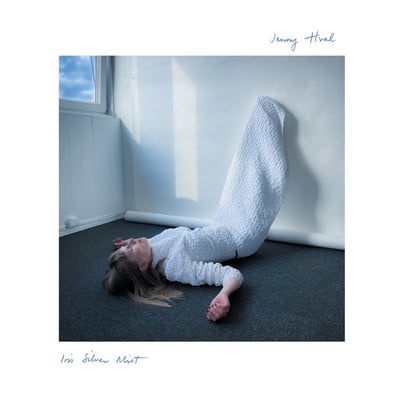
Jenny Hval Iris Silver Mist
Released May 2, 2025 4AD
Established consensus 6 professional reviews Updated Nov 30, 2025
Broadly positive consensus
Jenny Hval's Iris Silver Mist arrives as a sensorial memoir, folding scent, memory and staged absence into art-pop vignettes that reward close attention.
How ChoruScore worksCritics' Top Tracks
The songs critics returned to most
To be a rose
5 critic mentions
“Beginning with the mid-range thump of hand drums and call-to-arms trumpets, it takes a moment for the softer heart notes” — Paste Magazine
The artist is absent
5 critic mentions
“On “The artist is absent,” the record’s clubbiest number, Hval sings in a register so high her words are almost indecipherable.” — Pitchfork
I want to start at the beginning
4 critic mentions
“Juicy, warm, voluptuous, with muscle and fat, texture and resistance, animalic, toxic, tough or tender, burnt, loved… real. I used to be that,” — Paste Magazine
Full critic consensus
Jenny Hval's Iris Silver Mist arrives as a sensorial memoir, folding scent, memory and staged absence into art-pop vignettes that reward close attention. Across six professional reviews the record earned an 82/100 consensus score, and critics consistently point to a handful of standout songs that make the album feel both intimate and theatrically composed.
Critics agree that the best songs on Iris Silver Mist crystallize Hval's themes of perfume and impermanence. Reviewers repeatedly praise “To be a rose”, “The artist is absent” and “I want to start at the beginning” for their smoky imagery and tactile production, while “All night long” and “I want the end to sound like this” surface as kinetic highlights across multiple write-ups. Professional reviews from The Guardian, Pitchfork, Paste and others note the album's airiness - breathing synths, jazzy brass and house-tinged breaks - as the machinery that turns scent-driven nostalgia into music. The consensus suggests the record favors subtlety over immediate hooks, revealing its rewards across repeated listens.
There is also nuance in the reaction. Some critics celebrate the album's deliberate restraint and conceptual clarity, calling it a successful extension of Hval's theatrical experiments, while others find the pace tentative, arguing that certain compositions demand more muscular payoff. Overall the critical consensus frames Iris Silver Mist as a richly textured, conceptually rigorous work whose best tracks - especially “To be a rose”, “The artist is absent” and “I want to start at the beginning” - justify repeated listening and position the record as a distinctive entry in Hval's catalog.
Track Ratings
How critics rated each track, relative to this album (0-100). Only tracks that made critics feel something are rated.
Lay down
To be a rose
I want to start at the beginning
All night long
Heiner Muller
You died
Spirit mist
I don't know what free is
The artist is absent
Huffing my arm
The gift
A ballad
I want the end to sound like this
Get the next albums worth your time.
Critic-backed picks in one clean digest. No clutter.
What Critics Are Saying
Deep insights from 8 critics who reviewed this album

Critic's Take
Jenny Hval maps memory onto scent across Iris Silver Mist, where the best songs - notably “To Be a Rose” and “The Artist Is Absent” - distill her blend of surrealism and intimate recall. The review revels in Hval's Proustian imagery and smoky atmospherics, praising how “To Be a Rose” uses restless drum machine and jazzy brass to transmute a rose stem into a memory. It highlights “I Want to Start at the Beginning” and the record's kinetic, sensuous high point in “The Artist Is Absent”, arguing these tracks make the album feel like a portal to the present and the dead. The tone is admiring and analytic, presenting the best tracks on Iris Silver Mist as both ephemeral and powerfully evocative.
Key Points
-
The Artist Is Absent is the album’s standout for its kinetic, sensuous energy and looming bass.
-
Iris Silver Mist's core strengths are its Proustian scent-memory motifs and surreal, dreamlike soundscapes that make songs feel like portals to memory.
Themes

Critic's Take
In her quietly elliptical prose the reviewer frames Jenny Hval’s Iris Silver Mist as an album obsessed with absence and attunement, and the best tracks - notably “The artist is absent” and “The gift” - crystallize that tension. The voice is interior and tactile, mapping perfume and memory onto songs like “I want to start at the beginning” and “All night long” that luxuriate in sensory detail. The record’s strengths lie in how these standout tracks convert dislocation into vivid, gliding sound worlds, where house breaks, organ stabs, and whispered reveries make presence feel newly earned.
Key Points
-
The best song is "The artist is absent" because it crystallizes the album’s move from absence to sensory presence via deep house and funk elements.
-
The album’s core strengths are its tactile imagery and sensory attunement, converting pandemic dislocation into heady, interior sound worlds.
Themes

Critic's Take
In a voice that luxuriates in sensory detail, Jenny Hval's Iris Silver Mist makes the case for its best tracks through evocative texture and memory. The review repeatedly elevates “To be a rose” and “I don’t know what free is” for their cigarette-and-incense imagery, and names “I want the end to sound like this” as a sunny, proto-vapor highlight. The writer frames these standout songs as conduits for scent-driven nostalgia and mid-90s hauntology, explaining why listeners will call them the best songs on Iris Silver Mist. The tone is admiring, noting that repeated listens reveal jaw-dropping detail that crowns those tracks as the album's most rewarding moments.
Key Points
-
The best song(s) blend vivid scent-driven imagery with memorable musical allusions, making “To be a rose” the album's standout.
-
The album's core strengths are dense, multifaceted compositions and sensory nostalgia that reward repeated listens.
Themes
mu


Critic's Take
In her intimate, dream-haunted voice, Jenny Hval fashions Iris Silver Mist into a study of impermanence where the best songs - “I don’t know what free is”, “All night long” and “To be a rose” - distill her ideas about performance and evaporation. Blooming synths and soft consonants make “I don’t know what free is” a questioning centerpiece, while the earthier “All night long” becomes a declaration that performing is a way of not dying. The highlight “To be a rose” shapeshifts from rose to cigarette and breaks open with Hval’s glinting voice, proving these tracks are the best songs on Iris Silver Mist by feeling like miniature transformations.
Key Points
-
The best song is a highlight because it shapeshifts and culminates in a striking vocal breakthrough on “To be a rose”.
-
The album’s core strengths are its sustained meditation on impermanence and the performative self, realized through intimate vocals and evocative sonic detail.
Themes

Critic's Take
Jenny Hval\'s Iris Silver Mist reads like a perfume memoir, and the best songs - especially “I want to start at the beginning” and “I want the end to sound like this” - are where that sensory framing crystallises. Amaya Lim writes with an almost clinical intimacy, noting how scent and sound collapse together, so the best tracks on Iris Silver Mist feel like memories summoned by smell. The record\'s clearest moments, such as “I want to start at the beginning”, make Hval\'s voice feel both pure and sharpened, turning small fragments into a sustained emotional architecture. Listening for the best songs on Iris Silver Mist is to follow threads of perfume, theatre and childhood until they cohere into the album\'s strongest images and sounds.
Key Points
-
The best song is best because it crystallises the album's perfume-like intimacy and childhood memory fragments.
-
The album's core strengths are its multisensory framing and the clarity of Hval's voice, merging theatre, scent, and sound.
Themes

Critic's Take
Jenny Hval applies her acute intelligence and conceptual bent across Iris Silver Mist, where airy textures make songs like “Lay down” and “Spirit mist” feel like decisive moments. The reviewer's tone privileges thoughtful complexity, praising the album's depth while noting its deliberate restraint. For listeners asking about the best songs on Iris Silver Mist, the review signals that “Lay down” and “Spirit mist” crystallize Hval's art-pop ambitions, balancing atmosphere with argumentative clarity. Overall the record is admired for subtlety rather than immediate hooks, rewarding attentive listening.
Key Points
-
The best song is best because it crystallizes the album's airy, conceptual art-pop with focused intelligence.
-
The album's core strength is its subtle, thoughtful atmosphere that rewards attentive listening.