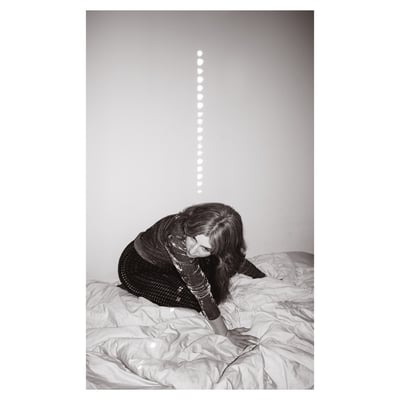
Julia Holter Materia
Released Aug 21, 2026 Domino Recording Co.
Established consensus 6 professional reviews Updated Oct 3, 2026
Mostly positive consensus
Julia Holter's Materia arrives as a companion piece that favours texture, revision and quiet revelation over overt reinvention.
How ChoruScore worksCritics' Top Tracks
The songs critics returned to most
My Lost One
5 critic mentions
“Fantasy and My Lost One rank among the most fully-realised songs Holter has ever written” — The Skinny
My Twin
5 critic mentions
“When Holter returns to her roots in avant-garde improvisation on "Clepsydra" and "My Twin," a hallucinatory ten-minute piece largely recorded in one take, the results are just as immediate.” — AllMusic
Fantasy
5 critic mentions
“My Lost One" and "Fantasy" both rival anything on Loud City Song or Have You in My Wilderness when it comes to exhilarating experimental pop” — AllMusic
Full critic consensus
Julia Holter's Materia arrives as a companion piece that favours texture, revision and quiet revelation over overt reinvention. Across six professional reviews the record earned a 68.33/100 consensus score, and critics consistently point to a handful of songs that crystallize its intent: “My Lost One”, “My Twin”, “Fantasy” and the title reworkings “Materia 2” and “Materia 3” emerge as the collection's clearest moments.
Critics agree that Materia trades conventional songcraft for textural impressionism and studio spontaneity. Reviewers praise the piano-led intimacy and soaring architecture of “My Lost One”, the ten-minute improvisatory build of “My Twin”, and the playful, meditative reworkings captured on “Materia 2”; publications from Pitchfork to The Quietus and The Arts Desk note how those pieces reward close, repeated listening. Recurring themes in the reviews include gathering and dispersal, ethereal textures, fragmentation and a sense of timelessness - Holter's reworking of earlier material becomes both a strength and a source of looseness depending on the critic.
Yet perspectives are mixed. Several reviewers describe the album as lovely but occasionally insubstantial, framing parts of Materia as leftover or meandering material rather than fully realised songs, while others embrace its companion-album logic and improvisatory charm. The critical consensus suggests Materia will most satisfy listeners drawn to ambience, textural detail and revisionist art-pop; for those seeking cohesive peaks it can feel diffuse. Below, the full reviews unpack why the best songs on Materia stand out and where its exploratory impulses falter.
Track Ratings
How critics rated each track, relative to this album (0-100). Only tracks that made critics feel something are rated.
The Laugh Is in the Eyes
My Lost One
Fantasy
Materia 2
Clepsydra
My Twin
Materia 3
Get the next albums worth your time.
Critic-backed picks in one clean digest. No clutter.
What Critics Are Saying
Deep insights from 9 critics who reviewed this album

Critic's Take
Julia Holter treats Materia as a companion that feels both connected and distinct, and the best songs on Materia are the opening trio that prove her art-pop mastery. The record kicks off with “The Laugh Is in the Eyes”, whose baroque-pop and exotica fusion makes it an immediate standout. “My Lost One” and “Fantasy” follow as exhilarating experimental pop, rivalling her best work and showing why fans ask about the best tracks on Materia. The closing “Materia 3” and the improvisatory “Clepsydra” and “My Twin” reveal Holter's improvisational roots, rounding out why these songs define the album's mood.
Key Points
-
The best song is the opener "The Laugh Is in the Eyes" for its baroque-pop and exotica fusion and sensuous beauty.
-
The album's core strengths are its experimental art-pop, improvisational roots, and emotionally adventurous companion-mood to Something in the Room She Moves.
Themes

Critic's Take
Julia Holter returns to Materia as if songs are living things, and the best tracks on Materia - “Fantasy”, “Materia 2” and “My Lost One” - prove that point. The reviewer's sentences move between quiet admiration and close attention, noting how Holter reworks the title into a hallucinatory duet and lets songs arrive like hidden tracks, which makes “Materia 2” and “Materia 3” feel revelatory. There is awe for the fully realised pieces, especially “Fantasy” and “My Lost One”, described as among the most fully-realised songs she has ever written. The tone is contemplative rather than declarative, valuing process over polish and explaining why these are the best songs on Materia in that measured, lyrical voice.
Key Points
-
The best song is favored for its full realisation and emotional completeness, especially “Fantasy”.
-
The album's core strength is thoughtful reworking and a willingness to present multiple versions rather than a single definitive take.
Themes
Fa
Critic's Take
Julia Holter keeps returning to familiar ground on Materia, and the record often feels like tender continuation rather than reinvention. I find “My Twin” the clearest distillation of her aims: tuned percussion and intimate dialogue make it feel like the album’s emotional centre. Likewise, “Materia 2” and “Materia 3” function as reworkings that deepen earlier ideas rather than upend them. Overall, Materia reads as a small, affectionate companion piece threaded with moments of childlike exploration.
Key Points
-
“My Twin” is the best song because its tuned percussion and inward dialogue crystallise the album’s affectionate core.
-
Materia’s core strength is its intimacy: familiar reworkings and playful, childlike textures that act as a focused companion to her prior album.
Themes

Critic's Take
Julia Holter's Materia is at its most revealing on “My Twin”, which spends ten improvisational minutes assembling thick knots of overlapping vocals before the biggest swell arrives and then drains away in a manner the reviewer calls "gorgeously strange." The record repeatedly trades density for absence - the title pieces “Materia 2” and “Materia 3” are skeletal and gap-filled, while “The Laugh Is in the Eyes” and “My Lost One” work through surges of accumulation and hollowing out to reach radiant moments. Even the brief “Clepsydra” feels precious, a fleeting but texturally rich two-minute composition that reaffirms Holter's ear for nuance. Read as an appendix to 2024's predecessor, Materia favors margins over peaks, rewarding listeners who return to its smaller, curious shapes.
Key Points
-
The best song, "My Twin", exemplifies Holter's textural ambition through a long, gorgeously strange improvisation.
-
Materia's core strength is its control of accumulation and dispersal, favoring sparse, textural vignettes over sweeping emotional peaks.
Themes
Th
Critic's Take
Julia Holter's Materia finds its clearest triumph in the piano-led intimacy of “My Lost One”, which begins wispily then builds into a soaring sonic architecture that feels like the best tracks on Materia. The reviewer singles out “My Lost One” as remarkable and more consummated than the brief “Fantasy”, so those two songs emerge as the best songs on Materia. Elsewhere the album is described in muted, foggy terms, etiolated and restrained, which explains why the standout tracks feel even more vivid by contrast.
Key Points
-
The best song is “My Lost One” because it progresses from whisper to a soaring, consummated sonic architecture.
-
The album's core strength is its ethereal textures and controlled grandeur, contrasted by generally muted, foggy restraint.
Themes
Th
Critic's Take
Hi, everyone. Timethony Linetano here - I find Julia Holter's Materia to be a frustrating sibling to its predecessor, with a few moments that pierce the fog. The best tracks on Materia - notably “My Lost One” and the sprawling “My Twin” - show familiar, enchanting textures but falter in execution and cohesion. “Clepsydra” and “Materia 2” feel insubstantial, and “Materia 3” is even less compelling. Overall, the record reads like leftover ideas rather than a vital set of new songs.
Key Points
-
The best song moments are in "My Lost One" and the expansive "My Twin", but both underdeliver compared with past work.
-
Materia's core strength is its familiar textural palette, yet it feels like leftover, disjointed material lacking the enchantment of earlier albums.
Themes

Critic's Take
On Julia Holter's Materia the best songs feel like found scenes within a dream - the album highlight “My Lost One” drifts in on music-box piano and luminous imagery, and “The Laugh Is in the Eyes” opens the record as an asymmetrical, electrified chimera that flashes like jewels. Holter reshapes older material into new forms, so the strongest tracks are those quiet transformations that reveal new textures rather than the moments when noodling becomes overcooked. The twin permutations “Materia 2” and “Materia 3” show both the revivified grandeur and the pared-down, arresting pauses that count as some of the record's most revealing moments.
Key Points
-
The best song, "My Lost One", stands out for its music-box piano and evocative imagery that create a dreamlike high point.
-
Materia's core strengths are transformative reworkings and ancient-influenced ambient textures, balanced against occasional over-embellishment.
Themes

Critic's Take
Julia Holter returns with Materia, a record of reworkings and playful studio impulse where the best tracks are the ones that reconfigure the title song into new emotional shapes. The best songs on Materia are clearly “Materia 2” and “My Twin”, with “Materia 2” meditative and spontaneous and “My Twin” finding new colours and solidifying into a jazzy ballad. Skye Butchard’s ear for texture means the best tracks reward close listening - they feel like one-take experiments that reveal attentive inner logic.
Key Points
-
The best songwork comes from tracks that rework the title motif, especially “Materia 2” which is meditative and improvisatory.
-
The album’s core strengths are spontaneity, textural detail, and a one-take studio sensibility that rewards attentive listening.
Themes
Ho
Critic's Take
Julia Holter’s Materia feels like a companion piece, leaning into the same hallucinatory, ambient-meets-art-pop textures that defined her recent peak. The review finds the record gorgeous in vocal and arrangement detail, yet occasionally loose in cohesion, with the ten-minute “My Twin” emblematic of that meander. By contrast the best tracks on Materia are sharper: “Fantasy” is singled out as the standout, an uptempo, danceable number that puts Holter at her very best. The album rewards attentive listening, even if it sometimes drifts from the focus of its predecessor.
Key Points
-
“Fantasy” is the album’s best song because it is uptempo, danceable and showcases Holter at her strongest.
-
The album’s core strengths are its hallucinatory, ambient-meets-art-pop textures and gorgeous vocal arrangements, despite occasional meandering.