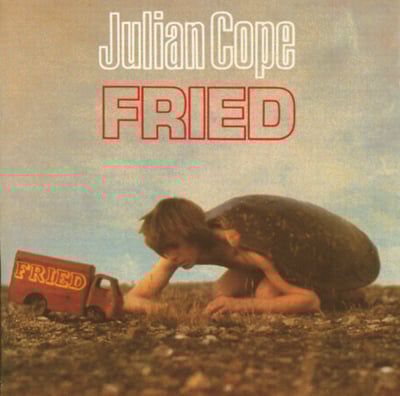
Julian Cope Friar Tuck
Released Jan 10, 2025 EMI
Consensus forming 3 professional reviews Updated Dec 10, 2025
Broadly positive consensus
Consensus is still forming across 3 professional reviews. Julian Cope's Friar Tuck arrives as a mischievous, melody-forward romp where garage-fuzz and affectionate trolling collide with plaintive orchestration.
How ChoruScore worksCritics' Top Tracks
The songs critics returned to most
The Dogshow Must Go On
1 critic mention
“The Dogshow Must Go On is the earworm here, a sub-two-minute garage charmer” — Uncut
Reynard The Fox
2 critic mentions
“In the song titles alone there’s a gleeful sense of mischief” — Classic Rock Magazine
Me And The Jews
1 critic mention
“slow-burning drone-rock on the seven-and-a-half-minute " Me And The Jews” — Uncut
Full critic consensus
Julian Cope's Friar Tuck arrives as a mischievous, melody-forward romp where garage-fuzz and affectionate trolling collide with plaintive orchestration. Critics agree the record's charms lie in its lo-fi home-studio quirkiness and mantric power, and the consensus suggests a rewarding, if slippery, listen rather than a fully polished statement.
Across three professional reviews, Friar Tuck earned a 74.67/100 consensus score, with writers consistently praising standout tracks that pair tunefulness with eccentric production. “Reynard The Fox” is repeatedly cited as a highlight, while “The Dogshow Must Go On” and “Me And The Jews” are singled out for earworm hooks and slow-burning scope. Reviewers noted the record's nostalgia-tinged imagery, playful wordplay, and Mellotron-tinged arrangements as strengths that make the best songs on Friar Tuck stick in the head.
While some critics point to slipperiness and deliberate rough edges, the dominant voice across Uncut, Classic Rock Magazine and Tinnitist frames the album as a gleeful return to melody that relishes mischief and anti-authoritarian mythmaking. Whether you prize hummable choruses, garage-rock grit or off-kilter orchestration, the critical consensus suggests Friar Tuck is worth hearing for its standout moments and idiosyncratic charm.
Below, read the full reviews to see what critics say about the best songs on Friar Tuck and how these tracks fit into Julian Cope's wider catalogue.
Track Ratings
How critics rated each track, relative to this album (0-100). Only tracks that made critics feel something are rated.
Reynard The Fox
Bill Drummond Said
Laughing Boy
Me Singing
Sunspots
The Bloody Assizes
Search Party
O King Of Chaos
Holy Love
Torpedo
I Went On A Chourney
Mic Mak Mok
Land Of Fear
Get the next albums worth your time.
Critic-backed picks in one clean digest. No clutter.
What Critics Are Saying
Deep insights from 4 critics who reviewed this album

Critic's Take
Tom Pinnock writes in a conversational, slightly wry register, praising the album's breezy vitality and lo-fi, first-take energy while noting its slipperiness.
Key Points
-
The album's core strengths are its breezy vitality, lo-fi home-recording immediacy, and playful, garbled lyricism.
Themes

Cl
Critic's Take
Julian Cope’s Friar Tuck is a gleeful, mischievous return to melody that relishes silly, vivid imagery and a loveably brash home-studio wonkiness. The review points to the fun wordplay in titles and highlights how the record is listenable rather than merely experimental, so best songs on Friar Tuck feel like those that pair tunefulness with that quirk - think “Reynard The Fox” and “Laughing Boy”. Emma Johnston’s tone is amused and approving, noting the album won’t stun but will stir, which makes these upbeat, melodic tracks stand out as top picks.
Key Points
-
The best song pairs Cope’s rediscovered melody with his gleeful mischief, making it the most immediately satisfying.
-
The album’s core strengths are tunefulness tempered by quirky home-studio production and witty, anachronistic imagery.
Themes

Critic's Take
Julian Cope’s Friar Tuck reads like a press release written with a wink, and its best songs - notably “Reynard The Fox” and “Bill Drummond Said” - are called out as hummable, wah-acoustic delights. Darryl Sterdan’s tone is playful and affectionate, praising the album’s garage-fuzz dub, mantric powerdrive and Mellotron orchestration while nudging at its micro-trolling. The result is a record that feels cosy, defiant and edgy, the sort of collection whose top tracks lodge in the head and stick there. The review makes clear the best tracks are those balancing melody and eccentric production, making them the standout moments on Friar Tuck.
Key Points
-
The best song(s) are the hummable, wah-acoustic moments that pair melody with Mellotron orchestration, making them earworms.
-
The album’s core strengths are its garage-fuzz production, mantric energy, and playful, defiant lyrical stance.