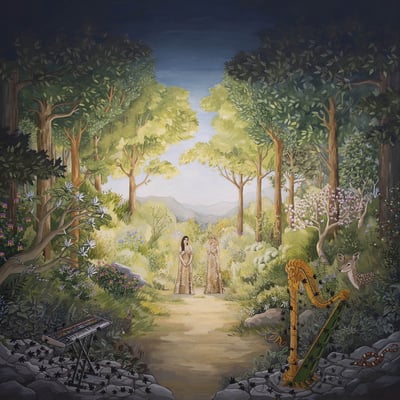
Julianna Barwick & Mary Lattimore Tragic Magic
Released Jan 16, 2026 InFiné
Established consensus 11 professional reviews Updated Feb 15, 2026
Broadly positive consensus
Julianna Barwick and Mary Lattimore's Tragic Magic feels like a ceremonial breath — an ambient collaboration that turns grief into luminous consolation and confirms why critics keep asking whether Tragic Magic is worth listening to.
How ChoruScore worksCritics' Top Tracks
The songs critics returned to most
Perpetual Adoration
10 critic mentions
“The opening “Perpetual Adoration” sounds almost exactly like you’d expect it to when imagining Barwick’s voice and Lattimore’s harp in the same space—which makes it enjoyable but never quite transcendent.” — Pitchfork
Melted Moon
10 critic mentions
“The closing “Melted Moon” is the most song-like piece here and its lyrics—most of the vocals on the album are wordless—connect directly to the catastrophe.” — Pitchfork
Stardust
11 critic mentions
“Just as thrilling is “Stardust,” which leaves the baroque trappings behind so the duo can indulge in time-tripping kosmische.” — Pitchfork
Full critic consensus
Julianna Barwick and Mary Lattimore's Tragic Magic feels like a ceremonial breath — an ambient collaboration that turns grief into luminous consolation and confirms why critics keep asking whether Tragic Magic is worth listening to. Across 11 professional reviews the record earned an 81.36/100 consensus score, and reviewers consistently point to a palette of harp, vocal drones and spare synths that produce moments of haunting beauty and cinematic nostalgia.
Critics agree that the best songs on Tragic Magic are those that allow slow accretion and ritualized patience to pay off. “Perpetual Adoration”, “Melted Moon” and “Stardust” emerge as frequent standouts: “Perpetual Adoration” opens with crystalline harp and choral bloom, “Melted Moon” closes with Barwick's unguarded vocal clarity, and “Stardust” delivers kosmische, time-shifting expanses. Reviewers highlight additional high points such as “Haze with no Haze” and “Rachel's Song” for their capacity to balance delicacy and grandeur, and several critics note the record's sea-coastal atmosphere and nature-inflected imagery as central to its emotional charge.
While praise is widespread, a few reviewers register that the album favors patience over poplike payoff, making some passages feel more devotional than revelatory. Yet the critical consensus emphasizes synergy: the nine-day creation story, the interplay of harp and synth, and the album's blend of modern classical restraint with ambient experimentation mark Tragic Magic as a cohesive, quietly powerful follow-up in both artists' catalogs. For readers hunting a measured verdict on Tragic Magic, the consensus score and repeated track highlights suggest an essential, consoling listen rather than a blockbuster transformation.
Below, detailed professional reviews unpack how these standout songs and recurring themes - transmutation of tragedy, ethereal ambiance, and collaborative intimacy - shape the record's singular mood.
Track Ratings
How critics rated each track, relative to this album (0-100). Only tracks that made critics feel something are rated.
Perpetual Adoration
The Four Sleeping Princesses
Rachel's Song
Haze with no Haze
Temple of the Winds
Stardust
Melted Moon
Get the next albums worth your time.
Critic-backed picks in one clean digest. No clutter.
What Critics Are Saying
Deep insights from 11 critics who reviewed this album

Critic's Take
There is a steady, nearly devotional tenderness at the heart of Tragic Magic, the record that finds Julianna Barwick and Mary Lattimore luxuriating in shared feeling and quiet power. The review’s voice insists that the best songs — like “Melted Moon” — crystallize that blend of urgency and solace, Barwick’s voice arriving as clouds break. This is not the duo chasing Earth-shattering peaks, but rather creating refuge, which makes the album’s strongest moments quietly resonant. For listeners asking what are the best tracks on Tragic Magic, the answer lies in those pieces that balance Barwick’s ache with Lattimore’s patient restraint.
Key Points
-
The album's core strengths are its sense of refuge, collaborative intimacy, and the melding of spiritual yearning with instrumental subtlety.

Critic's Take
On Tragic Magic, Julianna Barwick and Mary Lattimore slowly discover a third voice together, with highlights like “Stardust” and “Melted Moon” proving most revelatory. The record often favors patience over payoff, so while “Perpetual Adoration” is lovely it never quite transcends, and the album finds momentum when tracks accrete and evolve. Barwick and Lattimore’s best songs on Tragic Magic are the ones where structure yields to unexpected density - notably “The Four Sleeping Princesses” and the time-tripping kosmische of “Stardust” that leaves the reviewer wanting more. Ultimately the duo’s connection makes the strongest moments feel necessary and emotionally real.
Key Points
-
“Stardust” is best for its adventurous kosmische sound and expansive seven-minute scope.
-
The album’s core strengths are the emotional connection between the two artists and the patient, evolving structures that reveal a unique collaborative voice.
Themes

Critic's Take
There are at least three ideal situations in which to listen to Tragic Magic, and in each the record's best tracks - notably “Perpetual Adoration” and “Melted Moon” - perform the same gentle work of consolation. Richie Assaly's prose luxuriates in image and mood, describing how “Perpetual Adoration” opens with bright harp plucks and Barwick's soaring falsetto, while “Melted Moon” closes with a stunning, reality-returning vocal. The review praises the sorrowful standout “Haze with No Haze” for its breathtaking reverberation, and calls out covers like “Rachel's Song” and “Stardust” as moments where the album slips into a more derivative, film-score territory. Overall the tone is admiring and measured: this is ambient music that soothes and grounds, best heard in transit, at night, or in the bath.
Key Points
-
The best song, "Melted Moon," is a stunning, reality-returning finale rooted in clear, emotional vocals.
-
The album's core strengths are its ambient consolation, spacious collaboration, and cinematic textures that soothe anxiety.
Themes

Critic's Take
Julianna Barwick and Mary Lattimore’s Tragic Magic plays like a ceremony, and the best songs on the album - notably “Perpetual Adoration” and “Rachel’s Song” - show why. The record takes quiet harp and vocal drones and lets them expand into something vast, so when “Perpetual Adoration” unfurls its choral bloom the listening space itself becomes an instrument. Their cover of “Rachel’s Song” is described with the same cinematic awe that makes it one of the album’s standout moments. Even the surprise shifts in “Stardust” prove the duo can transmute grief into weightless, communal release.
Key Points
-
“Perpetual Adoration” is the best song because its spare harp and choral bloom let the recording space become an instrument.
-
The album’s core strength is transforming grief into an expansive, shared ambient ascent through historic harp textures and Barwick’s devotional layers.
Themes

Critic's Take
On Tragic Magic, Julianna Barwick and Mary Lattimore translate their "musical telepathy" into a set of immersive, ambient miniatures where the best tracks - notably “Perpetual Adoration” and “Haze With No Haze” - linger like lullabies and quiet urgencies. The opener “Perpetual Adoration” charms with a delicate harp loop and hushed whispers, while “Haze With No Haze” carries a brittle melody and Barwick’s yearning high register that give the album its emotional centre. When they push toward intensity, as on “Rachel's Song” and the climactic “Stardust”, the duo flirt with epic, almost pop-inflected moments before retreating to the intimate shimmer of “Melted Moon” as a closing grace.
Key Points
-
Perpetual Adoration is best for its lullaby-like harp loop and hushed vocal textures that set the album’s tone.
-
The album’s core strengths are the duo’s telepathic interplay, cinematic ambient textures, and a balance of intimacy and occasional grandeur.
Themes

Critic's Take
Julianna Barwick and Mary Lattimore sound uncannily united on Tragic Magic, the debut joint album that feels like the work of collaborators of decades rather than days. The review praises the record’s seamless blend of modern classical and other forms, and singles out the seven compositions as imbued with a spiritual touch - songs like “Perpetual Adoration” and “Temple of the Winds” exemplify that radiant cohesion. The writing emphasizes the immediacy of creation, noting the nine-day conception and recording as part of the album’s charm and proof of true musical synergy.
Key Points
-
The best song exemplifies the album’s seamless synergy and spiritual resonance forged in a rapid nine-day creation.
-
The album’s core strengths are the fusion of modern classical forms and an uncanny collaborative unity between the two artists.
Themes

Critic's Take
In a voice that feels equal parts reverent and awed, Julianna Barwick & Mary Lattimore make Tragic Magic sound like a voyage from hearth to heavens, where “Rachel’s Song” and “Stardust” emerge as the album's most transporting moments. The review lingers on “Rachel’s Song” as a weighty, otherworldly reimagining of Blade Runner, while “Stardust” is hailed as the definitive, unofficial song of the cosmos; both tracks underpin why listeners ask for the best tracks on Tragic Magic. The conversation-style praise balances personal fandom and detailed description, explaining why these are the best songs on the record and why the album feels simultaneously ancient and futuristic.
Key Points
-
“Stardust” is the standout for its transcendental final third and cosmic production.
-
The album's core strengths are its historic instrument textures and a progression from earthy to cosmic soundscapes.
Themes

Critic's Take
Julianna Barwick and Mary Lattimore’s Tragic Magic is an otherworldly, jazzy listen that rewards patient ears, with highlights like “Stardust” and “Temple of the Winds” standing out. The reviewer's voice lingers on the record’s haunting beauty and soaring, eerie vocals, noting how Lattimore’s harp shines on “The Four Sleeping Princesses” and “Haze with No Haze” while Barwick’s synths make “Stardust” an early favorite. Across seven songs the duo’s chemistry and quiet sonic risks make these the best tracks on Tragic Magic, each a small, spellbinding portrait of solitude and solace. The result is a cohesive collaborative LP that asks listeners to slow down and be absorbed by its jaw-dropping ambiance.
Key Points
-
“Stardust” is best for its luminous synth lead and being named an early favorite.
-
The album’s core strengths are its ethereal ambiance, harp-led moments, and collaborative chemistry.
Themes
KL
Critic's Take
The long friendship between Julianna Barwick and Mary Lattimore yields a radiant, immersive record in Tragic Magic, and the best songs here - “Perpetual Adoration” and “Melted Moon” - showcase that rare mix of experimental daring and plain beauty. Other highlights like “The Four Sleeping Princesses” and “Stardust” expand the palette, moving from neo-classical minimalism to sweeping, futuristic synth vistas that linger.
Key Points
-
Perpetual Adoration is best for its inviting harp melody and swooning vocal that set the record’s lush tone.
-
The album’s core strengths are its textural contrasts, subtle mood shifts, and the blend of experimental modernism with plain beauty.
Themes

Critic's Take
On Tragic Magic Julianna Barwick and Mary Lattimore do exactly what you expect: they luxuriate in weightless, sublime textures. The record is not full of surprises, but when it swells - notably on “Haze with no Haze” and “Stardust” - the chemistry feels titanic and precisely moving. Even the more fragmentary pieces, like “The Four Sleeping Princesses”, retain a pretty, drifting charm that fits the album's steady wonder.
Key Points
-
The best song is “Haze with no Haze” for its dramatic clash of harp and titanic synths.
-
The album's core strength is the seamless melding of Barwick's washed-out synths and Lattimore's crystalline harp producing sublime, weightless textures.
Themes

Critic's Take
I listened to Julianna Barwick & Mary Lattimore on the cliff and it is the sea-room feeling that defines Tragic Magic. The best songs - particularly “Perpetual Adoration” and “Melted Moon” - conjure that elemental collision of harp and voice, where Lattimore’s plucked lines and Barwick’s siren-calls make the album sing. “Stardust” and “Temple Of The Winds” show the collaborative call-and-response at its most mesmeric, neither player dominating the other. Overall, the record’s puckish energy and in-between dreamscape make these tracks the clearest standouts.
Key Points
-
The best song, 'Perpetual Adoration', is best for instantly conjuring the album’s elemental, sea-room atmosphere.
-
The album’s core strengths are its collaborative call-and-response, dreamlike liminality, and strong natural imagery.