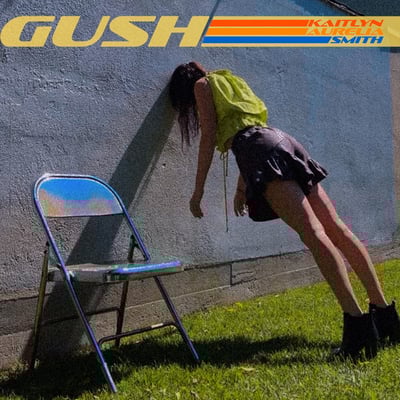
Released Aug 22, 2025 Nettwerk Music Group
Established consensus 6 professional reviews Updated Nov 24, 2025
Broadly positive consensus
Kaitlyn Aurelia Smith's GUSH arrives as a body-forward gesture toward pop and dance, where Buchla modular textures meet intimate vocal experiments.
How ChoruScore worksCritics' Top Tracks
The songs critics returned to most
Drip
6 critic mentions
“Opener “Drip” finds her “looking away, with my eyes on you”: romantic and anxiously possessive at once.” — Beats Per Minute
Both
3 critic mentions
“By far GUSH’s densest moment, the epiphany behind centring oneself with their surroundings feels accomplished as this glowing highlight melts like honey.” — The Line of Best Fit
Feel Heard
1 critic mention
“On "Feel Heard," a cresting treble loop sinks beneath adrenalized polyrhythms” — Pitchfork
Full critic consensus
Kaitlyn Aurelia Smith's GUSH arrives as a body-forward gesture toward pop and dance, where Buchla modular textures meet intimate vocal experiments. Across six professional reviews critics register a warm-but-precise welcome: the record earned a 74.5/100 consensus score across 6 reviews, praised for turning interior sensation into physical motion while occasionally testing patience with its start-stop pacing. For anyone searching for a clear verdict on GUSH, the critical consensus leans positive - an accessible, artful pivot rather than a complete reinvention.
Reviewers consistently point to “Drip”, “Both” and the title track “Gush” as the album's most immediate successes, with Pitchfork and PopMatters also flagging “Feel Heard” and “Urges” for their tactile builds and crests. Critics note recurring themes of integration - interior and exterior worlds collapsing into danceable textures - and the contrast between crystalline melodies and phantasmagoric synths. Comments emphasize vocal experimentation, bodily sensation, and a playful tropical/vaporwave sheen that makes certain cuts feel like experiments turned into hooks.
That praise is tempered in a few reviews that question cohesion. Under The Radar and The Line of Best Fit point to moments where pitch-shifted vocals or abrupt pacing interrupt groove, suggesting some tracks function better as standalone highlights than as continuous club-ready flow. Still, the majority of professional reviews celebrate Smith's clarity of purpose: the record's short arc, modular ingenuity and warmly physical songwriting mark GUSH as a noteworthy step in her catalog. Below, critics unpack why the best songs on GUSH - led by “Drip”, “Both” and “Gush” - make the album worth hearing.
Track Ratings
How critics rated each track, relative to this album (0-100). Only tracks that made critics feel something are rated.
Drip
Urges
Gush
Stare Into Me
Into Your Eyes
What's Between Us
Feel Heard
Both
Everything Combining
Almost
The World Just Got a Little More Big
Lay Down
In the Dressing Room
Get the next albums worth your time.
Critic-backed picks in one clean digest. No clutter.
What Critics Are Saying
Deep insights from 7 critics who reviewed this album

Critic's Take
Kaitlyn Aurelia Smith makes GUSH feel like a body-first dance record, playful and unafraid of pop hooks. The review highlights “Drip” as perhaps her most straightforward pop hook, and praises “What’s Between Us” and “Stare Into Me” as classic Smith pieces with summery pads and pitch-shifted vocals. The voice here is admiring and slightly amused, noting how bleeps, bloops and off-kilter vocal exercises sit atop conventional pop structures. For listeners searching for the best songs on GUSH, start with “Drip”, “What’s Between Us” and “Stare Into Me” for the clearest sense of Smith’s marriage of pop craft and Buchla weirdness.
Key Points
-
“Drip” is the album’s clearest pop triumph, built around a repeated, cathartic chorus.
-
GUSH’s core strength is its body-centered, playful fusion of pop hooks and Buchla-powered experimentalism.
Themes

Critic's Take
Kaitlyn Aurelia Smith makes a bodily, almost tactile record with GUSH, where songs like “Drip” and “In the Dressing Room” put physical gesture at the centre of feeling. The review revels in Smith's Buchla synth brushstrokes and angsty overdubbed vocals, praising how tracks such as “Both” and “What’s Between Us” move from hypnagogic shimmer to playful 8-bit invention. The tone is admiring and precise, insisting that while GUSH is more direct than its predecessor, its structures and lucid melodies recall the game-changing clarity of Kid. Ultimately the album's 40-minute arc, ending with a brief sonic experiment, feels perfectly logical - a compact, inventive work that rewards attention.
Key Points
-
The best song, 'Drip', frames the album's bodily theme with angsty vocals and Buchla synths, making it the record's emotional center.
-
GUSH's core strengths are inventive synth textures, clear song structures, and a balance of directness with experimental touches.
Themes

Critic's Take
Chase McMullen hears Kaitlyn Aurelia Smith leaning into a colder futurism on Gush while still plumbing tender feeling; that tension makes songs like “Drip” and “Gush” the best tracks on Gush. McMullen frames “Drip” as romantically anxious and vividly intimate, and presents the title track as one of the album's unabashedly romantic high points. The review's voice pairs analytic observation with lyrical description, arguing that the juxtaposition of steel-like sounds and warm words is the record's greatest strength. This keeps the focus on those standout tracks as the clearest examples of Smith's risky, successful reinvention.
Key Points
-
The best song, the title track “Gush”, is the clearest example of Smith's warm lyrical romanticism against cold production.
-
The album's core strength is its deliberate contrast between sparse, futuristic sounds and tender, unguarded lyrics.
Themes

Critic's Take
In a record that makes sensation feel like choreography, Kaitlyn Aurelia Smith’s Gush finds its best tracks in the bodily pull of “Drip”, the patient build of “Urges”, and the cresting loop of “Feel Heard”. The reviewer’s language remains attentive to how sound becomes physical - Smith turns synthesis into limbs and beats into momentum, so the best songs on Gush are those that translate interior impulse into communal motion. These cuts show why the album’s pleasures pour from the bones, not the brain, and why the record’s social, libidinal focus works so insistently on the dance floor and in the body.
Key Points
-
The best song highlights sensation made bodily, with "Feel Heard" exemplifying the album’s cresting, adrenalized loops.
-
Gush’s core strength is translating interior impulse into communal, danceable motion through weighted synths and rhythm.
Themes


Critic's Take
In this review Dom Lepore hears Kaitlyn Aurelia Smith shaping sound into readable moments on GUSH, and pinpoints the record’s best tracks as ones that make you actually see and feel. The title track “Gush” surfaces as a mantra-driven centerpiece, while “Both” is hailed as the album’s glowing highlight, a prismatic modular groove that melts like honey. Opener “Drip” and the metallic-pulsed “Urges” are noted for their wakeful synth arpeggios and tense vocal howls, respectively, making them among the best songs on GUSH. Lepore keeps a measured tone - admiring the accessibility and ambition even as he flags reduced discombobulation compared to earlier work.
Key Points
-
“Both” is the best song because it is described as an elevated, prismatic modular groove and the album’s glowing highlight.
-
The album’s core strength is its sensory concept: celebrating surroundings through intricate, idiosyncratic electronic textures while becoming slightly more accessible.
Themes

Critic's Take
Kaitlyn Aurelia Smith's GUSH is framed as a set of dance-ready moments rather than a cohesive dance album, and the review zeroes in on what works - namely “Drip” and “What’s Between Us”. The critic praises “Drip” as an opener that eases the listener in, and calls “What’s Between Us” a gem with an easy-to-follow energetic arc that fulfills the album's promise. At the same time the reviewer flags tracks like “Urges” and “Stare Into Me” for plateauing or clashing vocals, undercutting flow. The voice is evaluative and slightly rueful, pointing out standout tracks for playlists even as the record's start-stop cadence frustrates groove.
Key Points
-
The best song is "What’s Between Us" because it delivers an easy-to-follow energetic arc that fulfills the album's promise of movement.
-
GUSH's core strength is its danceable textures and standout moments, even if a start-stop cadence prevents a cohesive dance flow.