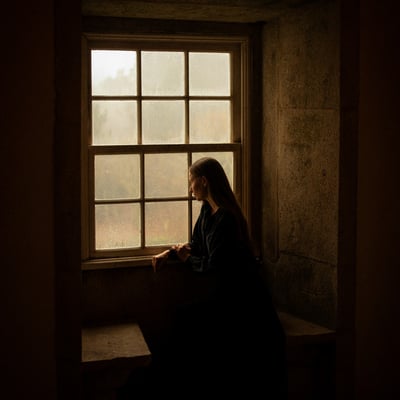
Kara-Lis Coverdale Changes In Air
Released Nov 21, 2025 Smalltown Supersound
Established consensus 5 professional reviews Updated Jan 5, 2026
Broadly positive consensus
Kara-Lis Coverdale's Changes In Air centers on meticulous timbre and sustained resonance, and critics agree the record rewards patient, close listening.
How ChoruScore worksCritics' Top Tracks
The songs critics returned to most
Strait of Phase
5 critic mentions
“Changes in Air ’s opening track, ‘Strait of Phase’, begins with slow striding organ, a steady pattern imbued with delicate harmonic variation.” — The Quietus
Curve Traces of Held Space
4 critic mentions
“the album's final track. Clocking in at nearly eight minutes, it shapeshifts over its runtime” — Exclaim
Labyrinth I
5 critic mentions
“Changes in Air : 1. Strait of Phase 2. Labyrinth I 3. Boundlessness 4. Oriri 5. Curve Traces of Held Space” — Exclaim
Full critic consensus
Kara-Lis Coverdale's Changes In Air centers on meticulous timbre and sustained resonance, and critics agree the record rewards patient, close listening. Across five professional reviews the consensus score sits at 76.4/100, with reviewers repeatedly pointing to the album's focus on organ and piano timbres, drone-driven textures, and the material inspirations - wood, water, sun, glass, metal - that inform its sound world. The result reads like a calm, sculptural capstone to a trilogy rather than a collection of immediate hooks.
Reviewers consistently single out “Strait of Phase”, “Labyrinth I” and “Curve Traces of Held Space” as standout tracks, while “Boundlessness” and “Oriri” earn frequent praise for tactile detail. Critics note how “Strait of Phase” suspends sonar-like oscillations and glowing organ warmth, how “Labyrinth I” rotates with sculptural grace and darker bleeps, and how “Curve Traces of Held Space” shapeshifts across its near-eight-minute span into an almost-ominous finale. Professional reviews highlight the record's installation origins, gradual evolution, and subtle dynamics - qualities that define the best songs on Changes In Air and underline the album's ambient minimalism and nocturnal moods.
While admiration is widespread, critics temper praise with the observation that rewards are slow and demanding; some reviews place the album's virtues in its lingering overtones rather than melodic payoff. As a result, the critical consensus frames Changes In Air as a textural, piano-driven achievement best appreciated as a cohesive listening experience and a fitting, thoughtful close to the trilogy.
Track Ratings
How critics rated each track, relative to this album (0-100). Only tracks that made critics feel something are rated.
Strait of Phase
Labyrinth I
Boundlessness
Oriri
Curve Traces of Held Space
Get the next albums worth your time.
Critic-backed picks in one clean digest. No clutter.
What Critics Are Saying
Deep insights from 5 critics who reviewed this album

Critic's Take
Kara-Lis Coverdale's Changes In Air rewards close listening, and the best songs on Changes In Air are the ones that let tiny gestures swell into landscapes - “Strait of Phase” and “Boundlessness” stand out. The reviewer lingers over “Strait of Phase” for its creeping amplitude and sudden bass impact, and praises “Boundlessness” for its liquid, piano-led flows. Elsewhere “Labyrinth I” and “Oriri” are noted for geometric motifs and thawing drones, reinforcing why the album's meticulous textures make these its strongest tracks. The tone is admiring and precise, arguing that these best tracks turn delicate detail into profound musical presence.
Key Points
-
The best song, “Strait of Phase”, is best because its careful build and sudden bass moment transform tiny gestures into a landscape.
-
The album's core strength is meticulous attention to subtle dynamics and textured materials that demand active listening.
Themes

Critic's Take
Kara-Lis Coverdale's Changes In Air feels like the calm centre of a restless trilogy, and the best songs on Changes In Air - notably “Strait of Phase” and “Curve Traces of Held Space” - show that balance in miniature. There is an emphasis on timbre and piano revelation, and the critic repeatedly praises the album's gentle unfolding and tonal variance. Overall the piece is framed as a masterful capstone that ties the trilogy together with restraint and evocative atmosphere.
Key Points
-
“Curve Traces of Held Space” is best because its reverberating drone and tender piano phrases tie the album's emotive arc.
-
The album's core strengths are timbral contrast, piano-led melodies, and a gentle, unfolding ambient structure that concludes the trilogy.
Themes

Critic's Take
“Boundlessness” is singled out for its tactile, clacking grounding, giving the album an immediate physicality. Overall, the record is celebrated for illuminating overtones and resonance rather than flourishes, making these tracks the best songs on Changes In Air by virtue of their insistence on lingering sound.
Key Points
-
The album’s core strengths are its attention to timbre, sustained resonance, and the physical materiality of instruments.
Themes

Critic's Take
The record unfolds like an installation, pieces evolving subtly from organ and modular synth into piano-dusted spaces, which makes it easy to answer which are the best songs on Changes In Air: the opener's glowing build and the closing piece's descending pianos. Even when bleeping synths in “Labyrinth I” conjure darker memories, the album maintains a serene, tactile focus that rewards patient listening.
Key Points
-
The best song is the opener for its warm organ drone and surprising climax.
-
The album's core strengths are subtle evolution, tactile textures, and patient, installation-like pacing.
Themes

Critic's Take
Kara-Lis Coverdale's Changes In Air feels like an excavation of material and mood, and the review points squarely to the closing “Curve Traces of Held Space” as a best track. The writer foregrounds that near-eight-minute finale, noting how it "shapeshifts over its runtime, beginning gently atmospheric before stretching into something almost ominous, but not quite," which makes “Curve Traces of Held Space” and the opening “Strait of Phase” the best songs on Changes In Air for texture and slow transformation. The critic's tone is admiring and measured, emphasizing the installation roots and the five-material concept as key reasons these tracks stand out. This is a recommendation for listeners seeking immersive, steadily evolving pieces rather than immediate hooks.
Key Points
-
The nearly eight-minute “Curve Traces of Held Space” is the standout for its shapeshifting, atmospheric-to-ominous arc.
-
The album's strengths are immersive textures, installation-derived concept, and slow-evolving electronic-organ and piano compositions.