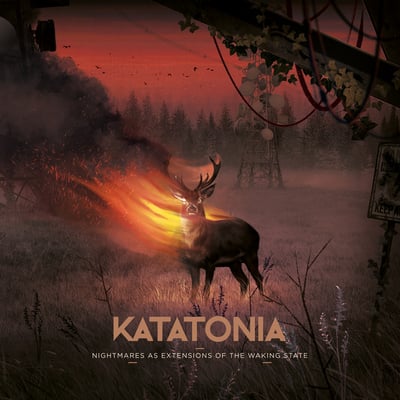
Katatonia Nightmares as Extensions of the Waking State
Released Jun 6, 2025 Napalm Records Handels GmbH
Established consensus 7 professional reviews Updated Sep 4, 2026
Mostly positive consensus
Katatonia's Nightmares as Extensions of the Waking State lands as a somber, cinematic statement that leans into progressive rock textures while preserving the band's signature melancholia.
How ChoruScore worksCritics' Top Tracks
The songs critics returned to most
Thrice
7 critic mentions
“heavy opener “Thrice” finds Elgstrand and Svalland juxtaposing chaotic guitar riffs and delicate six-string tapestries” — Metal Sucks
Wind of no Change
7 critic mentions
“Wind of No Change” is pointedly ominous due to both its satanic allusions and lusciously medieval chants” — Metal Sucks
The Liquid Eye
6 critic mentions
“opening track Thrice packs plenty of drama into its progressions, as does its immediate successor The Liquid Eye.” — Kerrang!
Full critic consensus
Katatonia's Nightmares as Extensions of the Waking State lands as a somber, cinematic statement that leans into progressive rock textures while preserving the band's signature melancholia. Across seven professional reviews the record earned a 71.43/100 consensus score, and critics consistently point to an album defined by guitar-centric arrangements, noirish ambience, and a tension between restrained atmosphere and moments of heft.
Reviewers agree that several standout tracks carry the album's emotional logic: “Thrice” repeatedly surfaces as an opener that fuses chaotic riffs with delicate arpeggios; “Wind of no Change” and “The Light Which I Bleed” are cited for marrying memorable choruses and riffs to a stadium-minded sweep; meanwhile the Swedish-language “Efter Solen”, “Lilac” and quieter pieces like “Departure Trails” and “Temporal” showcase the band's tender, reflective side. Critics praised Jonas Renkse's velvet voice and the clear, layered production, and many noted that the new guitar duo and lineup transition sharpen guitar interplay without erasing nostalgia for earlier metal heft.
The critical consensus is admiring but measured: reviewers applaud the album's progressive experiments, sectional collage approach, and cinematic gloom, while some find the fragmentary transitions and occasional diffusion of focus limiting. Across professional reviews the record reads as a mature, sometimes divisive step forward - not a wholesale reinvention, but a thoughtful evolution that balances loss and longing with restrained vibrance. For readers seeking a Nightmares review that answers whether the album is worth listening to, the verdict is that its best songs - notably “Thrice”, “Wind of no Change” and “Efter Solen” - make the collection a rewarding, if occasionally fragmented, addition to Katatonia's catalog.
Track Ratings
How critics rated each track, relative to this album (0-100). Only tracks that made critics feel something are rated.
Thrice
The Liquid Eye
Wind of no Change
Lilac
Temporal
Departure Trails
Warden
The Light Which I Bleed
Efter Solen
In the Event of
Get the next albums worth your time.
Critic-backed picks in one clean digest. No clutter.
What Critics Are Saying
Deep insights from 7 critics who reviewed this album
Cl
Critic's Take
Katatonia deliver on Nightmares as Extensions of the Waking State with a string of standout songs that balance heft and hushed beauty. The reviewer's tone finds the best tracks in the album's contrasts, praising “Thrice” as an elegant encapsulation and highlighting “Efter Solen” as a startlingly delicate centrepiece. He calls out the brutal grandeur of “Wind of no Change” and the tear-jerking hush of “Departure Trails”, arguing these are among the best songs on Nightmares for their melodic invention and emotional payoff. The narrative stays measured but admiring, noting that Renkse's songwriting keeps the present glowing brighter than the past.
Key Points
-
Efter Solen is singled out as the album's most affecting moment due to its delicate Swedish piano balladry and magical ambience.
-
The album's core strengths are Renkse’s melodic invention and the balance between heavy metallic riffs and noirish, cinematic tenderness.
Themes
Me
Critic's Take
Katatonia’s Nightmares as Extensions of the Waking State is another hauntingly decorated and tenderly tumultuous record, and the best songs - notably “Thrice” and “Wind of No Change” - showcase why the new guitar duo belongs in the band. The opener “Thrice” immediately verifies the lineup change, pairing chaotic riffs with delicate tapestries while Jonas Renkse’s chilling singing anchors it. Meanwhile “Wind of No Change” stands out for its ominous satanic allusions and lusciously medieval chants, giving the album an especially forbidding peak. Other highlights like “The Light Which I Bleed” and the gentle keyboard pieces “Departure Trails” and “Efter Solen” round out a record that keeps Katatonia’s sophisticated melancholy vividly alive.
Key Points
-
“Thrice” is the best song because it immediately showcases the new guitarists with a compelling contrast of chaos and delicacy anchored by Renkse’s vocals.
-
The album’s core strengths are its gothic atmosphere, sophisticated melancholy, and successful integration of a new guitar-centric lineup.
Themes
Bl
Critic's Take
Katatonia continue to trade in bleak atmospherics on Nightmares as Extensions of the Waking State, and the best songs here are plainly "Lilac", "Temporal" and the closing "In the Event of". The reviewer's voice celebrates curling, drifting verses in "Lilac" and the quick, effective lead of "Temporal", while noting the swooning, fully encapsulating sweep of "In the Event of" as emblematic of where the band are circa 2025. There is also praise for the opening trio - "Thrice", "The Liquid Eye" and "Wind of no Change" - for their burly riffs and pensive dropouts, which set the album's tone. Overall the best tracks on Nightmares as Extensions of the Waking State are those that balance thick riffing with space and atmosphere, the songs that will likely stand out live and in retrospect.
Key Points
-
"Lilac" is the best song because of its curling, drifting verses and live-staple potential.
-
The album's core strengths are its atmosphere, space, and the balance of thick riffs with reflective passages.
Themes
Di
Critic's Take
Katatonia's Nightmares as Extensions of the Waking State is at its best when it leans into collage-like surprises, with opener “Thrice” and lead single “Lilac” standing out for packing ideas and beautiful layered arpeggios. The reviewer relishes Jonas Renkse's velvet voice and the record's thick, crystal-clear production while noting the album's fragmentary transitions can frustrate recall. Fans searching for the best tracks on Nightmares as Extensions of the Waking State will find that “Thrice”, “Lilac” and the Swedish-language “Efter Solen” best showcase the band's melancholic grandeur and experimental turns. Overall the tone is appreciative - praising ambition and musicianship while flagging that the collage approach sometimes costs cohesion.
Key Points
-
The best song is the opener “Thrice”, for its instant switcheroo and concentrated ideas that reveal the album's collage approach.
Themes
Cl
Critic's Take
Katatonia retain their elegiac melancholy on Nightmares as Extensions of the Waking State, but it is the jolts of past heft and brief vibrance that make the best tracks stand out. The opener “Thrice” lands with a thump that nods to their metal beginnings and immediately marks it as one of the best tracks on the album. Moments like the symphonic swells in “Temporal” and “The Light Which I Bleed” and the trip-hop tint of “Efter Solen” are the album’s clearest delights. The record rarely reinvents them, yet those songs supply the strongest pleasures on Nightmares, small triumphs inside familiar darkness.
Key Points
-
The opener “Thrice” is the album’s clearest highlight, its opening thump invoking the band’s heavier roots.
-
The album’s core strengths are elegiac melodies and restrained moments of vibrance, like the symphonic swells and textured electronica.
Themes
An
Critic's Take
In a voice that still favors dusk and resignation, Katatonia deliver on Nightmares as Extensions of the Waking State with moments that stick - chiefly “Wind of No Change” and the woozy “The Light Which I Bleed” emerge as the best songs on the album because they pair Renkse's slinky vocal hooks with stadium-minded choruses and memorable riffs. The record often trades invention for familiarity, so the best tracks are those that sharpen the band’s trademarks into singable, soaring refrains rather than diffuse experiments. If you search for the best tracks on Nightmares as Extensions of the Waking State, look to the arena-ready melodicism of “Wind of No Change” and the bouncing wah-chord hypnosis of “The Light Which I Bleed”, which together give the album its clearest sense of purpose.
Key Points
-
The best song is "Wind of no Change" because it crystallizes Katatonia's arena-ready melodicism and slinky vocal hooks.
-
The album’s core strengths are its melancholic atmosphere, strong choruses, and polished contemporary production.

Critic's Take
Katatonia have never been a band to simply revert to old habits, and on Nightmares as Extensions of the Waking State the best tracks underline that steady, melancholic logic. Jonas Renkse’s voice is at its most suited to the reflective numbers, so it is the soothing, thoughtful pieces like “Departure Trails” and “Warden” that stand out as the album’s clearest strengths. Yet opener “Thrice” and its immediate successor “The Liquid Eye” pack drama into their progressions and make a persuasive case for being among the best songs on the record. The result is an album that nudges toward heft but ultimately remains firmly rooted in Katatonia’s considered, delicate sound.
Key Points
-
Departure Trails is the best song because its reflective, soothing nature suits Jonas Renkse’s understated vocals.
-
The album’s core strength is its considered, delicate sound that balances hints of heaviness with melancholic restraint.