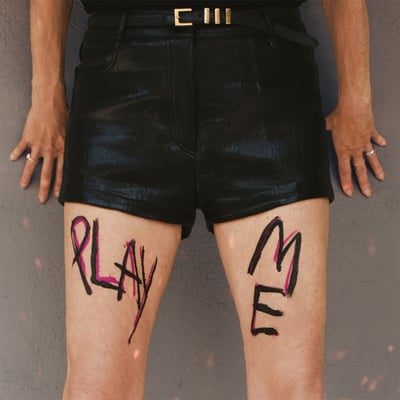
Kim Gordon PLAY ME
Released Mar 13, 2026 Matador
Established consensus 15 professional reviews Updated Mar 20, 2026
Mostly positive consensus
Kim Gordon's PLAY ME cuts sharp, brief dispatches that fold her no-wave sensibility into jittery electroclash and abrasive pop production, and across 15 professional reviews critics largely agree it succeeds in moments even when uneven overall.
How ChoruScore worksCritics' Top Tracks
The songs critics returned to most
BUSY BEE
11 critic mentions
“Apparently, that’s Dave Grohl behind the kit on ‘Busy Bee’, trading blows with an old school drum machine” — DIY Magazine
DIRTY TECH
11 critic mentions
“the danceable self-explanatory ‘Dirty Tech’ presents a shattered view of working life under technocracy” — New Musical Express (NME)
PLAY ME
9 critic mentions
“the eponymous opener is all slacker hip-hop and strange beats” — The Spill Magazine
Full critic consensus
Kim Gordon's PLAY ME cuts sharp, brief dispatches that fold her no-wave sensibility into jittery electroclash and abrasive pop production, and across 15 professional reviews critics largely agree it succeeds in moments even when uneven overall. The record earned a 71.2/100 consensus score across 15 professional reviews, with reviewers consistently pointing to rhythm and texture - clipped beats, trip-hop grooves and industrial punk grit - as the album's chief currency. Standout tracks repeatedly named by critics include “BUSY BEE”, “PLAY ME” and “DIRTY TECH”, each cited for marrying Gordon's idiosyncratic persona to modern electronic production and for transforming political satire about late-stage capitalism and technocracy into danceable, anxious hooks.
Critics praise how songs like “BUSY BEE” and “DIRTY TECH” distill capitalist anxiety and AI critique into concise, striking statements, and how “SUBCON” and “NOT TODAY” showcase spectral vocals-as-atmosphere over krautrock and boom-bap rhythms. Several reviews highlight Justin Raisen's production as a collaborator who sharpens Gordon's collage-like approach, producing moments of real panache even when tracks sometimes blur into one another. Reviewers note the album's brevity and snapshot lyricism as deliberate choices that foreground urgency over melodic resolution.
While many critics call the record fresh, strange and often moreish, some find its experimentation uneven or occasionally too literal compared with Gordon's subtler past work. The consensus suggests PLAY ME is worth attention for listeners curious about innovation in a later career and for those seeking the best songs on PLAY ME - namely “BUSY BEE”, “PLAY ME” and “DIRTY TECH” - that balance weirdness with a compelling rhythmic bite. Below, read the full reviews to decide whether PLAY ME ranks among Gordon's most vital recent statements or stands as a provocative, if imperfect, experiment.
Track Ratings
How critics rated each track, relative to this album (0-100). Only tracks that made critics feel something are rated.
PLAY ME
GIRL WITH A LOOK
NO HANDS
BLACK OUT
DIRTY TECH
NOT TODAY
BUSY BEE
SQUARE JAW
SUBCON
POST EMPIRE
NAIL BITER
BYEBYE25!
Get the next albums worth your time.
Critic-backed picks in one clean digest. No clutter.
What Critics Are Saying
Deep insights from 15 critics who reviewed this album

Critic's Take
He praises how the album fries and nourishes attention spans, pointing to the jazzy boom-bap of the title track and the crackling low-end of “Subcon” as further high points. The review frames these songs as both caustic and tender, arguing that tracks such as “Post Empire” and “Busy Bee” translate fury into potent, memorable rhythms. Overall, Sharples positions the best songs on PLAY ME as evidence that Gordon can make anything sound "fucking sick," even while issuing urgent critiques of convenience culture.
Key Points
-
The best song is "Dirty Tech" for its gnarly beat and satirical, furious lyricism.
-
The album's core strengths are its rhythmic invention, sharp satire of AI, and textured production.
Themes

Critic's Take
In his puckish, observant voice John Porter frames Kim Gordon's PLAY ME as defiantly strange yet addictive, singling out “DIRTY TECH” and “NOT TODAY” as exemplars of its pull. He describes the opener “PLAY ME” as slacker hip-hop with smoky, half-slurred vocals, and praises “DIRTY TECH” as one of the album's strangest and most captivating moments. Porter also notes the shift to a darker second half with tracks like “BUSY BEE”, “SUBCON” and “POST EMPIRE” that refuse expectations while remaining moreish. The narrative stays admiring throughout, calling the record fresh, different and plainly relevant even in Gordon's 70s, which explains why listeners seeking the best songs on PLAY ME should start with these highlighted tracks.
Key Points
-
“DIRTY TECH” is the album’s standout for being both strange and captivating.
-
The album’s core strength is its persistent experimentation that remains moreish and relevant.
Themes

Critic's Take
Kim Gordon channels righteous fury across PLAY ME, and the best tracks - “Dirty Tech”, “Black Out”, and “Post Empire” - crystallize that rage with bruising beats and sly satire. Grant Sharples hears Gordon turning techno-paranoia into combustible rhythm, praising the booming rage-rap of “Dirty Tech” and the melismatic Auto-Tune menace of “Black Out”. He flags “Post Empire” for its squealing feedback and sub-bass that make its political musings physically felt. The review positions these songs as prime examples of why listeners search for the best tracks on PLAY ME and the best songs on PLAY ME to experience Gordon's confrontational, humane music-making.
Key Points
-
“Dirty Tech” is the best song due to its gnarliest beat and satirical lyrics about AI.
-
The album’s core strengths are its rhythmic focus, textural experimentation, and satirical critique of technology.
Themes

Critic's Take
Kim Gordon leans into a sharpened, pop-noise persona on PLAY ME, where the best songs show her knack for turning cultural rage into dance-floor hooks. The review keeps circling back to how “NO HANDS” repurposes Sonic Youth lyricism over trap beats, and how “DIRTY TECH” and “POST EMPIRE” distill late-stage capitalism into scorched, concise statements. There is a delighted relish in noting that “BUSY BEE” kicks off with obscure nostalgia before collapsing into a lo-fi dance workout. Overall, the best tracks on PLAY ME are those that marry Gordon's persona to modern electronic textures, songs that start sharp and vanish, leaving a ringing aftershock.
Key Points
-
NO HANDS is best for repurposing Gordon's past lyricism into a modern trap-flavored highlight.
-
PLAY ME's strengths are concise, punchy electroclash songs that fuse persona with topical critique.
Themes

Critic's Take
Kim Gordon returns with PLAY ME, a left turn that feels jarring and pleasurable, led by the laidback trip-hop of “PLAY ME” and the skittering urgency of “GIRL WITH A LOOK”. Trendell writes with affectionate astonishment at how Gordon, at 72, prowls big beats and big vibes, where “No Hands” and “BLACK OUT” trade gnarly rhythms for razor-sharp commentary. The record reads as a fragmented, doomscrolled consciousness that still manages to repurpose nostalgia into urgent present-day critique, making clear why listeners searching for the best songs on PLAY ME should start with “PLAY ME” and “GIRL WITH A LOOK”.
Key Points
-
The best song is the title track, whose laidback trip-hop and stream-of-consciousness vocals set the album’s tone.
-
The album’s core strengths are its reinvention of nostalgia, political bite about technocracy and AI, and adventurous beat-driven production.
Themes

Critic's Take
Kim Gordon sounds defiant and lucid on PLAY ME, where the title track “PLAY ME” and the mid-album pair “NOT TODAY” and “BUSY BEE” emerge as the best tracks on PLAY ME because they distill her gritty, off-kilter approach. The opener “PLAY ME” sets the tone with clipped, sample-driven production, while “NOT TODAY” drifts dreamily before “BUSY BEE” dives into a messy cacophony that encapsulates the record’s social critique. Throughout, Gordon’s stripped-back instrumentation and purposeful glitches make these songs stand out as focal points of the album’s experimental capitalist-critique.
Key Points
-
The title track “PLAY ME” is the best for setting the album’s tone with its sample-driven critique.
-
The album’s strengths are its experimental production, thematic focus on capitalism and convenience, and striking contrasts between dreamy and noisy passages.
Themes

Critic's Take
Kim Gordon’s PLAY ME is a prickly, collage-like record that rewards listeners who like friction more than melody. Jerrome Volk hears glitchy beats and abrasive sounds throughout, and names “BUSY BEE” and “SUBCON” as moments where production wears its intent on its sleeve. The album’s bravado and hushed, husky vocals make the best songs - especially “GIRL WITH A LOOK” - feel like scuzzy dispatches from a distracted present. The closer “BYEBYE25!” lands as chilling and compelling in its political directness, rounding out the best tracks on PLAY ME without smoothing out its edges.
Key Points
-
The best song is driven by production tricks and notable collaboration, making “BUSY BEE” the record’s most immediate highlight.
-
The album’s core strengths are its abrasive production, political sting, and a consistent, hushed vocal delivery that suits the collage aesthetics.

Critic's Take
Kim Gordon leans into politicised textures on PLAY ME, where the best songs - “DIRTY TECH”, “NO HANDS” and “NOT TODAY” - trade abrasive guitar for anxious, danceable trip-hop. The record feels like a technofascist takedown, and “DIRTY TECH” is presented as the centerpiece, marrying internet-inspired beats and vinyl scratches to sharp lyricism. Gordon’s sarcasm about playlist culture in the opener frames why these are the best tracks on PLAY ME, songs that sound of-the-moment while excoriating the moment. The voice is confrontational but rhythmically grounded, making those named songs the clearest highlights for listeners seeking the best tracks on PLAY ME.
Key Points
-
The best song, "DIRTY TECH", is singled out for marrying internet-inspired trip-hop beats and vinyl scratches into a danceable, anxious takedown.
-
The album’s core strengths are politicised lyricism and a blend of distorted guitar with intense trip-hop beats that make its highlighted tracks stand out.
Themes

Critic's Take
On Kim Gordon's PLAY ME the best songs are the ones that still sneak in ambiguity, notably “BUSY BEE”, which feels like one of Gordon's career highs. The record trades her previous jagged ruptures for hook-forward loops, so best tracks on PLAY ME are the moments that let wit and noise collide rather than flatten into slogans. “BUSY BEE” rips with a Sleigh Bells-like chug and Dave Grohl drums, giving the album its oddball thrill, while the title track “PLAY ME” showcases the record's pop-savvy hooks and cultural cataloging. Overall, the best songs on PLAY ME are rescuing flashes of her old ambiguity amid an otherwise literal and brisk set.
Key Points
-
“BUSY BEE” is the album’s standout because it reintroduces ambiguity, strong hooks, and remarkable guest drumming.
-
PLAY ME’s strengths are concise, hook-forward production and topical immediacy, though it often sacrifices subtlety.
Themes

Critic's Take
In this review Devin Birse hears Kim Gordon shifting textures on PLAY ME, and pins the best tracks to moments where style and atmosphere collide. He singles out “Not Today” as maybe among Gordon's finest moments, praising its distorted guitar and krautrock drums that yield a painfully emotive performance. He also highlights “POST EMPIRE” and “SQUARE JAW” for their trip-hop gloom and Memphis-rap recall respectively, which makes them among the best tracks on PLAY ME. Across the record Birse values the spectral quality of Gordon's voice and the album's uncategorizable soundscape, which is why these songs stand out.
Key Points
-
The best song, "Not Today", stands out for its emotive distorted guitar and krautrock drums.
-
The album's strengths are its uncategorizable soundscape, spectral vocal delivery, and synth-led production.
Themes
Fa
Critic's Take
In a voice that is both impatient and exacting, Kim Gordon on PLAY ME proves how concise songs can pack a punch, with “PLAY ME” opening on horn flourishes and “BUSY BEE” landing as the clear standout. The record’s industrial punk urgency and rhythmic drive make the best tracks - notably “BLACK OUT” and “SQUARE JAW” - register as modern, caustic bursts rather than nostalgia. Gordon’s restless vocal delivery and the producer’s clipped arrangements mean the best songs on PLAY ME hit fast, furious, and defiantly succinct.
Key Points
-
The standout is “BUSY BEE” because the reviewer explicitly labels it the album's 'Standout Track'.
-
The album’s core strengths are its urgent, rhythmic focus and concise, punchy songcraft.
Themes
Th
Critic's Take
Kim Gordon continues to mine late-career invention on PLAY ME, advancing the dance-electronic and alt-rock mutations she refined on previous records. I admire her capacity to make something fresh entering her 70s, and the record frequently rewards attentive play with moments of real panache. The album's strength is its ability to build a distinctive musical language from drum patterns and bass tones, even when individual songs sometimes run together. For listeners wanting the highlights, the record-level originality and tightened focus are the clearest reasons to seek this out.
Key Points
-
The best qualities are Gordon's late-career inventiveness and fusion of electronic and alt-rock elements.
-
The album's core strength is its ability to build a distinctive musical language from modern drum and bass patterns.
Themes
Th
Critic's Take
Hi everyone, Playthony Metano here, and on PLAY ME Kim Gordon tries to stretch her post-Sonic Youth experiments but too often lands on safe or stale ideas. The best songs — notably “BYEBYE25!” and “BUSY BEE” — are the ones that actually feel experimental and alive. The title track shows interesting jazz-rap and trip-hop ambitions, but much of the first half feels like a weaker echo of The Collective. By contrast, “BUSY BEE” and “SUBCON” bring noisier, stranger production that recalls why you pay attention to Kim. Ending on a sinister “NAIL BITER” gives the album a stronger closing identity than its opening, yet overall it pales beside what came before.
Key Points
-
The album's core strength is its experiments in noisy, industrial-hip-hop textures, but uneven execution and stale beats weaken the record overall.
Themes

Critic's Take
Kim Gordon treats PLAY ME as a continued experiment in persona and production, and the best songs on PLAY ME prove why that experiment works. Tracks like “PLAY ME” and “SUBCON” show her knack for marrying moody, bass-heavy beats with brittle, free-associative lyricism, while “BUSY BEE” connects the present to her noisy past in a way that feels both triumphant and reflective. The album's high points are those that break from the mean - the eerie tech satire of “SUBCON” and the opening swagger of “PLAY ME” repeatedly land. Even when the approach risks overstaying its welcome, Gordon's conviction and charisma keep the best tracks compelling and vivid.
Key Points
-
The best song is the title track "PLAY ME" because its moody bass, horn samples, and role-playing lyrics set the album's compelling tone.
Themes
Re
Critic's Take
Kim Gordon sounds reinvigorated on PLAY ME, her arty electronica leaning into woozily industrial textures that feel box fresh. The record’s strength is in those nonlinear, first-draft lyrical snapshots that ask you to do interpretative work, and the production from Justin Raisen cushions her lines while keeping a rhythmic punch. Listeners hunting for the best songs on PLAY ME will find the album’s highlights are its textural pairings of voice and beat, where satire of figures like Bezos and Musk lands as absurdist portraiture rather than outright invective. The result is a quietly persuasive record that rewards repeated listening rather than instant anthems.
Key Points
-
The album’s best moments come from the interplay of Gordon’s snapshot lyrics and Raisen’s woozy industrial backings.
-
PLAY ME’s core strengths are its textured production and conversational, first-draft lyrical approach that invites interpretation.