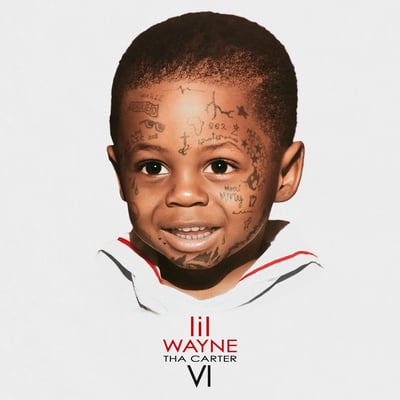
Lil Wayne Tha Carter VI
Released Jun 6, 2025 Lil Wayne PD
Established consensus 6 professional reviews Updated Nov 29, 2025
Mostly negative consensus
Lil Wayne's Tha Carter VI arrives as a sprawling, often frustrating chapter in a career defined by peak inventiveness and mercurial highs.
How ChoruScore worksCritics' Top Tracks
The songs critics returned to most
Hip-Hop (feat. BigXthaPlug, Jay Jones)
2 critic mentions
“He raps over the bass rumble of Rick Rubin 's beat for LL Cool J 's 1985 chestnut “Rock the Bells” for “Bells,” and Swizz Beatz 's keyboard fanfare from N.O.R.E.'s 1998 “Banned from TV” for “Banned from NO.” — Rolling Stone
Bein Myself (feat. Mannie Fresh)
2 critic mentions
“I can’t be nothing, just me…don’t try to make me someone else,” Wayne sings on “Bein’ Myself,” a long-anticipated reunion with one time Cash Money godhead Mannie Fresh.” — Rolling Stone
Rari (feat. Kameron Carter)
1 critic mention
“Rari," which is handled jointly by Wheezy and Bobby Raps, is a gummy, playful cut with a thunderous low end;” — Pitchfork
Full critic consensus
Lil Wayne's Tha Carter VI arrives as a sprawling, often frustrating chapter in a career defined by peak inventiveness and mercurial highs. Critics agree the record rarely captures the fire of earlier Carter albums, yet across six professional reviews a handful of tracks - notably “Rari (feat. Kameron Carter)”, “Hip-Hop (feat. BigXthaPlug, Jay Jones)”, “Bein Myself (feat. Mannie Fresh)”, “Welcome to Tha Carter” and “Written History” - emerge as clear highlights amid uneven execution. The album earned a 42.83/100 consensus score across six reviews, signaling a broadly lukewarm critical reception that nevertheless flags sporadic competence and moments of nostalgia-driven pleasure.
The critical consensus stresses recurring problems: heavy reliance on star-studded guest collaborations, occasional commercial overreach, and production choices that critics call misguided or recycled. Pitchfork and RapReviews emphasize diminished artistry and a blockbuster-by-committee feel, arguing technical skill too often substitutes for inspiration. Conversely Clash and Rolling Stone praise the record's eclecticism and point to tracks like “Hip-Hop” and “Bein Myself” as proof Wayne can still deliver stadium-ready energy and playful lyricism. Reviewers consistently identify nostalgia and self-mythologising as thematic through-lines - the album looks back to the Carter legacy even as it struggles to make a convincing present-day statement.
Taken together, professional reviews present Tha Carter VI as a pick-and-choose record: not a return to form but not without salvageable moments. For anyone searching for a clear verdict on whether Tha Carter VI is good, the consensus suggests tempered expectations - listen for the standout tracks named above, and approach the full collection as a career-curated playlist rather than a cohesive artistic rebound. Detailed reviews below unpack where the project succeeds and where it falters in Wayne's discography.
Track Ratings
How critics rated each track, relative to this album (0-100). Only tracks that made critics feel something are rated.
King Carter
Welcome to Tha Carter
Bells
Hip-Hop (feat. BigXthaPlug, Jay Jones)
Sharks (feat. Jelly Roll, Big Sean)
Banned From NO
The Days (feat. Bono)
Cotton Candy (feat. 2 Chainz)
Flex Up
Island Holiday
Loki’s Theme
If I Played Guitar
Peanuts 2 N Elephant
Rari (feat. Kameron Carter)
Maria (feat. Andrea Bocelli, Wyclef Jean)
Bein Myself (feat. Mannie Fresh)
Mula Komin In (feat. Lil Novi)
Alone In The Studio With My Gun (feat. mgk, Kodak Black)
Written History
Get the next albums worth your time.
Critic-backed picks in one clean digest. No clutter.
What Critics Are Saying
Deep insights from 7 critics who reviewed this album

Critic's Take
Lil Wayne’s Tha Carter VI is a pleasingly broad return, a buffet of 19 tracks that rewards pick-and-choose listening. The narrative frames these standout tracks as proof that Weezy remains vital and willing to surprise his audience.
Key Points
-
The album’s core strengths are its eclectic genre-mixing, self-mythologising themes, and surprising guest turns.
Themes

Critic's Take
Lil Wayne sounds contentedly playful on Tha Carter VI, and the review points to the best songs as bright spots rather than reinventions. The tone is measured and a little rueful, noting that these best tracks sparkle but do not salvage the album as a whole. The narrative answers queries about the best tracks on Tha Carter VI in the reviewer’s exact voice, emphasizing playfulness, references, and Wayne’s enduring punchlines.
Key Points
-
The album’s core strengths are Wayne’s punchlines, cultural references, and playful interpolations, even when there is little at stake.
Themes


Critic's Take
Lil Wayne sounds deeply diminished on Tha Carter VI, and the review’s blunt verdict is that the best songs here emerge despite Wayne rather than because of him. The author singles out “Sharks (feat. Jelly Roll, Big Sean)” as the album’s unexpected high point, a track dominated by Jelly Roll’s hook and Big Sean’s verse that still oddly lands. The overall tone is one of disappointment, situating this release as another step down from the heights of earlier Carter records.
Key Points
-
The album's core strengths are limited to occasional improved syllable structure and rhyme schemes, but these are overwhelmed by poor production and misguided song choices.
Themes

Critic's Take
In his blunt, unsentimental voice Paul Attard sees few redeeming moments on Tha Carter VI, and he names songs like “Welcome to Tha Carter” and “Banned from NO” as the album’s modest highlights. He writes with a weary precision, noting that “Welcome to Tha Carter” shows "nimble wordplay" even as the rest of the record "putters about with little purpose." The review frames the best tracks as reminders of Wayne’s baseline competence rather than true evolution, which answers the search for the best songs on Tha Carter VI with a resigned, specific thumbs-up for those few lively moments.
Key Points
-
The best song, "Welcome to Tha Carter," is the best because it showcases nimble wordplay and snappy verve amid pervasive listlessness.
-
The album’s core strengths are sporadic moments of Wayne’s former competence, but they are overwhelmed by indifference and recycled ideas.
Themes

Critic's Take
Paul A. Thompson finds Tha Carter VI almost entirely bereft of genuinely good songs. He frames the record as a blockbuster-by-committee that substitutes slick production and guest names for real inspiration. Elsewhere, tracks like "Flex Up" and "Banned From NO" expose technical rigor as cold arithmetic rather than personality or spark.
Key Points
-
The album's core strengths are technical precision and high production value, but these are undermined by lack of inspiration and excessive commercial grandstanding.
Themes
Th
Critic's Take
Hi, everyone. This review calls out the best tracks on Tha Carter VI largely by contrast - the record is a mess but a few moments stick. “Bells” emerges as one of the better songs because Wayne sounds awake and the late '80s B-boy beat actually works. “Peanuts 2 N Elephant” feels like an old-school Wayne highlight, playful and confident amid sloppy missteps. Even so, most songs - from “Welcome to Tha Carter” to “Island Holiday” - are marred by bad ideas and lazy execution, which makes the handful of decent cuts feel like consolation prizes.
Key Points
-
Peanuts 2 N Elephant is best because it channels playful, old-school Wayne energy and production that lets him rap confidently.
-
The album's core strengths are intermittent moments of classic Wayne performance, but they are overwhelmed by poor ideas, lazy execution, and ill-fitting collaborations.