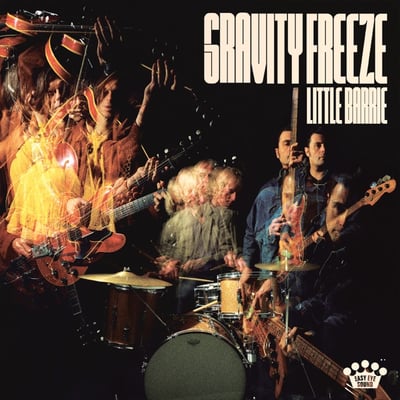
Little Barrie Gravity Freeze
Released May 22, 2026 Easy Eye Sound
Consensus forming 4 professional reviews Updated May 26, 2026
Broadly positive consensus
Consensus is still forming across 4 professional reviews. Little Barrie's Gravity Freeze arrives as a study in controlled momentum, trading flashy moves for a restrained, late-night groove that critics say pays dividends.
How ChoruScore worksCritics' Top Tracks
The songs critics returned to most
Luggin' Hurt
1 critic mention
“Luggin' Hurt" is a fine showcase for his skills” — AllMusic
Coralisa
1 critic mention
“Coralisa" also gives him an open vista for some truly gnarly guitar workouts” — AllMusic
Anything You Are
1 critic mention
“Anything You Are’ unfolds with a sultry, languid groove” — Clash Music
Full critic consensus
Little Barrie's Gravity Freeze arrives as a study in controlled momentum, trading flashy moves for a restrained, late-night groove that critics say pays dividends. Across four professional reviews the record earned an 80/100 consensus score, with reviewers pointing to mood, loose spontaneity and a DIY ethos as the album's defining strengths. Searches for "Gravity Freeze review" or "is Gravity Freeze good" will quickly turn up praise for the record's textured, psychedelic blues undercurrent.
Reviewers consistently highlight a handful of standout tracks as entry points to the record: “More Bad Miles Of Road” surfaces repeatedly for its smouldering, rolling bass and unhurried pulse, while “Anything You Are” and “Luggin' Hurt” are praised for their sultry, hypnotic grooves and guitar-forward immediacy. AllMusic singles out quieter pieces like “December” and the reflective “More Bad Miles of Road” as proof of depth, and Clash notes the fuzzed psychedelia and menacing low end on songs such as “It Isn’t Soul” that push the record beyond straightforward revivalism. Critics agree that the best songs on Gravity Freeze reward repeated listens rather than instant hooks.
While sentiment leans positive, reviewers temper their enthusiasm by framing the album as deliberately modest rather than bombastic: the strengths lie in restraint, groove and the record's willingness to leave space. That critical consensus suggests Gravity Freeze is worth listening to for fans of psychedelic blues and groove-minded rock, and sets a thoughtful context for deeper critical readings below.
Track Ratings
How critics rated each track, relative to this album (0-100). Only tracks that made critics feel something are rated.
More Bad Miles Of Road
It Isn't Soul
December
Luggin' Hurt
Talk It Up Like It's Wanted
Anything You Are
Coralisa
Wire
Gravity Freeze
Get the next albums worth your time.
Critic-backed picks in one clean digest. No clutter.
What Critics Are Saying
Deep insights from 4 critics who reviewed this album

Critic's Take
Little Barrie pull back the pyrotechnics on Gravity Freeze and find strength in restraint, where the best songs reveal themselves in mood rather than mayhem. At the same time quieter pieces like “More Bad Miles of Road” and “December” prove the album's depth, so searches for the best songs on Gravity Freeze should start with those guitar-forward standouts and then explore the subtler grooves.
Key Points
-
The album's core strength is restrained, low-slung grooves that reveal depth and feeling.

Critic's Take
Little Barrie sound expansive and immediate on Gravity Freeze, and the best songs show that restless, late-night groove. The lead single “More Bad Miles Of Road” is a highlight, anchored by a smouldering, rolling bass that gives the album its unhurried pulse. Equally compelling is “Anything You Are”, which unfolds with a sultry, languid groove that feels quietly hypnotic. Closer attention to “It Isn’t Soul” reveals a juggernaut of fuzzed psychedelia and menacing bass, making these tracks the standout moments on the record.
Key Points
-
The best song is driven by a central, smouldering bass that gives the record its unhurried pulse.
-
The album’s core strengths are its spontaneous grooves, psychedelic blues textures and DIY immediacy.

