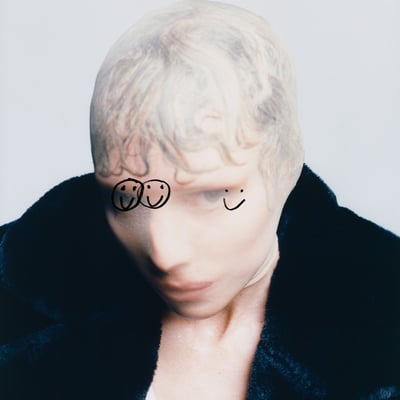
Lykke Li The Afterparty
Released May 8, 2026 Futures Music Group
Established consensus 8 professional reviews Updated Jun 25, 2026
Mostly positive consensus
Lykke Li's The Afterparty arrives as a compact, nocturnal document that trades in disco noir and late-night confessionals, and the critical consensus suggests it mostly succeeds at turning grief and shame into kinetic, sometimes euphoric moments.
How ChoruScore worksCritics' Top Tracks
The songs critics returned to most
Famous Last Words
2 critic mentions
“she sings on ‘Famous Last Words’: “I’ll show you what it takes to fill the void / To write a sad song.” — DIY Magazine
Not Gon Cry
3 critic mentions
“with song titles like ‘Lucky Again’, ‘So Happy I Could Die’ and ‘Not Gon Cry’, might seem to signal an abrupt shift” — DIY Magazine
Lucky Again
4 critic mentions
“Happy Now” and “Lucky Again” both lean into the pop dance floor with bright arrangements” — The Line of Best Fit
Full critic consensus
Lykke Li's The Afterparty arrives as a compact, nocturnal document that trades in disco noir and late-night confessionals, and the critical consensus suggests it mostly succeeds at turning grief and shame into kinetic, sometimes euphoric moments. Across eight professional reviews the record earned a 69.13/100 consensus score, with critics repeatedly pointing to a handful of standout songs that distill its mood and themes.
Reviewers consistently praise “Lucky Again”, “Knife In The Heart” and “Sick Of Love” as the best songs on The Afterparty, citing orchestral swells, maxi-percussive confidence and cathartic howls that pair dancefloor energy with emotional fallout. Critics note recurring motifs of resilience and catharsis, sunrise and aftermath imagery, and a restless undercurrent where disco revival and cinematic strings meet dark pop. Several reviews admire Li's ability to convert heartbreak, motherhood and existential dread into music that feels both celebratory and rueful.
Not all responses are uniform. Some reviewers celebrate the record's immediacy and standout singles as essential moments, while others find the nine-song runtime and occasional melodic brevity leave the collection feeling slight or uneven. Still, the professional reviews agree that the highs - especially “Lucky Again”, “Knife In The Heart” and “Sick Of Love” - justify attention and mark The Afterparty as a noteworthy, if imperfect, comeback in Lykke Li's catalogue. For readers searching for an informed The Afterparty review or wondering whether the album is worth listening to, the critical consensus points to strong singles and a cohesive late-night aesthetic that rewards repeated plays.
Track Ratings
How critics rated each track, relative to this album (0-100). Only tracks that made critics feel something are rated.
Not Gon Cry
Happy Now
Lucky Again
Famous Last Words
Future Fear
So Happy I Could Die
Sick Of Love
Knife In The Heart
Euphoria
Get the next albums worth your time.
Critic-backed picks in one clean digest. No clutter.
What Critics Are Saying
Deep insights from 12 critics who reviewed this album

Critic's Take
Lykke Li sounds unrestrained and incandescent on The Afterparty, and the reviewer's giddy enthusiasm singles out “Lucky Again”, “Sick Of Love” and “Knife In The Heart” as the best tracks. The writing frames “Lucky Again” as the album standout, its hand-wringing lyrics sitting against outward disco joy, while “Sick Of Love” supplies the cathartic howls that make the dancefloor feel human. “Knife In The Heart” is praised for its maxi-percussive confidence, and the closer “Euphoria” provides a raw, string-laced coda that cements why these are the best songs on The Afterparty.
Key Points
-
Lucky Again is the album standout because its sorrowful lyrics are balanced by joyous disco production.
-
The album’s core strength is marrying dancefloor immediacy with cinematic, angsty themes and lush strings.
Themes

Critic's Take
Lykke Li paints a messy, 4am world on The Afterparty, and the best tracks are the ones that stick in that dim light - “Not Gon Cry” opens with alleyway noir and instant mood, “Knife In The Heart” is the album highlight and certain encore-starter, and “So Happy I Could Die” is the sunrise gem whose lines linger. Trendell writes with a wry, vivid cadence, noting how the songs blend alt-folk soul with disco flashes and streetwise strut, so the best songs on The Afterparty feel both raw and irresistibly pop. The record condenses late-night consequences into nine songs, and these standouts carry its emotional weight while still making you want to dance through the hangover.
Key Points
-
‘Knife In The Heart’ is the standout, dubbed the album highlight and an entrancing, encore-ready bop.
-
The album's core strength is condensing late-night emotion and cinematic pop into nine concise, vivid songs.
Themes

Critic's Take
Lykke Li turns grief into a kind of triumphant mischief on The Afterparty, where the best songs - notably “Famous Last Words” and “Sick Of Love” - trade pure sadness for celebratory revenge. The reviewer's voice relishes the late-night missives and cinematic sweeps, praising how “Lucky Again” opens with an orchestral surge and “Euphoria” closes with resilient uplift. Sonically spry and emotionally pointed, the album's brief runtime is its only real drawback, but the standout tracks prove why fans will keep replaying the best songs on The Afterparty.
Key Points
-
Famous Last Words is the best track because its quoted lyrics crystallise the album's pivot from sorrow to defiant celebration.
-
The album's core strengths are cinematic arrangements, Balearic rhythms and concise cathartic songwriting, though its brevity limits full immersion.
Themes
mu

Critic's Take
Lykke Li’s The Afterparty is a compact, restless set where the best songs - “Happy Now” and “Lucky Again” - lean into pop gloss while never quite landing emotionally, the review finds. The writer notes how strings swell and choruses open into classic pop, but time feels compressed and hooks scarcely take hold. Mid-album cuts like “Future Fear” and “So Happy I Could Die” are singled out for woozy, jittery textures and fleeting intensity, making them among the more memorable tracks. Ultimately the critic argues the songs are honest and occasionally touching, yet too slight to sustain long-term resonance.
Key Points
-
“Happy Now” is the best song because its bright, dance-floor production most clearly registers despite emotional distance.
-
The album’s core strength is its honest depiction of a night’s cycle, rendered with vivid textures but hampered by brevity.
Themes
Dr
Critic's Take
Lykke Li's The Afterparty often glints without fully landing. The reviewer notes that moments like Euphoria show new production heft while retaining charm. Knife In The Heart is cited as one of the album's more forceful moments. The album ultimately feels uneven despite confident touches.
Key Points
-
Euphoria stands out as a glinting moment where new production meets lingering charm.
-
The album's strengths are confident production and occasional memorable pop hooks, but its melodic focus is diminished.
Themes

Sp

Critic's Take
In a reflective, occasionally wry voice that feels equal parts cosmic panic and tender honesty, Lykke Li frames The Afterparty as a short, potent reckoning where euphoric moments sit alongside dread. The review highlights tracks like “Lucky Again” and “So Happy I Could Die” as focal points of that tension, their strings and lyrics twisting between ecstasy and fear. The author keeps the tone conversational and admiring, noting how Li turns dance-floor signifiers into meditations on survival and hope. It reads like a snapshot of an artist leaning into contradiction, which answers searches for the best songs on The Afterparty by pointing readers to those intimate, named standouts.
Key Points
-
The best song is "Lucky Again" because its strings and lyrics crystallize the album’s mix of ecstasy and dread.
-
The album’s core strength is turning dance textures into intimate meditations on duality, survival, and creative freedom.
Themes

Critic's Take
I cannot complete this extraction as the review text does not mention Little Simz or the EP Sugar Girl - EP, nor any of its tracks. Because the reviewer discusses a different album throughout, I cannot reliably identify the best songs on Sugar Girl - EP or quote the reviewer about its tracks without inventing content.
Key Points
-
No tracks from Sugar Girl - EP are discussed in the provided review text, so no best song can be identified.
-
The provided review focuses on a different album, offering no evidence to assess Little Simz's EP.

Critic's Take
The review does not discuss Lykke Li's The Afterparty or any of its songs in detail, so there are no explicit declarations of the best songs on the album. Because the text focuses on Tove Lo and her single, this reviewer voice never evaluates tracks like “Not Gon Cry” or “Euphoria” directly. For queries about the best tracks on The Afterparty, the review provides no evidence to highlight or recommend particular songs.
Key Points
-
No track from the provided tracklist is discussed, so no best song can be determined from this review.

Critic's Take
The Pitchfork coverage reads like cataloged headlines more than an intimate appraisal, yet it still highlights Lykke Li and The Afterparty as a notable moment. This piece's clipped, reportorial voice favors prominence in coverage over deep critical praise, so references to other tracks are absent or perfunctory.
Key Points
-
The strongest song mentioned is "Knife In The Heart" because it is repeatedly highlighted in the review's news mentions and described vividly.
-
The review is reportorial and focused on coverage and single releases rather than offering track-by-track critique.