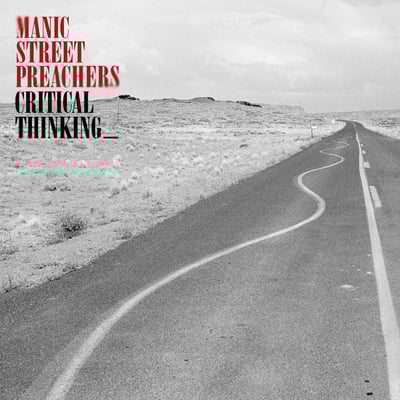
Manic Street Preachers Critical Thinking
Released Feb 7, 2025 Columbia
Established consensus 11 professional reviews Updated Oct 2, 2026
Broadly positive consensus
Manic Street Preachers's Critical Thinking confronts mid-life nostalgia and political unease with the blunt intelligence fans expect, and critics largely agree it succeeds.
How ChoruScore worksCritics' Top Tracks
The songs critics returned to most
Hiding in Plain Sight
1 critic mention
“the Anne Sexton-inspired ‘Hiding In Plain Sight’ is the first ever Manics' single with lead vocals from the band’s primary lyricist” — Hot Press
Critical Thinking
2 critic mentions
“It's all set to the distinctive sound of a James Dean Bradfield custom riff, and a Sean Moore martial breakbeat” — Hot Press
Decline & Fall
2 critic mentions
“The song taps into mid-life nostalgia, which lead single ‘Decline & Fall’ also maps, whilst harnessing an ABBA energy” — Hot Press
Full critic consensus
Manic Street Preachers's Critical Thinking confronts mid-life nostalgia and political unease with the blunt intelligence fans expect, and critics largely agree it succeeds. Across 11 professional reviews the record earned a 79.09/100 consensus score, praised for marrying sharp social critique to sturdy rock tradition while stopping short of radical reinvention. The abrasive title cut “Critical Thinking” and the pointed “Hiding in Plain Sight” emerge repeatedly as standout tracks, with “Decline & Fall” and “Brushstrokes of Reunion” adding melodic ballast and moments of unexpected warmth.
Reviewers consistently note the album's thematic core - reflection on ageing, political critique, and a skeptical eye toward social media and wellness culture - filtered through classic '70s rock swagger and literate lyricism. Hot Press highlighted the record's JG Ballard-like atmosphere and singalong hooks, while The Observer pointed to Gang of Four and ABBA-inflected touches that keep the band sounding vital. Critics praised the group's ability to renew familiar strengths rather than chase reinvention, calling the collection affectionate, occasionally scabrous, and thought-provoking.
While not unanimous in its intensity, the critical consensus suggests Critical Thinking is worth listening to for longtime followers and newcomers curious about the Manics' later-period voice. The album balances social commentary with melodic craft, positioning itself as a confident follow-up that reinforces the band's place in contemporary rock without overwriting their past.
Track Ratings
How critics rated each track, relative to this album (0-100). Only tracks that made critics feel something are rated.
Critical Thinking
Decline & Fall
Brushstrokes of Reunion
Hiding in Plain Sight
People Ruin Paintings
Dear Stephen
Being Baptised
My Brave Friend
Out Of Time Revival
Deleted Scenes
Late Day Peaks
OneManMilitia
Get the next albums worth your time.
Critic-backed picks in one clean digest. No clutter.
What Critics Are Saying
Deep insights from 11 critics who reviewed this album

Ho
Critic's Take
Manic Street Preachers open Critical Thinking with a brusque question that sets the tone, and the best tracks - notably “Critical Thinking” and “Hiding in Plain Sight” - deliver sharp social commentary wrapped in classic rock muscle. Will Russell's voice lingers on the album's mid-life nostalgia, with “Decline & Fall” and “Late Day Peaks” mining the same territory while still finding melodic lift. The record feels like a strange, satisfying hybrid of JG Ballard atmosphere and '70s rock swagger, and the closing anthem “OneManMilitia” seals the Manics' 2020s identity. This is an affectionate, occasionally scabrous set that rewards listeners looking for both critique and singalong hooks.
Key Points
-
Hiding in Plain Sight is best for its novelty and '70s rock swagger with Nicky Wire on lead vocals.
-
The album's core strengths are sharp social critique delivered through classic Manics rock and nostalgic melodicism.
Themes
mu


Th
Critic's Take
Manic Street Preachers have returned with Critical Thinking, an album that mostly trades on the band’s familiar strengths rather than radical reinvention. The abrasive title track and opener, “Critical Thinking”, jolts the record into life with Nicky Wire skewering mindfulness and wellness over a Gang of Four-influenced backdrop, making it one of the best tracks on Critical Thinking. The result is a reflective, thought-provoking set that finds the Manics ageing gracefully rather than reinventing themselves.
Key Points
-
The title track is best because its abrasive, curveball opening and sharp social skewering give the album immediate bite.
-
The album’s core strength is trading on familiar Manics’ signifiers—galloping piano, 1980s jangle—and ageing into reflective, thought-provoking songs.
Themes


Re
