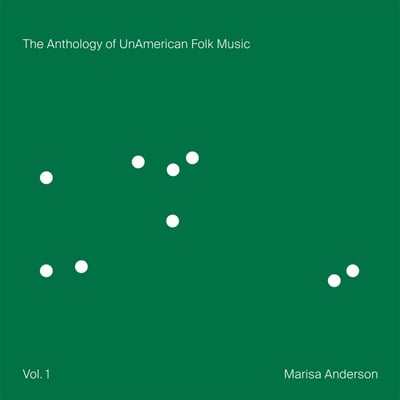
Marisa Anderson The Anthology of UnAmerican Folk Music
Released May 22, 2026 Thrill Jockey
Established consensus 6 professional reviews Updated Jun 25, 2026
Broadly positive consensus
Marisa Anderson's The Anthology of UnAmerican Folk Music mounts a patient, research-driven bridge between archive and guitar, translating field recordings into intimate, hymnlike meditations that feel both politically engaged and musically generous.
How ChoruScore worksCritics' Top Tracks
The songs critics returned to most
Taqsim for Guitar
1 critic mention
“Her phrasing on "Taqsim for Guitar" is rapt and careful” — Pitchfork
Rabāba
1 critic mention
“tried to play the sound of the escaping cow” — AllMusic
Quodlibet
3 critic mentions
“the sprawling “Quodlibet,” based on Bābā Qerān’s dambura music” — No Ripcord
Full critic consensus
Marisa Anderson's The Anthology of UnAmerican Folk Music mounts a patient, research-driven bridge between archive and guitar, translating field recordings into intimate, hymnlike meditations that feel both politically engaged and musically generous. Across six professional reviews the record earned an 83.17/100 consensus score, with critics praising Anderson's humility, transcriptional rigor, and the way specific pieces reward close, repeated listening.
Critics consistently point to a handful of standout tracks as proof of concept: “Quodlibet” emerges repeatedly as the album's centerpiece, “Taqsim for Guitar” draws notice for its careful negotiation of maqam tunings, and “Pair of Duduk” and “Rabāba” are singled out for their drone-driven resonance and cross-cultural fidelity. Reviewers note themes of tradition versus reworking, archival transcription, and cross-cultural exchange - describing arrangements that translate non-Western instruments into guitar idioms without flattening origin or intent. The record's political throughline - war, migration, and an anti-nationalist impulse toward reconciliation - underpins its musical choices rather than overwhelming them.
While praise is dominant, critics temper enthusiasm with observation: the album rewards patience rather than instant hooks, and its quiet devotion can feel more invitational than declarative. Taken together, the professional reviews frame The Anthology of UnAmerican Folk Music as a carefully argued, emotionally resonant project that preserves and reimagines source materials, offering listeners both compelling highlights and a deeper archive to explore.
Track Ratings
How critics rated each track, relative to this album (0-100). Only tracks that made critics feel something are rated.
Quodlibet
Rabāba
Sarvi Simin
Taqsim for Guitar
Zar
Pair of Duduk
Rop Koh
Hamd
Whistle Song
Get the next albums worth your time.
Critic-backed picks in one clean digest. No clutter.
What Critics Are Saying
Deep insights from 8 critics who reviewed this album

Critic's Take
Marisa Anderson once talks about trying to "play the sound of the escaping cow," and that playful, rigorous curiosity animates The Anthology of UnAmerican Folk Music. The best songs on The Anthology of UnAmerican Folk Music, especially “Rabāba” and “Quodlibet”, show Anderson transcribing foreign instruments into her guitar idiom with surprising fidelity and personality. “Sarvi Simin” and “Zar” stand out too, helped by Gisela Rodríguez Fernández's violin, combining joy and melancholy in ways that answer the album's political impulse. This is an ambitious, humane record that remakes archival material into distinctly Andersonian statements while quietly rebutting xenophobia.
Key Points
-
Anderson's transcription of archival international melodies makes "Rabāba" the album's most arresting moment.
-
The album's strengths are its cross-cultural adaptations, emotional range, and quiet political rebuke of xenophobia.
Themes


Critic's Take
Marisa Anderson approaches The Anthology of UnAmerican Folk Music with the kind of reverence that turns field recordings into living conversations, and the best songs on the album prove that point. The sprawling “Quodlibet” reads as a centerpiece, its roots in Bābā Qerān’s dambura music giving the record a sense of worldly depth. The ghostly drone of “Pair of Duduk” is another standout, a track that crystallises Anderson’s respectful, mesmerising touch. The hypnotic finale “Whistle Song” closes the set with a poignant reminder of beauty and horror entwined, making these the best tracks on The Anthology of UnAmerican Folk Music for listeners seeking evocative reinterpretation.
Key Points
-
“Quodlibet” is the best song for its sprawling, worldly reworking of dambura music.
-
The album’s core strengths are respectful reinterpretation and mesmerising, hypnotic arrangements.
Themes

Critic's Take
Marisa Anderson’s The Anthology of UnAmerican Folk Music feels like an act of careful archaeology and affectionate reimagining, and the best songs on The Anthology of UnAmerican Folk Music are those where her guitar finds new voices. Opener “Quodlibet” is beautiful, an intricate minor-key medley that showcases her bluegrass inflections against Uzbek material. Her take on the qawwali-derived “Hamd” is also a highlight, its stacked guitar layers ringing with warmth and emotion. Elsewhere, “Sarvi Simin” and “Zar” reveal how Anderson both preserves and transforms these traditions with patient, attentive arrangements.
Key Points
-
The best song, “Quodlibet”, stands out for its intricate minor-key medley and innovative bluegrass guitar approach.
-
The album’s core strength is Anderson’s ability to translate and transform disparate folk traditions with warmth and attentive arrangement.
Themes


Critic's Take
In his patient, observant voice Jayson Greene frames Marisa Anderson’s The Anthology of UnAmerican Folk Music as an act of careful translation, and he singles out “Taqsim for Guitar” and “Zar” as moments where that patience pays off. He calls Anderson’s phrasing on “Taqsim for Guitar” "rapt and careful," and describes “Zar” as leaping with the grace of a fountain beneath her fingers, which explains why listeners asking "best songs on The Anthology of UnAmerican Folk Music" will point to those pieces. The review keeps a tone of awed restraint rather than hyperbole, emphasizing humility, craft, and transformation as the reasons these tracks stand out. The result is an album whose best tracks reward attentive listening rather than instant grabs.
Key Points
-
The best song is "Taqsim for Guitar" because of its rapt, careful phrasing and transformative note-bending.
-
The album’s core strengths are humility, deep research, and sensitive arrangements that translate distant traditions into intimate performances.
Themes

Critic's Take
Marisa Anderson’s The Anthology of UnAmerican Folk Music feels like a deliberate, learned conversation with other cultures, and the best songs on the album are where that dialogue breathes easiest. The record opens with “Hamd”, a gently settling piece of praise that showcases Anderson’s devotional fingerpicking and frames the album’s intent. “Pair of Duduk” stands out for its slow, droning blend where guitar and duduk transcend regional norms. “Sarvi Simin” emerges as a beautiful duet with violin, proving Anderson’s researched transcriptions can yield near-magic performances.
Key Points
-
“Hamd” is the best track because its devotional fingerpicking opens the album and centers its cross-cultural mission.
-
The album’s core strengths are meticulous research, respectful cross-cultural transcription, and performances that bridge political and musical divides.
Themes

Critic's Take
In this piece Alastair Shuttleworth captures Marisa Anderson's project with the same curious precision she applies to sound: Marisa Anderson's The Anthology of UnAmerican Folk Music mines global sources and turns them into intimate guitar meditations. He lingers on how “Taqsim for Guitar” confronts maqam tuning and how “Rop Koh” retains its looping melody while Anderson introduces reverb and pedal steel, making those two the best tracks on The Anthology of UnAmerican Folk Music. The reviewer sounds fascinated rather than doctrinaire, noting the album's ability to make listeners look up the original pieces, which is why the best songs on the record feel like invitations rather than declarations. Overall the tone is admiring and inquisitive, praising Anderson's curiosity and technical rigour.
Key Points
-
The best song is "Taqsim for Guitar" because Anderson wrestles directly with maqam tuning and transcribes unfamiliar runs, showing technical care.
-
The album's core strength is its archival curiosity and cross-cultural reworking, turning source material into intimate, exploratory guitar pieces.