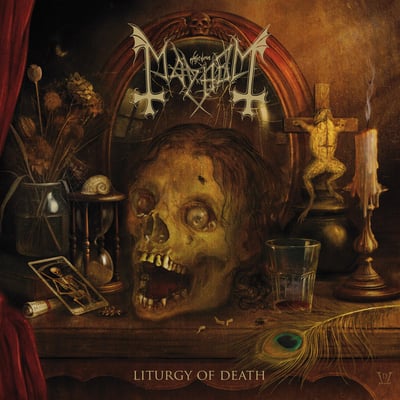
Mayhem Liturgy of Death
Released Feb 6, 2026 Century Media
Established consensus 6 professional reviews Updated Feb 15, 2026
Broadly positive consensus
Mayhem's Liturgy of Death returns the band to a ritualized, theatrical black metal that many critics call both reverent and restless, earning a broadly favorable critical reception.
How ChoruScore worksCritics' Top Tracks
The songs critics returned to most
The Sentence of Absolution
5 critic mentions
“In the back half of “The Sentence of Absolution,” a furious barrage of blastbeats is slowly supplanted by hypnotic, tribal drumming” — Pitchfork
Ephemeral Eternity (feat. Garm)
5 critic mentions
“maintaining steady blast beats for herculean stretches (“Ephemeral Eternity,” “Aeon’s End”)” — Angry Metal Guy
Realm of Endless Misery
5 critic mentions
“Around the midpoint of “Realm of Endless Misery,” everything drops out of the mix except Csihar’s indecipherable gargling” — Pitchfork
Full critic consensus
Mayhem's Liturgy of Death returns the band to a ritualized, theatrical black metal that many critics call both reverent and restless, earning a broadly favorable critical reception. Across six professional reviews the record has a 75.33/100 consensus score, and reviewers consistently point to long-form compositions and dramatic atmosphere as the album's primary strengths. Standout tracks singled out by critics include “The Sentence of Absolution”, “Ephemeral Eternity (feat. Garm)”, “Realm of Endless Misery”, “Despair” and “Weep for Nothing”—the songs most frequently cited as the best songs on Liturgy of Death for their combination of crushing riffs, eerie passages and theatrical vocal turns.
Critics praise the record's revivalist commitments and technical craftsmanship while noting its willingness to flirt with progressive influences and weirdness. Several reviews celebrate Csihar's volatile vocal performances and Hellhammer's propulsive drumming as engines of the album's darker moments, with “Ephemeral Eternity (feat. Garm)” and “Weep for Nothing” highlighted for atmosphere and momentum. At the same time some professional reviews flag repetition and occasional production sterility as limiting factors, arguing that extended songs sometimes verge on sameness even as isolated barnstormers like “Despair” and “The Sentence of Absolution” cut through.
The critical consensus frames Liturgy of Death as a work of legacy and continuity - a confident, occasionally experimental follow-up that rewards patience more than instant gratification. For readers asking what critics say about Liturgy of Death and whether the record is worth listening to, the answer in reviews is nuanced: not a definitive career rebirth, but a must-listen for fans drawn to ritual atmospherics, long-form composition and the album's repeatedly praised high points.
Track Ratings
How critics rated each track, relative to this album (0-100). Only tracks that made critics feel something are rated.
Ephemeral Eternity (feat. Garm)
Despair
Weep for Nothing
Aeon's End
Funeral of Existence
Realm of Endless Misery
Propitious Death
The Sentence of Absolution
Get the next albums worth your time.
Critic-backed picks in one clean digest. No clutter.
What Critics Are Saying
Deep insights from 6 critics who reviewed this album
An
Critic's Take
Mayhem’s Liturgy of Death is a formidable meditation on mortality, with standout moments like “The Sentence of Absolution” and “Despair” that crystallize the record’s power. The review revels in Attila Csihar’s inspired vocal shifts and Hellhammer’s punishing grooves, arguing that these best tracks elevate the album’s thematic heft. It reads like praise worn plain - seasoned, assured, and confident that these songs mark Mayhem as still-setting standards. For anyone asking what the best songs on Liturgy of Death are, the critic points squarely to “The Sentence of Absolution” and “Despair” as the album’s defining high points.
Key Points
-
The best song is "The Sentence of Absolution" because it culminates the album with unparalleled structure, climax, and restraint.
-
The album’s core strengths are meticulous thematic focus on mortality and powerful, assured performances across vocals and rhythm section.
Themes

Critic's Take
The review insists that Mayhem's Liturgy of Death finds the band renewed, and it singles out opener “Ephemeral Eternity (feat. Garm)” and “Funeral Of Existence” as the best tracks. In this register the best songs on Liturgy of Death are those that balance atmosphere with muscle, and those two tracks are presented as the album's clear high points.
Key Points
-
The album's core strength is long, purposeful compositions that never waste a moment while sounding energised and vital.
Themes
Sp
Critic's Take
Mayhem's Liturgy of Death is presented as a dramatic, unstoppable journey where the best tracks - notably “Despair”, “Realm of Endless Misery” and “The Sentence of Absolution” - provide the album's clearest moments of payoff. Framed as an operatic, sometimes doomy progression, the record's strength lies in atmosphere and technical execution rather than pop-style memorability. This is advice to seekers of the best songs on Liturgy of Death: listen for “Despair” and “The Sentence of Absolution” as the clearest exemplars of the album's drama and payoff.
Key Points
-
The best song(s) like "Despair" and "The Sentence of Absolution" are highlights because they crystallize the album's dramatic climaxes and operatic payoff.
-
The album's core strengths are its dramatic flow, technical brilliance, and Csihar's transformative vocal performances rather than instantly memorable riffs.
Themes

Critic's Take
Mayhem's Liturgy of Death sells itself on confrontation and craft, and the review pinpoints the best tracks clearly: “Weep for Nothing” as the lead single that perfectly showcases crushing riffs and atmosphere, plus the bleak, moving finale of “Realm of Endless Misery” and “The Sentence of Absolution”. The record returns to their early sound while flirting with progressive textures, which makes these songs the best tracks on Liturgy of Death for both relentlessness and philosophical weight. The reviewer's voice favors direct, vivid description over reverie, and it is those three songs that embody why this album matters.
Key Points
-
The best song is “Weep for Nothing” because it perfects shifts between crushing riffs, blast beats, and atmospheric breakdowns.
-
The album's core strengths are its return to early Mayhem sonics combined with philosophical lyrics that give the final tracks hefty emotional weight.
Themes

Critic's Take
Mayhem sound reliably reverent on Liturgy of Death, but the album truly crackles when it leans into strange moments and Csihar's theatricality. The reviewer's ears catch barnstormers like “Despair” and “Weep for Nothing” as the record's hardest hits, yet it is the odd, unsettling passages in “Realm of Endless Misery” and “The Sentence of Absolution” that make them the best tracks on Liturgy of Death. This is a band comfortable with tradition, and the best songs balance orthodox blastbeats with moments that unsettle and surprise.
Key Points
-
The best song moments pair orthodox black metal attack with unsettling, experimental breaks that spotlight Csihar.
-
The album's strengths are ritualistic atmosphere, strong adherence to black metal fundamentals, and occasional inventive departures.
Themes

Critic's Take
Mayhem sound like a legendary act still capable of sparks on Liturgy of Death, but the record too often falls into sameness. The verdict: a decent slab of black metal with clear highlights but not the classic Mayhem fire many hoped for.