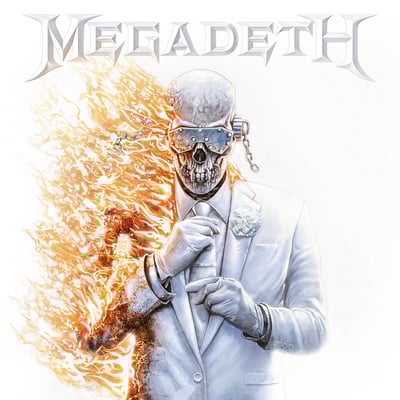
Megadeth Megadeth
Released Jan 23, 2026 BLKIIBLK
Established consensus 8 professional reviews Updated Feb 3, 2026
Mostly positive consensus
Megadeth's Megadeth reads like a deliberate final statement, equal parts defiant thrash manifesto and weary career inventory.
How ChoruScore worksCritics' Top Tracks
The songs critics returned to most
I Don't Care
7 critic mentions
“I Don’t Care’ is another that falls into this trap, with uninspired lyrics like “I don’t care if I’m not your class” — New Musical Express (NME)
Tipping Point
6 critic mentions
“Opener “Tipping Point” earns the green light in that regard, a brisk and bludgeoning thrash jaunt” — Pitchfork
Let There Be Shred
6 critic mentions
“The 64 year old vamps for the doubters once again on “Let There Be Shred,” a lighthearted blitz” — Pitchfork
Full critic consensus
Megadeth's Megadeth reads like a deliberate final statement, equal parts defiant thrash manifesto and weary career inventory. Across professional reviews, critics point repeatedly to the opener “Tipping Point”, the shredding spectacle of “Let There Be Shred” and the snarling “I Don't Care” as the record's clearest high points, even as several writers register a sense of diminishing returns elsewhere on the tracklist.
The critical consensus is measured: Megadeth earned a 64.63/100 consensus score across 8 professional reviews, a reflection of divided reaction among music critics. Reviewers consistently praise the album's technical precision, furious riffs and moments of genuine aggression - Kerrang!, Classic Rock and Sputnikmusic highlight the album's shredding virtuosity and punchy execution - while others, including Pitchfork and Slant Magazine, flag vocal decline, a tendency toward formula and an absence of adventurous ambition. Themes of finality, nostalgia and a retrospective gaze recur in many reviews, framing the record as both a farewell and a tidy summary of the band's strengths.
Taken together, the reviews suggest that fans seeking the best songs on Megadeth will gravitate to “Tipping Point”, “Let There Be Shred” and “I Don't Care” for concentrated thrash energy and technical flair. Yet critics also note uneven sequencing and moments where precision supplants personality, producing a farewell that feels honorably accomplished rather than transcendent. For readers wondering whether Megadeth is worth hearing, the professional reviews portray a respectable, occasionally thrilling career-capstone that solidifies legacy while admitting its limits.
Track Ratings
How critics rated each track, relative to this album (0-100). Only tracks that made critics feel something are rated.
Tipping Point
I Don't Care
Hey God?!
Let There Be Shred
Puppet Parade
Another Bad Day
Made To Kill
Obey The Call
I Am War
The Last Note
Ride The Lightning (Bonus Track)
Get the next albums worth your time.
Critic-backed picks in one clean digest. No clutter.
What Critics Are Saying
Deep insights from 8 critics who reviewed this album

Critic's Take
Megadeth's self-titled set feels like Dave Mustaine leaning into familiar fury, and the best tracks - notably “Tipping Point” and “I Don't Care” - wear that venom like a badge. Nick Ruskell's review savours the album's withering lyrical tack and piano-wire musical tension, arguing the record keeps the war machine resolutely in-gear. If you want the best songs on Megadeth, look to the opener and follow-through where sneers and stress coalesce into killer riffs and sneering hooks. The result is a confident return that sounds very much like Dave at his most Mustaine, furious and direct.
Key Points
-
The opener is best because it crystallizes Mustaine's sneer, venom and the album's piano-wire tension into immediate impact.
-
The album's core strengths are lyrical cynicism, sustained musical tension, and the confident, furious voice of Mustaine.
Themes

Critic's Take
The reviewer frames Megadeth's final album Megadeth as a solid, snarling capstone that still delivers the best tracks, notably “Let There Be Shred” and “I Don't Care”. He writes in a blunt, comparative tone that celebrates the aggression and punch of the record - saying these bangers hit hard and fast, easy to thrash and headbang to.
Key Points
-
The best song is best because it is a fast, aggressive banger that fits the Megadeth catalog and invites thrashing.
-
The album's core strengths are tight uptempo drumming, crunchy guitars, fast solos, and a snarling vocal delivery.
Themes
Ke
Critic's Take
In a typically blunt appraisal, James Hickie writes, “Megadeth’s self-titled record is a fraught, occasionally thrilling farewell that underlines the band’s strengths while admitting its cracks.” He balances clear-eyed critique with admiration for the musicianship, noting moments of genuine class amid uneven sequencing.
Key Points
-
A final-stroke album that alternates between triumph and fatigue
-
Strong musicianship and standout riffs save uneven songwriting
-
Feels like a bittersweet coda rather than a definitive swansong

Critic's Take
Megadeth deliver a farewell that plays to their strengths and sometimes to their predictability. On Megadeth the best tracks - notably “Tipping Point” and “I Am War” - are where the band return to back-to-basics thrash with renewed vigour, while “Hey God!” and closer “The Last Note” reveal older, wiser lyrics that give the record emotional heft. The album's highs feel gratifying and full-circle, but songs like “Let There Be Shred” and “Puppet Parade” expose how remaining too faithful to formula can make parts of the record fall flat. Overall, this final outing is a committed, sometimes rousing, sometimes carping, celebration of a four-decade sound done on the band’s own terms.
Key Points
-
The best song(s) stand out when Megadeth return to back-to-basics thrash with renewed vigour, notably on "Tipping Point".
-
The album's core strengths are its unwavering commitment to signature thrash sound and small lyrical/nuanced moments that provide emotional closure.
Themes

Critic's Take
Megadeth's self-titled swan song reads like a final inventory of strengths and shortcomings. The reviewer repeatedly points to songs like “Tipping Point” and “Let There Be Shred” as proof that the band can still deliver thrash highs, while noting that cuts such as “Puppet Parade” trade speed for rote nostalgia. The tone is frank and a little rueful, insisting that Megadeth can still do the thing but that this record lacks the communal gravitas of a proper farewell.
Key Points
-
The best song is the opener “Tipping Point” because it proves Megadeth can still deliver brisk, bludgeoning thrash.
-
The album's core strengths are technical competence and occasional nostalgic callbacks, but it lacks communal chemistry and fresh inspiration.
Themes

Critic's Take
Megadeth's self-titled farewell reads as an oddly bloodless coda, and the best songs here are notable mainly for fleeting personality rather than invention. The sophomoric “I Don’t Care” stands out as memorably committed to its gimmick, even if the commitment is to bile and posturing, while quieter failures like “The Last Note” fail to deliver the closure the title promises. Throughout Megadeth the band favors metronomic precision and hyper-polished playing over risk, so fans searching for the best tracks on Megadeth will find only grudging highlights rather than a triumphant swan song.
Key Points
-
The best song, “I Don’t Care”, is the most memorable due to its committed gimmick despite sophomoric content.
-
The album’s core strengths are technical precision and polished playing, but these are undermined by lack of ambition and diminished vocals.
Themes

Critic's Take
There is a definite sense of finality on Megadeth, and the best songs - notably “Tipping Point” and “Puppet Parade” - underline the band’s strengths. Alexis writes in the sharp, evaluative register fans expect, praising the flatly superb opener “Tipping Point” while admiring how “Puppet Parade” shows Mustaine can still craft a radio-friendly hook. He also singles out “Let There Be Shred” and “Made To Kill” as moments that recall the band’s thrash progenitor status, even as the second half sags. The verdict is measured: a career-summarising redux, performed with technical precision but not without signs of dwindling inspiration.
Key Points
-
The best song is "Tipping Point" because the reviewer calls it "flatly superb" and a clear thrash highlight.
-
The album's core strengths are its technical precision and career-summarising hits that recall Megadeth’s thrash legacy.
Themes
Cl
Critic's Take
Megadeth have fashioned a defiantly career-closing record with Megadeth, and the best songs on the album - notably “Tipping Point” and “Made To Kill” - make that case with brutal clarity. Dom Lawson writes with a relish for blunt, punchy appraisal, celebrating razor-sharp hooks and monstrous technicality while insisting this is a fitting, vital last stand. The review’s voice is admiring and wry, calling out both brute force and melodic craft as the things that make the best tracks on Megadeth land so memorably. This is framed as a final, dignified triumph rather than a weary epilogue, which is exactly how the reviewer positions these standout songs.
Key Points
-
Tipping Point is the best song because it pairs razor-sharp hooks with monumental force, making it an instant classic.
-
The album’s core strengths are technical virtuosity, precision, and a convincing final-statement emotional heft.