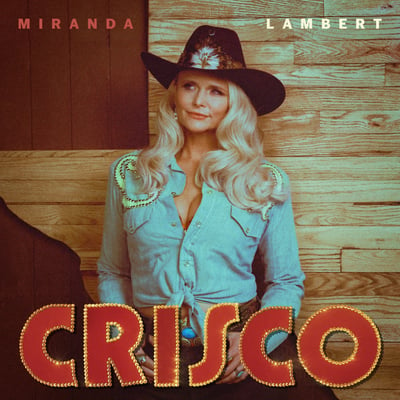
Miranda Lambert Crisco
Released Oct 2, 2026 Miranda Lambert PS
Consensus forming 3 professional reviews Updated Oct 3, 2026
Broadly positive consensus
Consensus is still forming across 3 professional reviews. Miranda Lambert's Crisco arrives as a vivid, retro-tinged detour that pairs her country roots with Seventies disco flourishes, and critics generally find it an intriguing, if imperfect, reinvention.
How ChoruScore worksCritics' Top Tracks
The songs critics returned to most
Cuttin' Onions
2 critic mentions
“Cuttin' Onions" is a stone-faced kiss-off to an ex without nary a wet eye” — Rolling Stone
A Song To Sing
3 critic mentions
“That track appears on Crisco, and its dreamy, mirror-ball vibes are the connective tissue of the album” — Rolling Stone
To Everything
2 critic mentions
“To Everything," a swooning, strings-assisted fantasy about letting go of the reins” — Rolling Stone
Full critic consensus
Miranda Lambert's Crisco arrives as a vivid, retro-tinged detour that pairs her country roots with Seventies disco flourishes, and critics generally find it an intriguing, if imperfect, reinvention. Across professional reviews, the record earned a 76/100 consensus score from three reviews, praised for lush orchestrations, rhinestone cowboy imagery, and a playful fusion of disco and country that often pays off in its most spirited moments.
Reviewers consistently single out several standout tracks as the album's high points. “A Song To Sing” and “To Everything” are widely noted for their string-assisted swoon and mirror-ball shimmer, while “Cuttin' Onions” gets repeated praise for channeling Lambert's feral verve and Texas grit. Critics cite the title track “Crisco” and opener “Snakeskin Boots” as effective statements of concept, and hometown-leaning cuts like “Whiskey Business” and “Till The Going's Gone” remind listeners of her country foundations.
At the same time, professional reviews flag uneven songwriting and a uniform mood that blunts some moments; Pitchfork in particular called the record sumptuous but occasionally samey, while others admired how the vintage studio aesthetics and lush strings create a convincing Seventies pastiche. The critical consensus suggests Crisco is worth hearing for its standout songs and bold stylistic gamble, even if its pleasures register more in texture and atmosphere than consistent songwriting across the whole collection.
Read on for the full reviews and track-by-track takes that explain why critics agree the best songs on Crisco balance disco sheen with country bite.
Track Ratings
How critics rated each track, relative to this album (0-100). Only tracks that made critics feel something are rated.
Snakeskin Boots
Crisco
Cowgirl Curtsy
Two Things Can Be True
Cuttin' Onions
Till The Going's Gone
To Everything
Whiskey Business
Right Where We Left It
A Song To Sing
I'll Have To Say I Love You In A Song
Sunset Marquis
Get the next albums worth your time.
Critic-backed picks in one clean digest. No clutter.
What Critics Are Saying
Deep insights from 3 critics who reviewed this album

Critic's Take
Miranda Lambert leans into a playful, retro groove on Crisco, and the best songs show how seamlessly she marries country with disco. The title track “Crisco” lays out the concept with its tongue-in-cheek lyricism, while the opener “Snakeskin Boots” surprises as a spaghetti-Western-meets-dancefloor duet. Winsome turns like “Till The Going's Gone” and “A Song To Sing” underline that the best tracks on Crisco are those that balance period flair with genuine songcraft.
Key Points
-
The title track “Crisco” best encapsulates the album's disco-country concept with playful lyricism.
-
Lambert's core strength is blending vintage disco studio sheen with sincere country songwriting and strong guest harmonies.
Themes

Critic's Take
Miranda Lambert's Crisco finds its best tracks in moments that marry her country roots with Seventies shimmer, notably “A Song To Sing” and “To Everything”. The reviewer's tone is admiring and vivid, praising how “A Song To Sing” supplies dreamy mirror-ball vibes while “To Everything” swoons with strings-assisted release. At the same time, grounded cuts like “Whiskey Business” and “Cuttin' Onions” reaffirm her Texas grit, giving listeners both dance-floor sheen and old-school country bite. This balance is why queries about the best songs on Crisco reliably point to the album's disco-tinged centerpieces and its straight-shooting country moments.
Key Points
-
The best song is "A Song To Sing" because it supplies dreamy mirror-ball vibes and serves as the album's connective tissue.
-
The album's core strength is blending 70s disco sheen with anchored country storytelling and Lambert's confident vocal persona.
Themes

Critic's Take
Miranda Lambert’s Crisco is a spotless, bubblelicious ode to late-’70s country disco that sounds luscious but often drifts into sameness. In the reviewer’s voice, the best songs on Crisco are clearly “Cuttin' Onions” and “Right Where We Left It,” because “Cuttin' Onions” channels Lambert’s feral verve and “Right Where We Left It” showcases her controlled, melodramatic balladry. The orchestrations make “Two Things Can Be True” and the title track notable, even if the album’s uniform mood keeps several moments from registering more sharply. Ultimately, the record’s polish is impressive, but the humdrum writing prevents it from being among her best.
Key Points
-
“Cuttin' Onions” is the best track because it revives Lambert’s feral energy and vocal ingenuity.
-
The album’s core strength is its lush, late-’70s country disco production and orchestration, but repetitive mood and humdrum writing limit its impact.