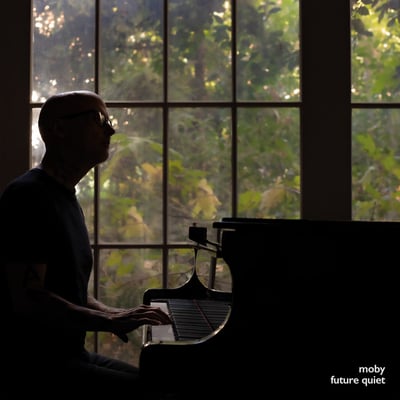
Moby Future Quiet
Released Feb 20, 2026 BMG Rights Management (UK) Ltd.
Consensus forming 4 professional reviews Updated Feb 27, 2026
Mostly positive consensus
Consensus is still forming across 4 professional reviews. Moby's Future Quiet settles into hushed, piano-led introspection and ambient orchestration, offering a quiet refuge that critics find both consoling and, at times, indulgent.
How ChoruScore worksCritics' Top Tracks
The songs critics returned to most
When It's Cold I'd Like to Die
4 critic mentions
“To open is the reimagined ‘When It’s Cold I’d Like to Die’.” — Clash Music
Estrella del Mar
2 critic mentions
“Elise Serenelle’s operatics engage with the fragile synths of ‘Estrella Del Mar’ to haunting effect” — Hot Press
Mott St 1992
2 critic mentions
“Mott St 1992’ would not seem out of place on Moby’s mega-selling 1999 album, Play” — Hot Press
Full critic consensus
Moby's Future Quiet settles into hushed, piano-led introspection and ambient orchestration, offering a quiet refuge that critics find both consoling and, at times, indulgent. Across professional reviews the record earns a measured verdict: an average consensus score of 64.75/100 from four reviews, with praise focused on reworkings and collaborations that foreground vulnerability and therapy-like calm. Critics consistently name “When It's Cold I'd Like to Die”, “On Air - Quiet Future” and “Precious Mind - Quiet Future” among the best songs on Future Quiet, while “Estrella del Mar” and “Mott St 1992” recur as standout moments.
Reviewers highlight recurring themes of ambient minimalism, classical influence and insomnia and anxiety, noting how guest vocalists such as Jacob Lusk and India Carney imbue the sparse arrangements with emotional lift. Several critics praise the arresting re-recording of “When It's Cold I'd Like to Die” for its fragile majesty, and point to stripped-down takes on “Precious Mind” and “On Air” as the record's most effective moves. At the same time professional reviews call out the album's length and pacing as liabilities; some find the near-85-minute running time and uniform minimalism weigh the record down and limit its momentum.
Taken together the critical consensus paints Future Quiet as a carefully crafted, occasionally uneven late-period statement by Moby: a collection that rewards patience with moments of genuine emotional clarity, even if its restrained palette and extended duration make it a divisive listening experience. Below, detailed reviews unpack whether Future Quiet functions better as a therapeutic album and which tracks emerge as essential listens.
Track Ratings
How critics rated each track, relative to this album (0-100). Only tracks that made critics feel something are rated.
When It's Cold I'd Like to Die
This Was Never Meant for Us
Retreat
Estrella del Mar
Ruhe
Mott St 1992
Precious Mind - Quiet Future
Tallinn
On Air - Quiet Future
Selene
Le Vide
Great Absence
Mono No Aware
The Opposite of Fear
Get the next albums worth your time.
Critic-backed picks in one clean digest. No clutter.
What Critics Are Saying
Deep insights from 7 critics who reviewed this album

Critic's Take
Moby's Future Quiet reads like a breathtaking, ethereal masterpiece, instruments knitting together into a seamless whole. The reviewer praises its symphonic elegance and signature melancholy, noting how every track flows like waves and how the piano and violin propel the record. They single out “This Was Never Meant for Us” as the standout - haunting, captivating and a likely new favourite. Fans of Moby and those drawn to deep, terminal emotional work will find the best tracks on Future Quiet particularly rewarding.
Key Points
-
The standout track is “This Was Never Meant for Us” because the reviewer calls it a haunting, captivating standout that leaves a lasting impression.
-
The album’s core strengths are its seamless transitions, symphonic elegance, and palpable emotional depth conveyed mostly through instrumentals.
Themes
mu

Critic's Take
Moby has fashioned Future Quiet as a kind of musical therapy, and the reviewer's tone is reverent and intimate, praising tracks like “When It’s Cold I’d Like to Die” and “Mott St 1992” as standout moments. The critic leans into Moby's ambient piano and collaborations - noting Elise Serenelle's transcendent voice on “Estrella del Mar” - while pointing out that the album's power lies in its calm, reflective atmosphere. Written with warm admiration and precise detail, the review positions these best tracks as the emotional centres of an album meant to soothe insomnia and anxiety.
Key Points
-
‘Mott St 1992’ is the album's grandest moment, using sparse drums and pleasurable synth to inject happiness into the meditative core.
-
The album's core strength is its ambient piano therapy, offering calm, reflective relief for insomnia and anxiety.
Themes
Ho
Key Points
-
The opener “When It’s Cold, I’d Like To Die” is best for its lush orchestral backing and Jacob Lusk’s soaring vocals.
-
The album’s core strength is its patient, minimalist orchestration and effective use of guest vocalists to humanize ambient textures.
Themes
St
Critic's Take
Moby leans into solemnity and stillness on Future Quiet, and the best songs - notably “When It’s Cold I’d Like to Die” and “Retreat” - show why. The re-recorded “When It’s Cold I’d Like to Die” with Jacob Lusk remains arresting, fragile and majestically emotional, while “Retreat” uses a simple piano refrain to hit a universal pang.
Key Points
-
The re-recorded “When It’s Cold I’d Like to Die” stands out for its arresting fragility and majestic final verse.
-
The album’s core strengths are its solemn, religious-tinged minimalism and intimate, stripped-down arrangements that offer refuge.

Fa
Critic's Take
Lauren Hunter's voice here is admiring but impatient, praising the "beautiful, entrancing" reworking of “When It's Cold I'd Like To Die” while flagging that the album's 85-minute runtime stretches goodwill. The tenderness of “This Was Never Meant For Us” and the soaring instrumentals of “Retreat” are cited as high points, yet the persistent minor-chord, piano-led approach makes the whole feel overlong. The result is an album of clear, quiet beauties that nevertheless asks the listener for more endurance than it fairly earns.
Key Points
-
The reworking of “When It's Cold I'd Like to Die” is the album's most entrancing moment and clearly the best song.
-
The album's core strength is its intimate, piano-led ambient aesthetic, but its excessive 85-minute length undermines impact.