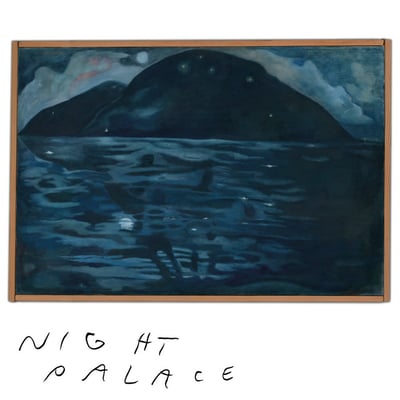
Mount Eerie Night Palace
Released Nov 1, 2024 P.W. Elverum & Sun
Established consensus 14 professional reviews Updated Dec 30, 2025
Broadly positive consensus
Mount Eerie's Night Palace announces itself as a wind-swept, domestic epic that reunites Phil Elverum's intimacy with expansive, experimental reach.
How ChoruScore worksCritics' Top Tracks
The songs critics returned to most
Night Palace
10 critic mentions
“Elverum leaves us with either a question or a statement: “So what if nobody finds this notebook.” — PopMatters
Huge Fire
9 critic mentions
“on groovy second track "Huge Fire" he sings: "All this shattered wood I’ve been pulling into a heap of flames and smoke / this is my life.” — Beats Per Minute
Demolition
8 critic mentions
“the 12-minute "Demolition", the penultimate track on the record, which is something of a return to the diaristic style” — Beats Per Minute
Full critic consensus
Mount Eerie's Night Palace announces itself as a wind-swept, domestic epic that reunites Phil Elverum's intimacy with expansive, experimental reach. Across 14 professional reviews the record earned a consensus score of 81.36/100, and critics consistently point to a handful of centerpiece songs that make the collection both accessible and demanding. The title track “Night Palace”, the 12-minute “Demolition”, and quieter revelations like “Broom of Wind” and “I Walk” emerge repeatedly as the best songs on Night Palace, each balancing melody, noise and narrative weight.
Reviewers agree the album trades elegy for playfulness at times, marrying parental devotion and grief aftermath with flashes of humor and political critique. Several reviews highlight long-form sequencing and sonic maximalism - moments where feedback drones and spoken-word passages give way to campfire fuzz and motorik pulses - while others praise the lo-fi home-recording intimacy that renders quotidian domestic life and nature imagery immediate. Critics note recurring themes of family, mortality, ritual and recovery, and professional reviews emphasize how the record's contrasts - tenderness and abrasion, brief vignettes and sprawling meditations - create a cohesive emotional architecture.
Though most reviewers hail Night Palace as one of Elverum's more adventurous, rewarding statements in years, some criticism centers on occasional cluttered mixes and oblique detours that ask for patience. The critical consensus suggests that if you want to know "is Night Palace good," the answer is yes for listeners willing to sit with its long arcs: start with “Night Palace”, “Demolition”, “Broom of Wind” and “I Walk” before diving deeper into the album's rituals, politics and sonic experiments.
Track Ratings
How critics rated each track, relative to this album (0-100). Only tracks that made critics feel something are rated.
Night Palace
Huge Fire
Breaths
Swallowed Alive
My Canopy
Broom of Wind
I Walk
(soft air)
Empty Paper Towel Roll
Wind & Fog
Wind & Fog, Pt. 2
Blurred World
I Heard Whales (I Think)
I Saw Another Bird
I Spoke With A Fish
Myths Come True
Non-Metaphorical Decolonization
November Rain
Co-Owner of Trees
Myths Come True, Pt. 2
& Sun
Writing Poems
the Gleam, Pt. 3
Stone Woman Gives Birth To A Child At Night
Demolition
I Need New Eyes
Get the next albums worth your time.
Critic-backed picks in one clean digest. No clutter.
What Critics Are Saying
Deep insights from 14 critics who reviewed this album

Critic's Take
Anyone who knows Mount Eerie will find Night Palace rewarding if slow patience is on the table, and the reviewer's favorites emerge clearly: “Night Palace” sets the tone with long feedback drones, and “I Heard Whales (I Think)” charms with naturalistic detail. Brandon Miller praises the immediacy of “Huge Fire” and highlights the surprising vocal shift on “Wind & Fog, Pt. 2”, making these among the best songs on Night Palace. The album is described as immersive and demanding, so the best tracks are those that balance melody and atmosphere while rewarding repeated listens.
Key Points
-
The title track is best for setting the album's meditative, drone-driven tone and a memorable lyrical question about a notebook.
-
The album's strengths are its poetic storytelling, immersive soundscapes, and moments that reward patient, repeated listening.
Themes

Critic's Take
Mount Eerie's Night Palace finds Phil Elverum returning to dense, volatile textures while refining the intimacy that marked his best work, and the best songs - notably “Night Palace” and “Wind & Fog” - show him at his most vital. The album channels wind as a central muse, the gusts literally entering songs like “I Heard Whales (I Think)” and giving the indie-pop glide of “Broom of Wind” a surprising tenderness. There is a steady parental devotion in “My Canopy” and a playful, profound brevity in “Empty Paper Towel Roll,” both of which explain why fans asking for the best tracks on Night Palace will point to these moments. Night Palace balances noisy catharsis with contemplative lyricism, making its standout songs feel both immediate and lived-in.
Key Points
-
The best song(s) capture a balance of dense distortion and intimate lyricism, with "Night Palace" and "Wind & Fog" exemplifying that blend.
-
The album's core strengths are its wind-driven motifs, poetic lyrics, and a renewed richness in arrangement that deepens emotional resonance.
Themes

Critic's Take
The best songs on Night Palace feel like souvenirs of a long career, where Mount Eerie reworks the grandeur of The Glow Pt. 2 into quieter wisdom. Noah Barker’s voice leans on imagery of Anacortes and intimate DIY craft to explain why tracks such as “Night Palace” and “Breaths” act as the record’s standout moments, equal parts lullaby and distortion-drenched revelation. The review highlights how these songs balance lo-fi trickery, acoustic electronics and speechlike vocals to make them the best tracks on Night Palace, each one a small, devastating proverb. In Barker’s telling, the album’s best songs are those that turn mortality into commonality, letting the listener live inside the music rather than merely hear it.
Key Points
-
The title track distills the album’s wisdom, balancing lullaby intimacy with distortion to make it the standout.
-
Night Palace’s core strength is its DIY, textured production that turns mortality and everyday imagery into resonant soundscapes.
Themes

Critic's Take
Mount Eerie’s Night Palace feels like a long, restorative taking-stock, and the best tracks here - notably “Night Palace” and “Demolition” - crystalize that feeling. Hakimian’s account hears Elverum moving from quotidian tenderness in “My Canopy” to an almost diaristic reckoning in “Demolition”, the two acting as the album’s emotional anchors. The record’s strengths are its wide canvas and tonal diversity, which make songs like “Huge Fire” and “I Walk” standout moments in a sprawling sequence. This is praise offered without sentimentality; it is a portrait of survival and renewed ease after devastation, and those best tracks carry that story most clearly.
Key Points
-
The best song, "Demolition", is the album’s diaristic centerpiece that synthesizes mortality, daily life, and political thought into a long, cathartic statement.
-
Night Palace’s core strengths are its tonal breadth and emotional honesty, moving from domestic tenderness to political rage while finding renewed ease.
Themes

Critic's Take
Mount Eerie's Night Palace reads like Phil Elverum returned triumphant to the wild and expansive impulses of The Glow Pt. 2, with the title track and “Demolition” standing out as the record's heart. The opening “Night Palace” and the 12-minute “Demolition” induce a contemplative state with long, drawn-out tones, while bites like “Swallowed Alive” and “My Canopy” provide jagged punctuation. This is the Mount Eerie album that foregrounds nature and meditation, and those best tracks are where his affinity for wind, waves and ravens feels most alive. The result is an adventurous, definitive statement that rewards repeated listens and long walks in the woods.
Key Points
-
The best song, the opening “Night Palace”, is best because it sets the album’s contemplative, nature-infused tone.
-
The album’s core strengths are its integration of natural sounds, meditation-influenced long forms, and stark stylistic contrasts.
Themes

Critic's Take
In his characteristic mix of awe and exacting scrutiny, Phil Elverum makes Night Palace feel like a culmination and a rupture - the best tracks, like “Broom of Wind” and “I Walk”, pair miniature lyric precision with numinous balladry. Daniel Bromfield’s cadence emphasizes the album’s big vistas and sumptuous imagery while noting the post-A Crow Looked at Me voice that questions metaphor and meaning. The review foregrounds rockier shocks too, citing “Non-Metaphorical Decolonization” and “Co-Owner of Trees” as muscular counterpoints that expand the record’s emotional and political reach.
Key Points
-
“Broom of Wind” is best for its perfect miniature construction and celestial baroque pop.
-
The album’s strengths are its expansive natural imagery, emotional range from intimacy to blackened rock, and clear political reflection.
Themes

Critic's Take
Mount Eerie's Night Palace reads like a cosy, fizzing scrapbook, where the best tracks - notably “I Spoke With A Fish” and “Night Palace” - feel playful and alive rather than mournful. The reviewer’s voice is breathless and affectionate, cataloguing fuzz, campfire melodies and cartoonish surprises with a giddy, almost staccato joy. He praises the album as a return to songcraft, full of exploratory sketches, buzzing acoustic ideas and a new lightness that makes the best songs sing out. The result is an album of small, charming revelations, the kind you want to tell someone about on a walk in the woods.
Key Points
-
The best song is best because it captures the album's newfound playfulness and conversational surrealism.
-
The album's core strengths are its nature-wrapped warmth, exploratory energy, and return to song-focused craft.
Themes

Critic's Take
Mount Eerie's Night Palace settles into long, searching passages where the best songs - “Night Palace” and “Huge Fire” - stand out as apex moments. The reviewer writes in an expansive, comparative voice that privileges scale and ambition, arguing these tracks crystallize the album's thematic sweep and emotional weight. Phrases throughout treat the album as part elegy, part experiment, and those two songs are highlighted as the clearest, most affecting examples.
Key Points
-
The best song is best because it crystallizes the album's thematic sweep and emotional weight.
-
The album's core strengths are scale, ambition, and resonant natural-imagery songwriting.
Themes

Critic's Take
In a voice that trades elegy for abrasion, Mount Eerie’s Night Palace names its best songs plainly: “Huge Fire” opens with lyric and clatter that lodge in the brain, while “I Saw Another Bird” and “Writing Poems” deliver the album’s clearest tenderness. Will Hermes writes with a keen ear for how memory and noise collide, praising the record’s thorny beauty and spotlighting those tracks as touchstones of its grief-and-wonder center. Listen for “Huge Fire” as the thesis and “I Saw Another Bird” as its quiet counterweight.
Key Points
-
“Huge Fire” is the album's thesis track, its memorable imagery and clattering arrangement anchoring the record.
-
Night Palace's core strengths are its fusion of noise-damaged songcraft with tender moments of memory and natural wonder.

Critic's Take
Mount Eerie's Night Palace reads like a dense journey through Elverum's synapses, where the best songs - “Huge Fire” and “Non-Metaphorical Decolonization” - splice personal grief with political thought. Tony Inglis notes these are some of the most maximalist songs Elverum has recorded, from minute-long collages to sprawling 12-plus minute prose poems, which makes the best tracks feel both intimate and brazen. The review points listeners to “Huge Fire” for its immediacy and to “Non-Metaphorical Decolonization” for its narrative reach, framing the album's strongest moments as confrontations with past and present. The effect is that the best songs on Night Palace reward repeated listening, revealing callbacks and self-mythology with each play.
Key Points
-
The best song, “Huge Fire”, is recommended for its immediacy and prominence in the reviewer's 'Listen to' list.
-
The album's core strengths are its maximalist scope, blending intimate grief with political and existential reflection.
Themes

Critic's Take
Phil Elverum returns with Night Palace, an expansive, wind-swept record where the best tracks - “Broom of Wind”, “I Walk” and “Demolition” - crystallize his trade: intimate domestic detail folded into sweeping philosophical questions. The reviewer's voice lingers on the album's contrasts, praising the short, potent pieces and the sprawling experiments in equal measure, noting how moments like “Stone Woman Gives Birth to a Child at Night” and the three-part animal suite feel both tender and strange. This is an album that rewards patience, a record of domestic ritual, ghosts and politics that still produces undeniable standouts for anyone asking what the best songs on Night Palace are.
Key Points
-
The best song(s) stand out by marrying intimate domestic detail with expansive, wind-swept instrumentation, especially on "I Walk" and "Broom of Wind".
-
The album's core strengths are its blend of personal grief, natural-world imagery and bold structural contrasts between short fragments and long experiments.
Themes

Critic's Take
Mount Eerie's Night Palace is a mammoth, reflective double album whose best songs are the ones that let Elverum's fragile melodies cut through the soundscape - namely “Broom of Wind”, “November Rain” and the closer “I Need New Eyes”. Eric R. Danton's prose frames these tracks as the moments that elevate the record from journal entries to revisitable music, noting how those melodies "lay bare Elverum's soul" while other pieces erupt into noise or punk. The review balances admiration for Elverum's equanimity and craft with recognition that much of the album is oblique, and it steers listeners toward the songs that repay repeated listens. This is an intimate, idiosyncratic collection where the best tracks reward patience and attention.
Key Points
-
The best song moments, like “Broom of Wind,” reveal fragile melodies that make the album worth revisiting.
-
Night Palace's strengths are its intimate nature imagery, varied sonic textures, and Elverum's reflective, observant voice.
Themes

Critic's Take
Mount Eerie's Night Palace is a guarded, sometimes thrilling record whose best tracks reveal how Elverum pushes his sound to the brink. The reviewer finds highlights in “I Walk” and “Breaths”, where diary-like lyricism collides with motorik beats and static to arresting effect. At times the mix buries delicate moments, but songs like “Broom of Wind” and “Wind & Fog, Pt. 2” still stake claims as the best tracks on Night Palace by turning fragility into force. This is an album that rewards close listening, so those searching for the best songs on Night Palace will find the record's strange textures essential.
Key Points
-
The best song is “I Walk” because its diary-like lyricism remains poignant amid noisy textures.
-
The album's core strengths are its nature-infused imagery and risky sound experiments that push folk into abrasive, lo-fi territory.
Themes
Th
Critic's Take
Hi, everyone. Nightthony Skytano here: on Night Palace Phil Elverum mixes brief vignette songs and sprawling meditations to surprising effect, and the best tracks - “Broom of Wind”, “I Walk”, and the epic “Demolition” - showcase why. The record's charm is its messy intimacy, where a warm, blissful performance on “Broom of Wind” sits beside the oddly hilarious, autotuned fish-sketch of “I Spoke with a Fish” and the climactic 12-minute spoken-word of “Demolition”. If you want to know the best songs on Night Palace, those cuts are where joy, emotional heft, and Phil's conceptual reach converge. This is a massive, dense record that rewards repeated listens and feels like one of his more digestible yet adventurous statements in years.
Key Points
-
The best song is the 12-minute "Demolition" because it climactically ties together the album's major themes through compelling spoken-word and field recordings.
-
The album's core strengths are emotional intimacy, thematic ambition, and a mix of concise vignettes with sprawling meditations that reward repeated listens.