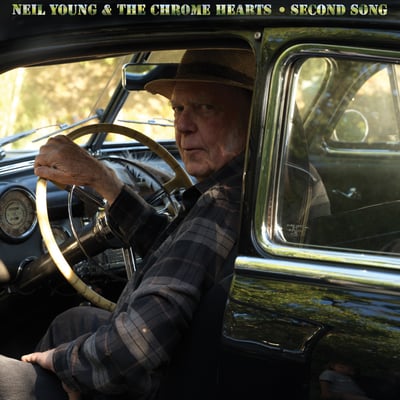
Neil Young & Neil Young & The Chrome Hearts Second Song
Released Sep 18, 2026 Reprise
Consensus forming 3 professional reviews Updated Sep 21, 2026
Broadly positive consensus
Consensus is still forming across 3 professional reviews. Neil Young's Second Song arrives as a late-career meditation on time, memory and mortality, trading instant hooks for spacious, atmospheric revelation.
How ChoruScore worksCritics' Top Tracks
The songs critics returned to most
Soon I Might Be Going
3 critic mentions
“More affecting still is the astonishing nine-minute “Soon I Might Be Going”, which addresses mortality with a frankness” — Uncut
Second Song
2 critic mentions
“Its melody is impossibly beautiful and - crucially - not markedly similar” — The Guardian
The Foggy Edge of Time
1 critic mention
“As with most of Second Song, autobiographical opener "The Foggy Edge Of Time" finds Young in mellow mood” — Uncut
Full critic consensus
Neil Young's Second Song arrives as a late-career meditation on time, memory and mortality, trading instant hooks for spacious, atmospheric revelation. Across professional reviews critics point to the eleven-minute title track “Second Song” and the nine-minute, elegiac “Soon I Might Be Going” as the record's emotional center, with revived vault pieces such as “Casting Me Away From You” and “I’ll Love You Forever” adding moments of tender reconnection.
The critical consensus is cautiously positive: the collection earned a 75.67/100 consensus score across 3 professional reviews, with reviewers consistently praising the album's patient melodies, warm sonic space and late-period introspection. Pitchfork and Song Bar emphasize atmosphere and the cumulative weight of Young's spare arrangements, while Uncut highlights how the title piece anchors the record and lends monumentality to its themes of revisiting the past. Across reviews critics praised the melodic dexterity of “Second Song” and the plaintive ache of “Soon I Might Be Going”, naming them among the best songs on Second Song.
Not all reactions are uniform. The Guardian frames the album as uneven at times, noting sublime, haunting passages beside a few overlong or slight reworkings, which tempers the praise with a sense that spontaneity sometimes outpaces finesse. Taken together, professional reviews suggest that Second Song will most reward those drawn to contemplative, late-period reflection: the record may not reinvent Neil Young's vocabulary, but its standout tracks offer quietly monumental proof of his enduring voice.
Below, detailed reviews unpack where the album's strengths and lapses lie within Young's ongoing conversation with time.
Track Ratings
How critics rated each track, relative to this album (0-100). Only tracks that made critics feel something are rated.
The Foggy Edge of Time
Day after Day
Earth Girl
Second Song
Casting Me Away From You
Soon I Might Be Going
I’ll Love You Forever
Get the next albums worth your time.
Critic-backed picks in one clean digest. No clutter.
What Critics Are Saying
Deep insights from 4 critics who reviewed this album

Critic's Take
Neil Young sounds reflective and reconciled on Second Song, and the record’s best tracks prove it: the title track “Second Song” unfolds as an 11-minute meditation and anchors the album, while “Soon I Might Be Going” is an astonishing nine-minute examination of mortality. The revived vault songs such as “Casting Me Away From You” and “I’ll Love You Forever” slot seamlessly into the record, giving these themes of memory and return fresh emotional weight. Young and the Chrome Hearts favour warmth and space, and that restraint makes these standout moments—especially the long, contemplative title piece and the tender farewell of “Soon I Might Be Going”—feel quietly monumental.
Key Points
-
The title track “Second Song” is the album’s centerpiece, its 11-minute meditation widening the record’s emotional scope.
-
Young’s strengths here are restraint, warmth and the emotional resonance of revisiting old songs with present-day tenderness.
Themes

Critic's Take
Neil Young arrives on Second Song as an exerciser in atmosphere, less interested in hooks than in the slow, hypnotic drift that has defined his late work. The reviewer's eye lingers on the patient beauty of “Day After Day” and the lyric-heart of “Soon I Might Be Going”, tracking how those best tracks on Second Song trade immediate payoff for cumulative emotional weight. This is Sam Sodomsky noticing how Young's falsetto and spare arrangements turn small melodic gestures into lasting impressions, and why listeners asking for the best songs on Second Song will find themselves circling these lengthy, haunting pieces. The album feels like comfortable, bittersweet maintenance of a voice rather than a late-career reinvention, which is precisely its point.
Key Points
-
The best song is "Soon I Might Be Going" because it contains the reviewer’s favorite lyric and condenses the album’s emotional core.
-
The album’s core strength is sustaining a hypnotic, atmospheric mood that highlights Young’s weathered voice and melodic touches.
Themes

Critic's Take
Neil Young sounds weary but still capable on Second Song, where the best songs are the epic “Second Song” and the elegiac “Soon I Might Be Going”. Petridis lingers on their melodies and emotional reach, praising the title track's impossibly beautiful melody and the plaintive, ruminative ache of “Soon I Might Be Going”. He treats the album as a mixed bag - sublime moments set among pleasant but slight reworkings and one overlong ramble - and frames those two standouts as why listeners searching for the best tracks on Second Song should linger here.
Key Points
-
The title track is the album's high point for its original, beautiful melody and sustained, engrossing 11-minute arc.
-
The album's core strength is its ability to produce genuinely gripping, elegiac moments amid otherwise pleasant, sometimes slight material.
Themes

Critic's Take
At 80, Neil Young makes Second Song feel like a conversation with time, and the best songs - “The Foggy Edge of Time”, “Second Song” and “Soon I Might Be Going” - do the heavy lifting. The album’s reflective mood is established immediately by “The Foggy Edge of Time”, with backwards guitar and a loose, atmospheric arrangement that suggests looking back while refusing to stop moving. The heart of the record is the patient, eleven-minute “Second Song”, a slow meditation that turns falling leaves and embers into a moving metaphor for mortality. And on “Soon I Might Be Going” Young makes the late-career confession explicit, restless, personal and quietly devastating, which is why these tracks stand out as the best songs on Second Song.
Key Points
-
The patient, eleven-minute “Second Song” is the emotional center and best track for its meditation on mortality and music.
-
The album’s core strengths are reflective songwriting, time-and-mortality themes, and the way old songs gain new meaning in Young’s late voice.